
Kenya faces 84.1% risk of election violence as rights report warns of democratic backsliding before 2027
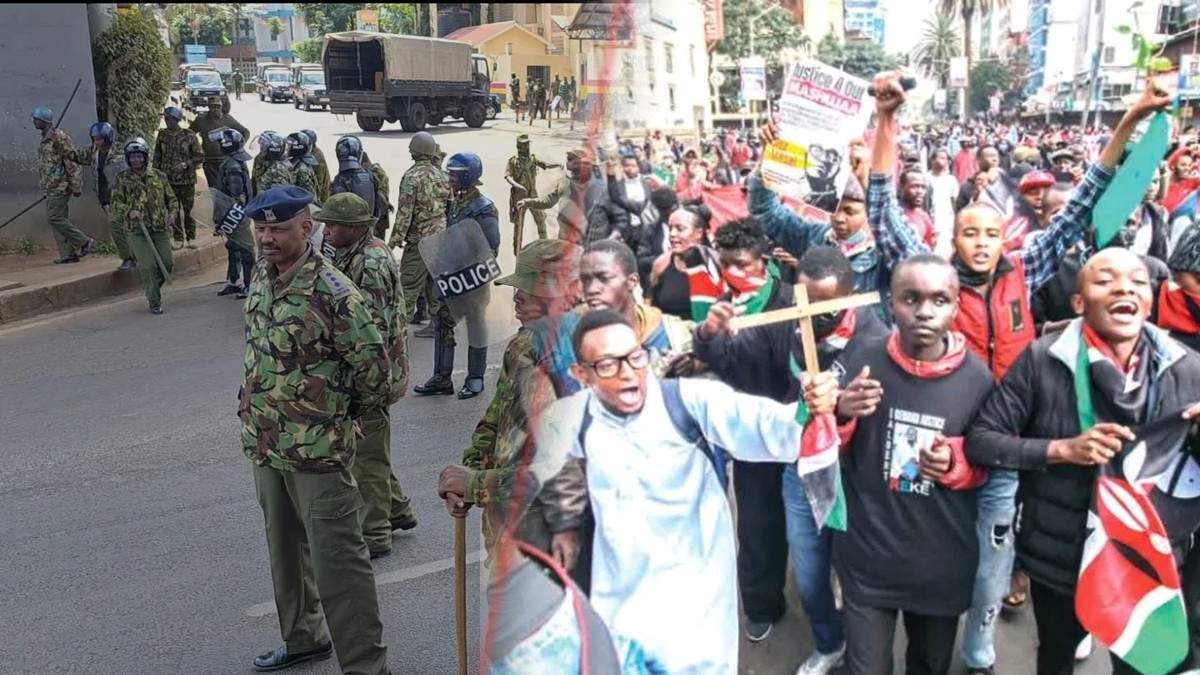
Kenya is experiencing democratic backsliding marked by police killings, political violence and growing restrictions on civil liberties, and faces an 84.1 per cent risk of some form of violence around the 2027 General Election, according to a new human rights report released on Friday, October 30, and reported by The Star.
The report, titled Democratic Backsliding: State of Human Rights and Governance in Kenya, was compiled by the Civic Freedoms Forum (CFF), a coalition of civil society groups. It reviews the country's governance record between September 2025 and October 2026 and warns that the State's growing reliance on force, surveillance, arrests and intimidation to handle dissent could undermine the credibility of the next election.
"That pattern is dangerous ahead of 2027, and it borders on the crisis of democratic backsliding, which involves the substantial weakening of democratic practices in a shift towards authoritarianism," the report states.
Where the 84.1 per cent figure comes from
The headline risk figure is not the forum's own calculation. It is drawn from the Kofi Annan Foundation's Electoral Vulnerability Index 2026-2027, published in mid-2026, which ranked Kenya the second most vulnerable democracy to electoral violence in the world, behind only Nigeria.
According to coverage of the index by The Star and Eastleigh Voice in July, the foundation estimated an overall 84.1 per cent probability that Kenya will experience some form of electoral violence during the 2027 cycle. It put the chance of moderate violence at 75.4 per cent and of severe violence at 6.2 per cent. The index measures the likelihood of election-related unrest such as localised clashes and protests, rather than predicting a nationwide conflict.
The foundation listed the drivers as economic hardship and the cost of living, youth unemployment, anger over taxation, corruption and police conduct, mistrust of the electoral body, and uncertainty in the opposition following the death of Raila Odinga in October 2025. Rather than naming specific counties, it pointed to historically sensitive areas and to urban centres where cost-of-living grievances and tensions between police and residents run high.
Warning signs from recent by-elections
The CFF report treats the by-elections held since November 2025 as early warnings:
- During the November 27, 2025 by-elections, the Kenya National Commission on Human Rights (KNCHR) recorded three deaths in the campaign period, two in clashes in Kasipul and one in a stampede in Kabuchai, and 10 people were hospitalised after attacks on hotels and homes linked to candidates.
- In the February 26, 2026 by-elections, results forms were reportedly not publicly displayed at 27.3 per cent of observed polling stations, while KIEMS kits malfunctioned at 30 per cent of observed stations.
- The July 16 Ol Kalou parliamentary by-election was marred by allegations of voter bribery, intimidation, destruction of property and violence, including one reported death.
Police conduct and civic space
The report devotes much of its attention to policing. It cites the Missing Voices 2025 report, which documented 131 cases of police violence, including 125 killings and six enforced disappearances. It says 24 police killings were recorded in May 2026 alone, while protests over fuel prices left more than 30 people injured and over 348 arrested. During the June 25, 2026 Gen Z anniversary demonstrations, KNCHR documented 361 arrests across 11 counties and seven enforced disappearances.
It also points to international ratings: Freedom House cut Kenya's global freedom score from 51 to 49 out of 100 this year while keeping its "partly free" label, and CIVICUS rates the country's civic space as "repressed", its second-worst category.
Beyond security, the forum lists corruption, public debt and the cost of living as major governance failures, noting that 64.9 per cent of day-school learners had reportedly been sent home or denied classes over levies it describes as illegal.
What the forum wants
The report closes with 10 demands, among them an end to police killings and enforced disappearances, protection of journalists and human rights defenders, credible electoral preparations, accountability for corruption and protection of independent constitutional bodies. It calls on the Independent Electoral and Boundaries Commission (IEBC), police oversight bodies and the Judiciary to safeguard freedoms and ensure a credible poll.
The forum says it will share the report with the public, Parliament and international human rights bodies as an alternative assessment of the government's record. There was no immediate response from the government or the National Police Service to the findings by Friday afternoon.
The warning comes as political temperatures rise ahead of the August 2027 polls, with new coalitions forming and the IEBC still completing preparations, including the recruitment of a substantive chief executive.
Photos: The Star (Enos Teche); Eastleigh Voice. Thumbnail design: HAMASTA MEDIA.
Every moment, captured beautifully.
Events, corporate portraits, products and editorial shoots by our newsroom photographers.





More in Politics
See all
Police commission takes recruitment and promotions fight with IG Kanja to the Supreme Court

Electoral reform coalition questions 44 names on IEBC CEO applicants' list, gives commission 24 hours to respond
Crowd chants 'President Sifuna' over Kalonzo at Linda Mwananchi launch as Gachagua claims Ruto bought Mudavadi's ANC for Sh20m

Sifuna promises Sh500bn budget cut to scrap fuel, power taxes and housing levy, faults Ruto over Bayern-Ajax match

Sifuna unveils Linda Mwananchi lineup with Osotsi as chair and Natembeya heading presidential campaign, sets November 13 delegates meeting
Global Community Remarks
0