
Kenya goes 10 days without a new Ebola case as MoH sets November 11 target to free remaining contacts

Kenya has gone 10 days without recording a new Ebola infection, the Ministry of Health said on Friday, and officials now expect to release everyone still under quarantine and surveillance by November 11.
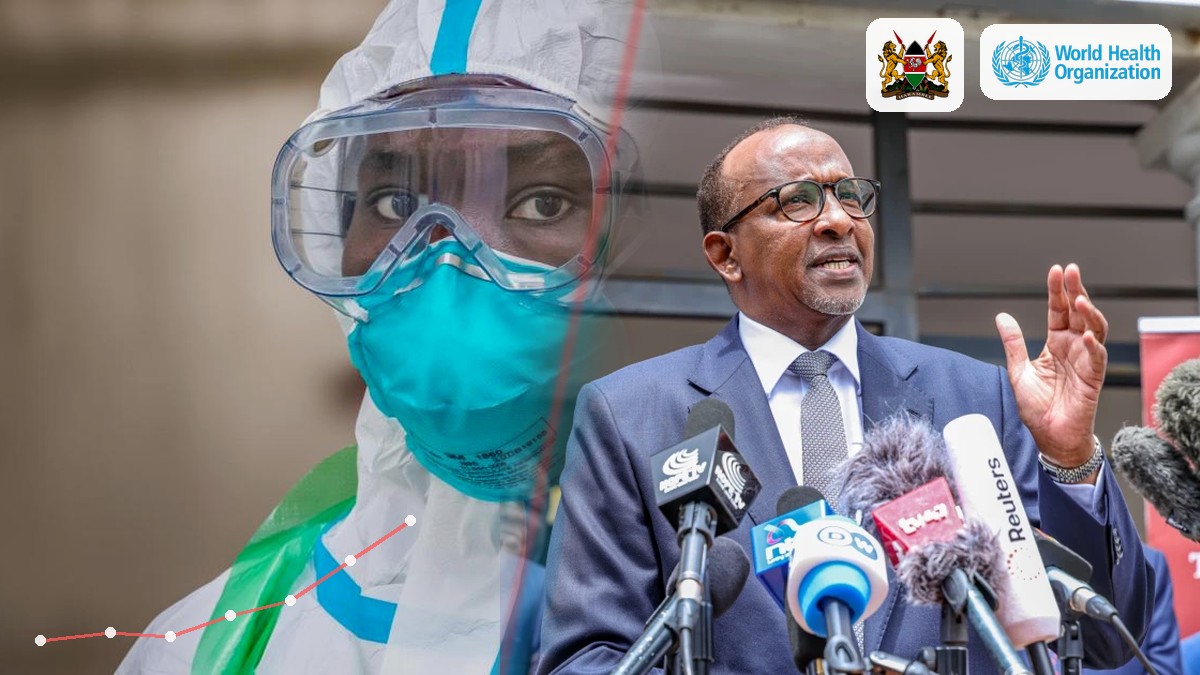
Public Health Principal Secretary Mary Muthoni gave the update after the ninth meeting of the national Ebola response task force on Friday, October 30. She credited joint work by the national government, county administrations and development partners. "Kenya is making progress in containing the Ebola outbreak, with no new cases reported in the last 10 days," she said, according to People Daily.
Who goes home, and when
Muthoni said 46 people now in quarantine are expected to finish their monitoring period and return home on Tuesday, November 3. The remaining contacts could follow over the next two weeks, as long as they stay well under observation.
"Those completing the required monitoring period are expected to be progressively released, with the process expected to conclude by November 11," the PS said, as reported by Kenyans.co.ke.
Director General for Health Dr Patrick Amoth told the meeting that seven patients are still being treated in isolation. Two of them have tested negative and will be retested after 72 hours. The other five are said to be in stable condition.
The ministry says it has traced all 135 people identified as contacts of confirmed patients, nine of whom are outside Kenya. The first group of 20 contacts finished the mandatory 21-day monitoring period and went home on October 26. Reuters described that release as a milestone in Kenya's containment efforts.
How the outbreak unfolded
Kenya confirmed its first Ebola case on October 6. The patient was a Kenyan who had been living in the Democratic Republic of the Congo (DRC) and travelled home through Uganda. He died in a Nairobi hospital. Tests showed the Bundibugyo strain of the virus. Unlike the more common Zaire strain, it has no approved vaccine or specific treatment.
Over the next two weeks more cases emerged among people who had been close to the first patient. They included health workers who treated him, a relative, and a hospital attendant who handled his utensils and linen, Al Jazeera reported. By October 20 Kenya had nine confirmed cases. A second death followed on October 23. The European Centre for Disease Prevention and Control says all nine cases are linked to the first patient, and no case has been reported since October 20.
Nairobi has been the centre of the outbreak, with patients isolated in the capital. Border points such as Busia have stepped up screening of travellers from Uganda. Health officials have not reported confirmed cases in other counties, although facilities such as Moi Teaching and Referral Hospital in Eldoret have tested and cleared several suspected cases. MTRH chief executive Dr Philip Kirwa said this week that about 10 suspected cases tested negative, with most turning out to be malaria.
Kenya's outbreak is part of a much larger regional crisis. The DRC has recorded more than 10,000 confirmed cases and close to 5,000 deaths since May, making it the deadliest Ebola outbreak in that country's history.
Help from partners
The Africa Centres for Disease Control and Prevention (Africa CDC) has pledged about $1.5 million (around Sh194 million) to the response after its Director General, Dr Jean Kaseya, met Health CS Aden Duale in Nairobi on October 27. The package includes 10 African public health experts, laboratory reagents, test kits and about $350,000 worth of equipment for the Public Health Emergency Operations Centre. More than Sh259 million has also been channelled through the UN humanitarian office (OCHA) for border surveillance, rapid response teams and frontline health workers.
What happens next
Ten days without a new case is good news, but Kenya is not yet close to being declared Ebola-free. Under international rules, a country must go 42 days, twice the virus's maximum incubation period, without a new case. That countdown only starts once the last patient has recovered or tested negative twice. With seven patients still in isolation, the clock has not started.
The task force also called for better protection of health workers, including timely supply of protective gear and closer coordination with county governments. Surveillance at airports, seaports and land borders will continue.
Muthoni urged Kenyans to stay alert, avoid unnecessary handshakes and hugs, and report anyone with suspected symptoms such as sudden fever, weakness, vomiting, diarrhoea or unexplained bleeding.
- Toll-free line: 719
- USSD: *719#
- WhatsApp: 0700 719 719
Photos: People Daily (PS Mary Muthoni); Kenyans.co.ke (CS Aden Duale). Thumbnail design: HAMASTA MEDIA.

Tell your story on screen.
Commercials, documentaries, interviews and social video, from script to final cut.





More in Health
See all
Duale asks World Bank to speed up delayed Sh43.5 billion health projects

Sh29bn MTRH Kiplombe hospital 11 per cent complete as MPs tour site, first phase targeted for March 2027

Kakamega breaks ground on 83-bed Navakholo maternity unit as M-Pesa Foundation brings Uzazi Salama to the county

Nurses' union asks Duale to pay nursing interns' July stipends, says delay is causing hardship

Kisumu rolls out MamaCare and mental wellness apps as Nyong'o pushes digital health
Global Community Remarks
0