
Nairobi rolls out solar streetlights fitted with trackers in bid to light 100,000 points and beat vandals
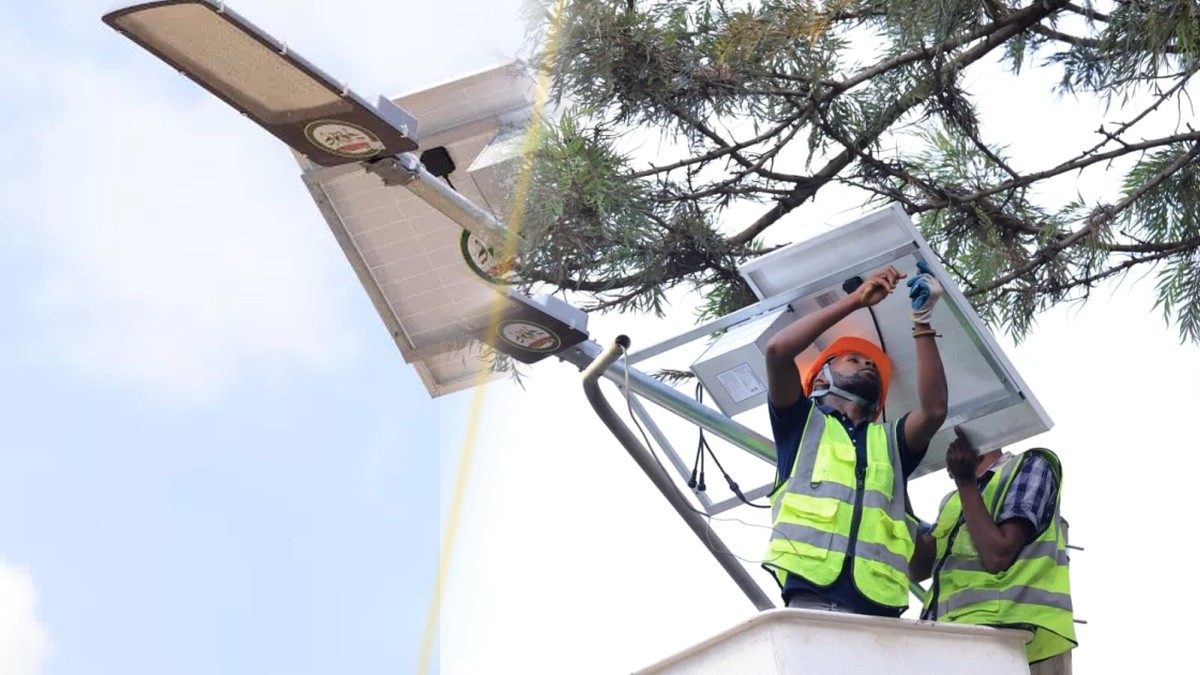
Nairobi City County has started installing solar-powered streetlights fitted with tracking devices on major roads, residential estates and informal settlements, in a programme Governor Johnson Sakaja says will eventually light 100,000 points across the capital.
The programme covers both new installations and the repair of about 50,000 streetlights that have stopped working, and will reach all 17 sub-counties, with poorly lit neighbourhoods given priority.
Where the work has started
Installation crews are already working in the Githogoro informal settlement, along Gitanga Road towards Kawangware and on Mbagathi Road, which is now also known as Raila Odinga Highway.
The county says solar power will cut its reliance on electricity from the grid and allow it to light areas where connecting to the grid has been difficult. Outages and disconnections have in the past left whole stretches of the city's roads in darkness.
Trackers against thieves
The new lights carry tracking devices meant to deter vandals, who have for years stripped Nairobi's streetlights of cables, batteries and solar panels for sale as scrap.
"These lights are of no use to vandals," Sakaja said, explaining that any interference would be easier to trace.
County officials have previously said trackers helped investigators follow stolen lighting equipment to a scrap metal dealer, who was later arraigned in court together with three others.
The governor urged residents to help protect the installations. "Keeping Nairobi lit is a shared responsibility," he said.
Security and night economy
Sakaja said the lights are about more than visibility. "Street lighting is not just about illumination; it is about security, mobility," he said, adding that the county wants residents to move and work with more confidence after dark.
The county expects better lighting to support night-time business for traders, transport operators, shops and restaurants, and to make walking home safer for commuters who rely on matatus and boda bodas late in the evening.
- Target: 100,000 lighting points citywide.
- About 50,000 faulty streetlights to be rehabilitated.
- Coverage: all 17 sub-counties, including highways, estates and informal settlements.
Questions over delivery
Streetlighting has been a recurring promise in Nairobi. Sakaja has previously told a national committee that only three of 40,000 streetlights planned under a separate Sh80 billion development deal had been installed, blaming problems with the contractor.
The county has not said how much the new solar programme will cost or when it expects to hit the 100,000 target. Sakaja said only that the rollout would continue until the city's lighting network had been significantly expanded.
The programme is likely to be closely watched by residents of estates where broken lights have been blamed for muggings, and by traders who say darkness forces them to close early.
Photos: Citizen Digital; The Star. Thumbnail design: HAMASTA MEDIA.


Take your event live to thousands.
Multi-camera live streams, panel discussions and digital broadcasts with professional crews.




More in Business
See all
Avocado sea exports shut as AFA cites low harvest; oil processors face Monday deadline to verify stocks

Inflation jumps to 7.3pc, highest in over three years, as fuel, fares and food push up cost of living

KRA plans to recover unpaid taxes from the Sh175 billion government owes suppliers in pending bills

From today: KRA to block cargo without local digital marine insurance as long-delayed import rule kicks in

From tomorrow: Card machine, till and Paybill charges to attract 16% VAT as banks enforce new tax
Global Community Remarks
0