
'You will find crates of milk sitting there': Ndii blames empty supermarket shelves on affordable housing workers, not falling supply
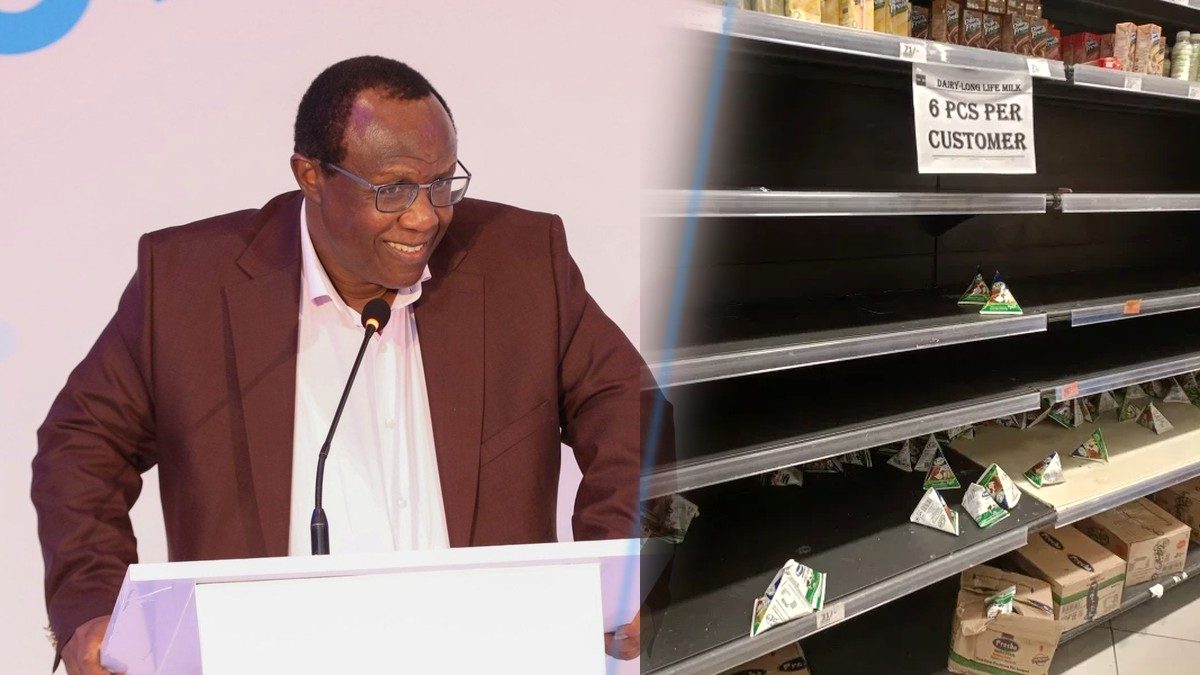
President William Ruto's chief economic adviser David Ndii has dismissed talk of a milk production crisis, telling a Nairobi business audience on Tuesday that the empty dairy shelves in supermarkets are the result of surging demand, including from the hundreds of thousands of workers on affordable housing construction sites, rather than a fall in supply.
Speaking at the 2026 NCBA Economic Forum, Ndii argued that Kenya is producing far more milk than it did when the current administration took office in 2022, and that the only explanation left for the stockouts is that new groups of consumers are drinking more of it.
"Then the question becomes who's consuming this milk? Certainly probably not the people in this room who haven't increased their consumption a lot. But it means that there are people who aren't consuming a lot of milk, who are now consuming a lot of milk," he said, according to People Daily.
"And I can tell you where you can find them. If you go to any of our construction sites where we are doing affordable housing, where there are a couple of hundred thousand people working every day, you will find crates of milk sitting there," he added, explaining that contractors supply milk to workers on site alongside other provisions.
The numbers Ndii is relying on
Citing Kenya National Bureau of Statistics data, Ndii said annual milk production has risen by about 20 per cent to roughly 5.6 billion litres, and that the increase alone is more milk than 90 per cent of African countries produce in a year.
He said the volume of milk received by processors has grown by 34 per cent, from about 500 million litres in 2022 to one billion litres last year, and that intake in the first eight months of 2026 was close to the same period of 2025 despite the drought.
"So if there is no reduction in supply and there's actually a very sharp increase in both production and the intake by processors, what can explain the stockouts on the shelf? The only thing left to explain that stockout on the shelves is demand," he said.
Ndii put the value of Kenya's annual milk output at close to Sh400 billion at current farm-gate prices and said good dairy heifers are now fetching between Sh300,000 and Sh350,000, with Kenya importing breeding animals from South Africa and the Netherlands while exporting cattle to other African markets. He suggested that KNBS sampling methods may be missing activity in fast-growing parts of the economy and said he had raised the matter with the bureau.
What the official data shows
The adviser's explanation sits uneasily with recent industry figures. The Star reported that an October 19 assessment found formal milk deliveries to processors fell by about 16 per cent between May and August, from 88.89 million litres to 75 million litres, a drop the Kenya Dairy Board attributed mainly to drought and pressure on animal feed. The KNBS Leading Economic Indicators for August recorded formal intake of 77.1 million litres, down 5.1 per cent from 81.3 million litres in July.
Prices have followed. KNBS data showed the cost of fresh packaged milk rose six per cent in September, while long-life UHT milk went up eight per cent, feeding into the October inflation reading of 7.3 per cent, the highest in more than three years.
In September, the Kenya Dairy Board described the situation as a temporary supply constraint rather than a full-blown shortage and said it expected output to recover with the October-December rains, while Agriculture Cabinet Secretary Mutahi Kagwe put the fall in deliveries to formal processors at about 5.8 per cent.
Rationing on the shelves
Shoppers have for weeks encountered sparsely stocked dairy aisles, with some supermarkets limiting customers to a handful of packets of long-life milk and some wholesalers capping packaged milk purchases. Fresh pasteurised milk has been harder to find than UHT.
Ndii's remarks drew swift criticism online, with some Kenyans questioning how construction workers could account for shortages experienced by ordinary shoppers and pointing out that only about a third of the milk produced in Kenya goes through the formal processing chain, meaning rising farm output does not automatically translate into packets on a supermarket shelf.
Photos: NCBA Bank Kenya (via People Daily); The Star. Thumbnail design: HAMASTA MEDIA.


Grow an audience that listens.
Social media management, digital campaigns and online storytelling that converts.



More in Business
See all
Motorists could face a new road charge as electric vehicles eat into the fuel levy, State Department for Roads says

'It now makes a pipeline bankable': Ndii says Dangote's Lamu refinery revives shelved Turkana crude pipeline

Jubilee Group hands top job to deputy Juan Cazcarra as Julius Kipng'etich retires after eight years
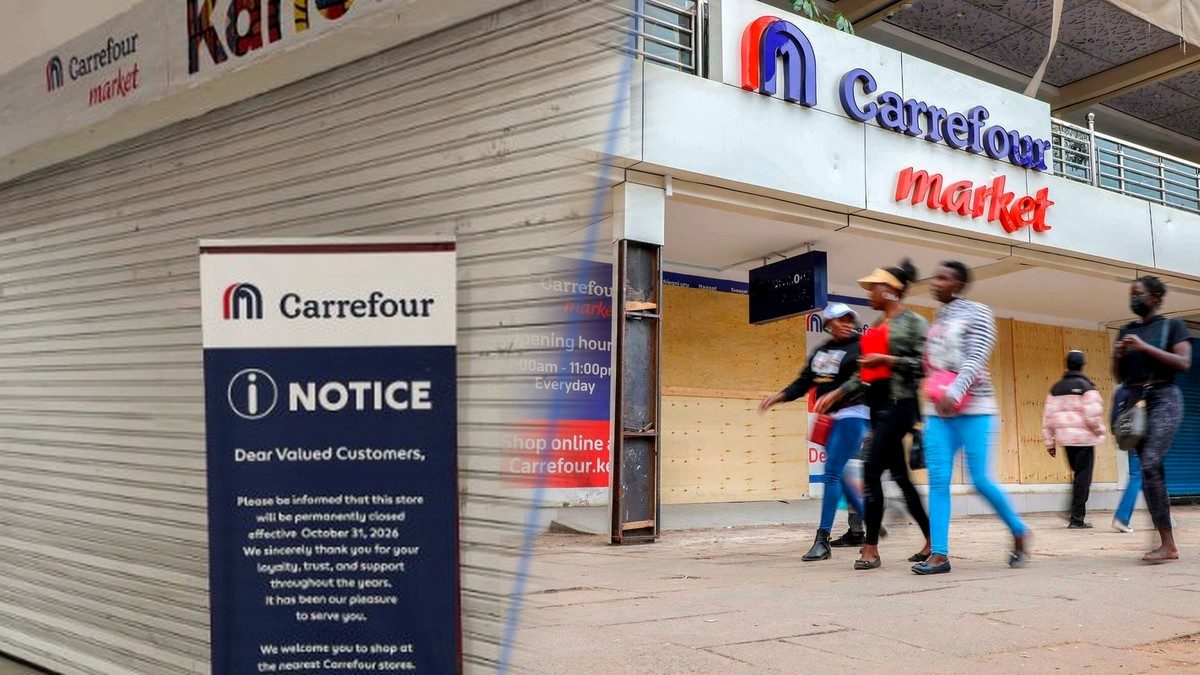
Carrefour pulls down the shutters at Comet House, its first Nairobi CBD store, four years after opening

KTDA board ousts Enos Njeru after eight months as Murang'a director James Mwangi is elected chairman

Global Community Remarks
0