
Limuru and Karatina farmers turn to sandbags and grass to shield soil from rains
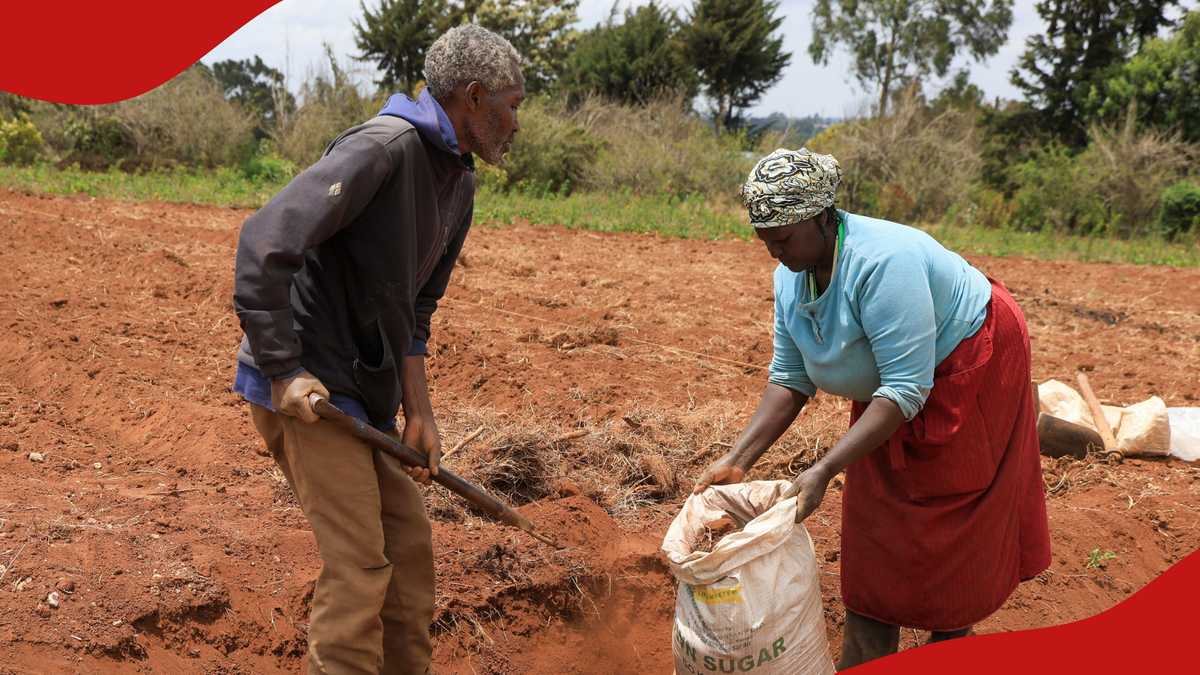
Smallholder farmers in Limuru and Karatina are turning to cheap, simple methods to keep their soil and crops from washing away as the country prepares for this season's rains, which Tuko describes as forecast El Niño rains.
The farmers are using sand-filled sacks, shallow trenches, Napier grass and bamboo to slow runoff. Many are still recovering from the 2024 floods, which killed more than 230 people and stripped fertile topsoil from farmland across Kenya, according to Tuko, citing a report by The Associated Press.
Counting the cost of 2024
In Limuru, Kiambu County, Elizabeth Itotia farms five acres on a slope. She estimates the 2024 rains destroyed about KSh 200,000 worth of her produce, including kale, spinach, cabbage, potatoes and indigenous vegetables.
The water also carried away her nutrient-rich topsoil. Her family then had to bring in soil from other farms, adding to their costs and workload.
This season, Itotia has planted Napier grass and bamboo along the parts of her farm most prone to erosion, relying on the plants' roots to hold the soil in place. She has also laid sandbags inside shallow trenches to slow water flowing across the surface. Her neighbour, Esther Njoki, is using a similar approach.
Coffee farmers also affected
In Karatina, Nyeri County, coffee farmer Moses Muhoro is digging trenches and filling sacks with soil to limit runoff. The 2024 floods washed away the productive topsoil on his land, and his coffee yields dropped the following season.
Muhoro said many farmers in the area suffer losses that could have been avoided, because useful information reaches them too late.
What experts recommend
Samuel Munyiri, an agronomist at Osho Chemical Industries, said the sandbag method does reduce losses from runoff, especially where small erosion channels have already begun to form.
For longer-term protection, he advised farmers to consider:
- Terracing sloping land
- Building gabions
- Contour planting
- Using cover crops
He also urged farmers to move towards crops that can cope with long periods of wet conditions, citing maize, wheat and barley.
Harvest timing raises aflatoxin risk
The timing of the rains is a particular concern because the short rains coincide with the maize harvest. Maize planted during the long rains is usually harvested just as the short rains start.
If the grain is too wet and cannot dry properly at that stage, the risk of aflatoxin contamination rises, according to the report.
November expected to be the peak
David Koros, assistant director of forecasting at the Kenya Meteorological Department, said November is expected to be the wettest month of the season.
He said above-average rainfall is likely along the coast, in the northeastern and southeastern lowlands, in eastern Kenya, in parts of Nairobi, in western Kenya and in the Rift Valley.
Western Kenya and the Rift Valley are among the country's main food-producing regions, meaning heavy losses there could affect national food security, Tuko reported.
For farmers like Itotia and Muhoro, the low-cost measures are an attempt to avoid a repeat of the damage they suffered two seasons ago.
This story was prepared by the Hamasta Newsdesk with AI assistance, based on reporting by Tuko. Read the original report. Photo: Tuko.


Take your event live to thousands.
Multi-camera live streams, panel discussions and digital broadcasts with professional crews.




More in Environment
See all
William and Kate name Bhutan among five Earthshot Prize winners in Mumbai

Nairobi's 'Green City in the Sun' title at risk as construction boom fells trees

COP31 draft deal exposes rifts as fight over IPCC report timing deepens

Green Belt Movement Rejects Plan for Crematorium at Nairobi City Park
Kenya Met: Rain expected in 36 counties as north braces for heat above 35°C
Global Community Remarks
0