
Canada and China agree new tariff cuts as both look to reduce reliance on US
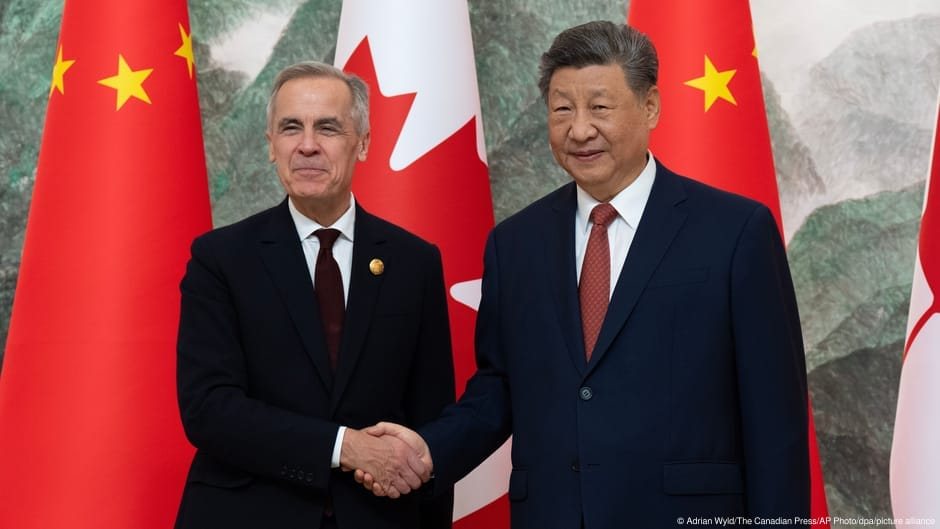
Canada and China have agreed to further reduce tariffs on a range of goods, deepening a thaw in relations that has gathered pace as both countries try to lessen their economic dependence on the United States, according to DW News.
The agreements followed talks between Canadian Prime Minister Mark Carney and Chinese President Xi Jinping held ahead of the Asia-Pacific Economic Cooperation (APEC) summit in Shenzhen. Ottawa announced the outcome on Tuesday.
What each side has agreed
Under the arrangement described in a Canadian government statement, Beijing will lower tariffs on Canadian pork, as well as fish and seafood.
In return, Canada will extend its existing tariff exemptions on Chinese steel and aluminium for a further two years.
Beyond trade in goods, the two leaders committed to closer cooperation on economic and financial matters. They also agreed to work together on education and environmental protection.
Leaders upbeat on ties
Carney welcomed what he described as greater predictability and stability in Canada's relationship with China. He said Canada had moved faster than expected towards its target of raising exports to China by 50% before the end of the decade.
Xi struck a similarly positive tone. He said cooperation between the two countries would "benefit not only our two countries but also Asia-Pacific and the world," DW News reported.
Building on January deal
The Shenzhen agreements build on commitments the two leaders made during talks in Beijing in January, when they first signalled their intention to strengthen bilateral ties.
That earlier deal provided for lower tariffs on Canadian agricultural products, while Chinese electric vehicles were given easier access to the Canadian market.
The steady rapprochement marks a shift after years of strained relations between Ottawa and Beijing. According to DW News, trade tensions with Washington have pushed both governments to look for ways to cut their reliance on the US.
Concerns at home
The warming ties have not been universally welcomed in Canada. Critics argue that drawing closer to Beijing poses risks to the country's security and values.
Among the concerns is the assessment by Canadian intelligence that China interfered in at least two federal elections. Beijing denies the allegation.
Why it matters
The latest agreement highlights how trade frictions with the United States are reshaping relationships among other major economies. For Canada, a close US neighbour and trading partner, diversifying export markets has become a stated priority, with China emerging as a key target.
For Beijing, closer economic links with a Western, G7 economy offer an opportunity to broaden its partnerships at a time of tension with Washington.
How far the relationship develops is likely to depend on whether Ottawa can balance its trade ambitions with the security concerns raised by its critics at home.
This story was prepared by the Hamasta Newsdesk with AI assistance, based on reporting by DW News. Read the original report. Photo: DW News.



Know what people say about you.
Media monitoring, audience insights and strategic communication for your brand.


More in International
See all
Chivayo helicopter crash: Report says aircraft flew into fog, no mechanical fault found
Mongolia's President Khurelsukh to resign over railway corruption claims
Botswana's Boko and Ivory Coast's Ouattara sign mining, energy and trade deals

Ukraine says Russia is targeting rescuers after 'double-tap' strike killed 72

Muhoozi back on X, warns media of 10-year jail terms over criticism of Museveni

Global Community Remarks
0