
Murkomen Studies Italian Policing Tech as Kenya, Italy Sign Security Pact
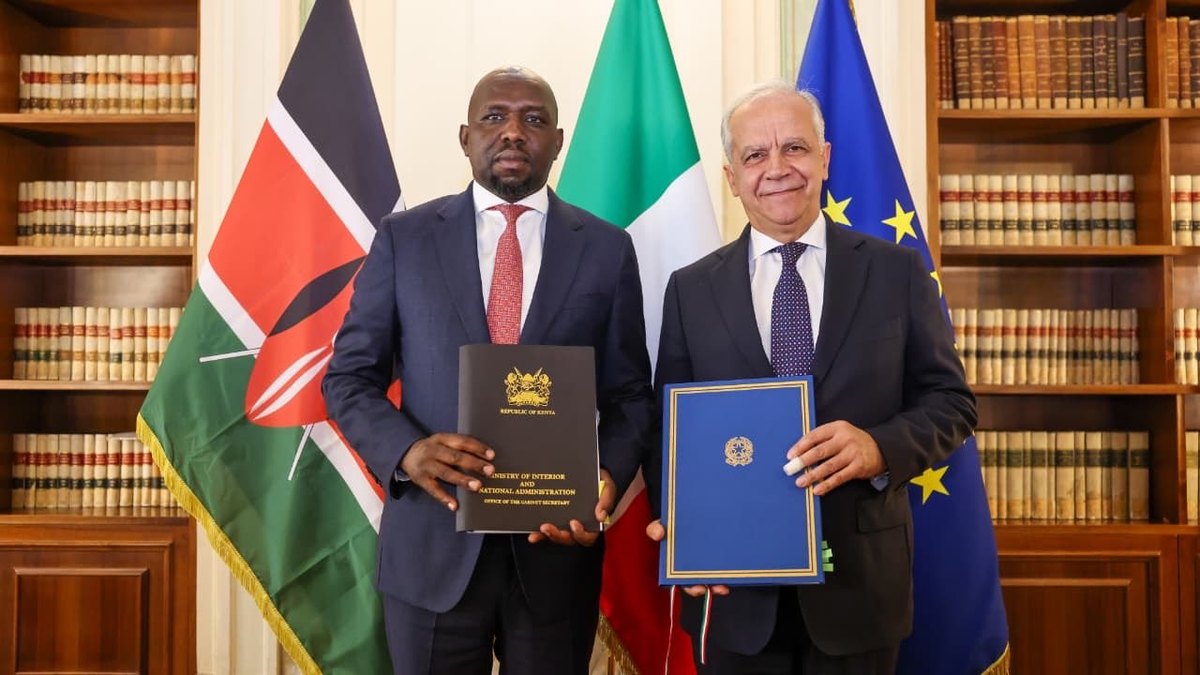
Interior Cabinet Secretary Kipchumba Murkomen has toured Italy's police operations and control centre in Rome as Kenya looks abroad for ideas on how technology, intelligence and real-time surveillance can support its police reform agenda, according to allAfrica Kenya.
The visit was paired with bilateral security talks between Mr Murkomen and Italian Interior Minister Matteo Piantedosi, which ended with the two countries signing a security cooperation agreement.
Inside the Questura di Roma
During his stop at the Questura di Roma, the CS examined how Italian security agencies combine surveillance systems with intelligence to coordinate police operations and respond to security incidents, the report, first carried by Capital FM, said.
Mr Murkomen said Kenya was eager to learn from Italy's experience as the government pushes ahead with efforts to modernise its policing systems, improve operational efficiency and advance wider police reforms.
The focus on integrated, technology-driven command and control reflects the kind of capabilities the ministry is seeking to build as it reshapes how security agencies plan and carry out their work.
What the agreement covers
The security pact signed by the two ministers sets out several areas of collaboration between Nairobi and Rome. According to the report, these include:
- Intelligence sharing between security agencies
- Specialised training for officers
- Technical assistance
- The use of technology to tackle contemporary security threats
Beyond those areas, Kenya and Italy committed to deepening cooperation against a range of threats, namely terrorism, organised crime, drug trafficking, human trafficking, cybercrime and maritime insecurity.
Sovereignty and rights safeguards
Mr Murkomen said the partnership would be carried out within the framework of national sovereignty, constitutional principles and the rule of law, and with respect for fundamental human rights.
The assurance is likely to be closely watched at home, where questions about how security agencies operate and how surveillance tools are used have featured in public debate on policing.
What next
The report did not give a timeline for rolling out the measures in the agreement, nor did it set out any specific systems or equipment Kenya intends to adopt following the visit.
It also did not indicate the cost of any planned upgrades or which Kenyan agencies would lead the implementation of the various areas of cooperation.
However, the deal places Italy among the partners Kenya is engaging as it seeks to strengthen its capacity to deal with both traditional and emerging threats, from organised crime networks to offences committed online and at sea.
The Rome visit underlines the government's stated aim of using international partnerships to support the modernisation of policing, with the Interior Ministry signalling that lessons from abroad will inform the next phase of reforms.
This story was prepared by the Hamasta Newsdesk with AI assistance, based on reporting by allAfrica Kenya. Read the original report.
Photo: KBC.

Tell your story on screen.
Commercials, documentaries, interviews and social video, from script to final cut.





More in Politics
See all
Ruto Receives Global PR Lifetime Achievement Award at Ceremony in Abuja

State moves against use of children's images in online fundraising appeals

ODM MP Samuel Atandi dismisses TIFA poll placing Sifuna level with Ruto

Nairobi County Uses Bank Overdraft to Clear Staff Salaries, Controller of Budget Says

Kindiki receives charter for nationwide war on illicit alcohol and drugs

Global Community Remarks
0