
Europe bets €400m on light-based photonic chips to win next tech race
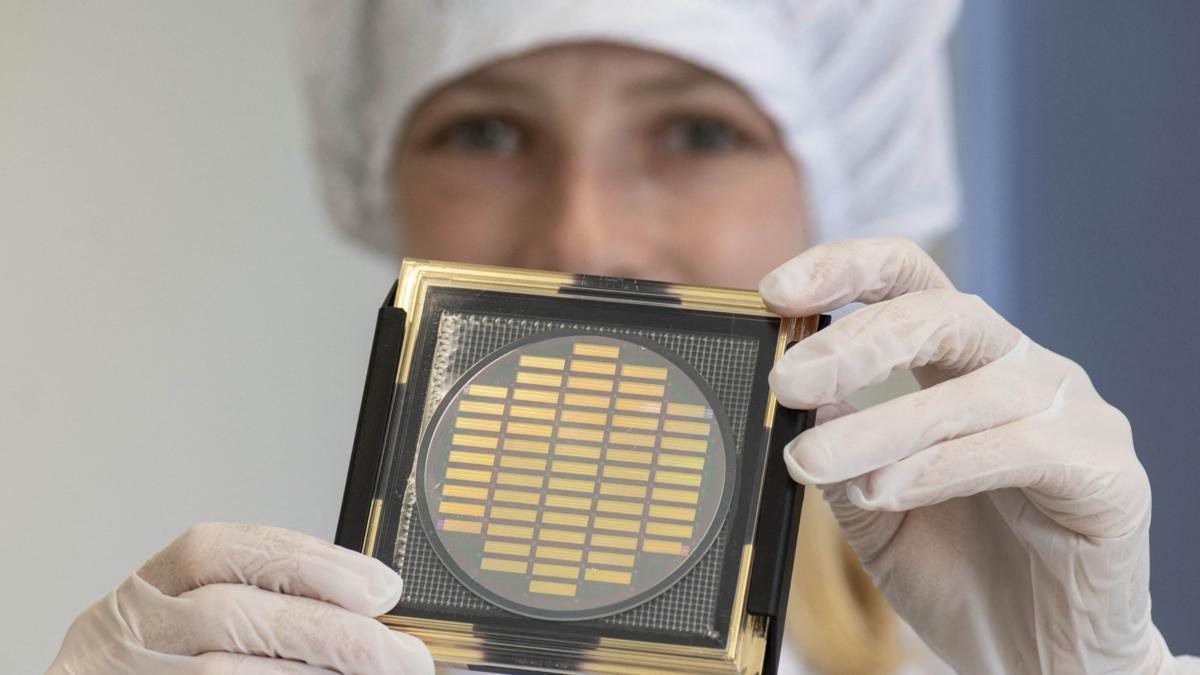
Europe is pouring hundreds of millions of euros into an emerging class of computer chips that use light instead of electricity, hoping to claim leadership in a technology that could underpin future data, telecom and artificial intelligence (AI) systems, according to BBC Business.
The European Union has committed €400m to a project called PIX Europe, whose stated aim is to make the continent a global leader in photonic integrated chips. The Dutch government and the Dutch research institute TNO are also backing the effort.
Why photonic chips matter
Most chips in use today, from those in phones and televisions to the processors in large data centres serving AI demand, are electrical. They work by moving electrons through tiny circuits, with a single modern chip able to hold billions of transistors.
Photonic chips instead use light. BBC Business reports that this makes them faster and more energy-efficient, and that they produce less heat than conventional chips.
Ton van Mol of TNO, who leads a key part of the programme, believes the technology is close to a turning point. He told BBC Business that optical chips are roughly where electronic chips stood some 40 to 50 years ago, and he hopes for a similar acceleration in development.
A factory in Eindhoven
Van Mol's team is building a 10,000 square-metre facility on the High Tech Campus in the Dutch city of Eindhoven to produce six-inch indium phosphide wafers. Photonic chip production worldwide currently relies on four-inch wafers, and larger wafers allow factories to make chips more efficiently.
The plant is expected to open fully in 2030. Van Mol said the aim is to achieve a stable, high-yield process by then before opening the pilot line to industrial partners for commercial production.
The project is part of the European Chips Act, which van Mol said was introduced because Europe could no longer rely on manufacturing in the United States or China. American, Taiwanese and Chinese firms currently dominate the global chip industry.
The facility will operate as a foundry, meaning businesses in Europe and elsewhere can design and build chips there without setting up their own costly plants. "There's no intention to have our own product," van Mol said. BBC Business notes this is the same model that helped Taiwan's TSMC dominate microchip manufacturing.
ASML's role
The site sits close to the headquarters of ASML, the Netherlands-based firm that is the only company in the world able to build the machines needed for the most advanced semiconductors. Its equipment will be central to the pilot line, as photonic chips are made using methods similar to those for electronic chips.
Stanislas Baron, head of ASML's EU/US customer team, said Europe was strong in photonics research and that the challenge now was scaling innovations up to industrial manufacturing.
Former ASML chief executive Peter Wennink, who wrote a report for the Dutch government projecting that the photonics market could grow 10 to 20 times over the next decade, has described the pilot line as a launchpad for Europe's future digital economy.
Global competition
Europe is not alone. In June, US firm Coherent announced what it called the world's first and largest volume-production six-inch indium phosphide platform at its plant in Sherman, Texas, backed by Nvidia and $50m in public funds under the US Chips Act.
Joris Teer, a policy analyst at the European Institute for Security Studies, told BBC Business that high energy and labour costs, skills shortages and limited capital make broad reindustrialisation impossible for Europe. He argued the continent should instead focus on ensuring others depend on European suppliers.
Photonic chips are already used in specialised areas such as data centres and Lidar sensors. Van Mol hopes scaling up production will bring them into phones, laptops, medical scanners and 6G communications, saying the chips could become "the backbone of all data and telecom".
This story was prepared by the Hamasta Newsdesk with AI assistance, based on reporting by BBC Business. Read the original report. Photo: BBC Business.
Every moment, captured beautifully.
Events, corporate portraits, products and editorial shoots by our newsroom photographers.





More in Technology
See all
AI helps uncover critical decade-old security flaw in Java programming language

Waymo halts driverless taxi rides on all US freeways after California ban

Kenya and EU conclude talks on landmark data protection adequacy deal

Kenya's Data Commissioner Immaculate Kassait Wins Global Buttarelli Privacy Award
Voyager 1 becomes first human-made object to sit a full light-day from Earth
Global Community Remarks
0