
World Court set to rule on The Gambia's Rohingya genocide case against Myanmar
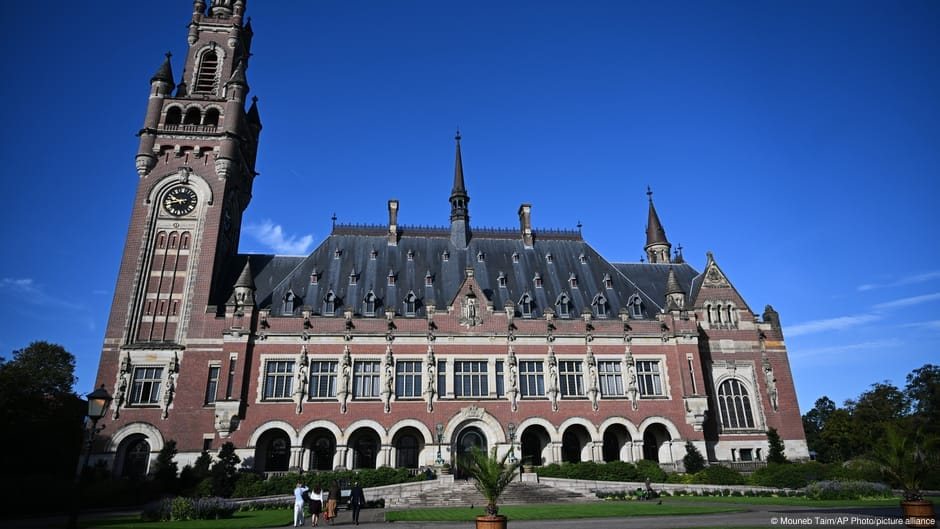
The International Court of Justice (ICJ) is due on Thursday to deliver its judgment in the genocide case brought by The Gambia against Myanmar over the treatment of the Rohingya minority, according to DW News.
The ruling comes seven years after the West African nation filed the case in The Hague in November 2019, accusing Myanmar of violating its obligations under the 1948 UN Genocide Convention. It will be the first verdict from any court among several cases filed worldwide over Myanmar's treatment of the Rohingya.
The allegations
The Gambia contends that Myanmar's security forces carried out a deliberate campaign of killings, rape and arson in Rakhine State between 2016 and 2017, with the aim of destroying the mostly Muslim Rohingya in whole or in part.
A UN fact-finding mission later estimated that around 10,000 people were likely killed. Some 700,000 Rohingya fled into neighbouring Bangladesh, where most remain in what is described as the world's largest refugee settlement.
The Rohingya had faced decades of persecution in the Buddhist-majority country before the violence, with most denied citizenship and many confined to camps.
Myanmar's defence
Myanmar maintains that its operations were a legitimate counterinsurgency and counterterrorism response. Days before the heaviest military action in August 2017, the Arakan Rohingya Salvation Army attacked more than 30 police posts, killing several officers.
The Gambia argues that an operation can be both counterinsurgency and genocide, and points to sexual violence and the killing of children as evidence of genocidal intent.
Michael Becker, an associate professor of international human rights law at Trinity College Dublin and a former ICJ legal officer, told DW News that such atrocities are difficult to reconcile with Myanmar's stated purpose.
A long legal road
In December 2019, Aung San Suu Kyi, then Myanmar's de facto civilian leader, travelled to The Hague to dispute the allegations, a move that damaged her standing as a human rights figure.
In 2020, the court ordered emergency provisional measures requiring Myanmar to prevent acts of genocide, an order rights groups say has been ignored. The military seized power the following year, detaining Suu Kyi and triggering a civil war that is still under way.
The ICJ rejected Myanmar's objections to its jurisdiction and to The Gambia's standing in 2022, and held 14 days of hearings in January.
Wider implications
Melanie O'Brien, an international law professor at the University of Western Australia, said the judgment could be complex because the court may find against Myanmar on some provisions of the convention and in its favour on others.
Both experts said the case offers the court a chance to clarify how it weighs indirect evidence of intent. Investigators were barred from Rakhine and relied on testimony from those who fled and on UN and other reports.
The outcome could shape other genocide cases before the ICJ, including those between the Democratic Republic of Congo and Rwanda, South Africa and Israel, and Ukraine and Russia. A genocide finding could also strengthen a pending request at the International Criminal Court for an arrest warrant against coup leader Min Aung Hlaing.
Enforcement, however, is uncertain. Any reparations order would fall to the UN Security Council, where Myanmar's allies China and Russia hold veto power.
Rohingya activist Aung Kyaw Moe, whose family fled the violence, told DW News that expectations in the community are high.
"International venues were the only hope," he said.
He added that he remains hopeful of eventual compensation, reparations and transitional justice for his people.
This story was prepared by the Hamasta Newsdesk with AI assistance, based on reporting by DW News. Read the original report. Photo: DW News.


Grow an audience that listens.
Social media management, digital campaigns and online storytelling that converts.



More in International
See all
Senegal's ruling party Pastef expels President Faye and 31 others
Five EU states plan Rwanda deportation hub as critics warn of rights 'black hole'
Trump greets Putin and Xi in Shenzhen ahead of first three-way summit

UK Sets Aside 42,900 Seasonal Work Visas for 2027: What Kenyan Applicants Need
Sudan war trauma fuels surge in drug addiction among young people
Global Community Remarks
0