
Over 11,000 migrants reach Spain's Canary Islands in first half of November
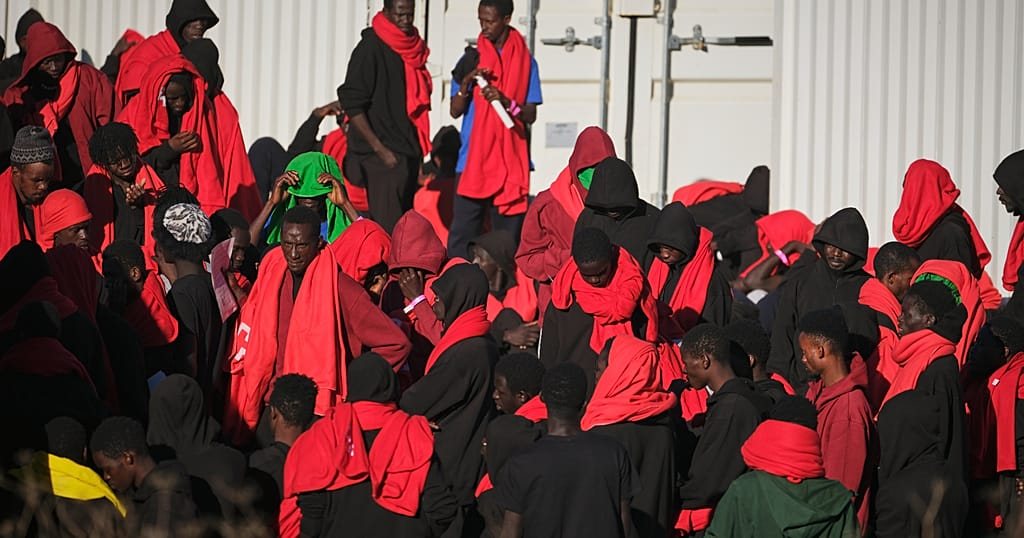
More than 11,000 migrants reached Spain's Canary Islands in the first 15 days of November, a record surge that is overwhelming reception centres and emergency services on the Atlantic archipelago, according to Spanish government figures reported by Africanews.
The arrivals in just over two weeks amount to more than half of the total recorded for the whole of 2025, the figures show.
Most of those arriving come from West Africa. A Red Cross spokesperson said the majority are from Senegal, Gambia, Mali and Guinea, and are escaping poverty and conflict in search of a better life in Europe.
Emergency declared
Madrid declared a migration emergency in the Canary Islands on 10 November and set aside extra money to increase capacity at state-run reception centres, Africanews reported.
Authorities are nevertheless struggling to keep up with the scale of arrivals. Regional officials have repeatedly warned that the islands lack the space and resources to receive so many people, and have pointed to particular difficulties on some of the smaller islands.
On a number of those islands, the number of migrants arriving has matched or even exceeded the size of the local population, according to the report.
A dangerous Atlantic route
The Canary Islands, which lie off the north-west coast of Africa, are one of the main gateways into Europe for migrants, mostly from West and North Africa.
Many make the journey across the Atlantic Ocean in makeshift boats, a crossing widely regarded as one of the most dangerous migration routes. The open ocean, strong currents and long distances involved leave little margin for error for overcrowded vessels.
The route is especially significant for people leaving countries along the West African coast such as Senegal and Gambia, from where boats set out towards the Spanish archipelago.
Political pressure on Sánchez
The sudden jump in arrivals has become one of the dominant issues in Spain in the run-up to general elections scheduled for 29 November, according to Africanews.
Prime Minister Pedro Sánchez, who leads the Socialist Party, has faced heavy criticism from conservative politicians over what they describe as his government's immigration-friendly policies.
The pressure on the islands is likely to remain a central theme of the campaign as voters weigh how the government has handled the crisis and the response of regional authorities, who have long called for more support from the central government.
What comes next
The additional funds earmarked under the emergency declaration are intended to expand the number of places available at state reception centres. However, regional authorities' repeated warnings suggest the strain on facilities and emergency services is far from resolved.
For many African families, the figures are a reminder of the conditions driving young people to risk the perilous sea journey. The Red Cross noted that poverty and conflict in countries of origin remain the main factors pushing people to leave.
Spanish officials have not indicated, in the figures reported, whether the pace of arrivals is expected to slow in the second half of November.
This story was prepared by the Hamasta Newsdesk with AI assistance, based on reporting by Africanews. Read the original report. Photo: Africanews.



Know what people say about you.
Media monitoring, audience insights and strategic communication for your brand.


More in International
See all
Ghana's KSh 7.8b Falcon 6X presidential jet for Mahama sparks political row

Riyadh's PIF Tower damaged as Saudi Arabia reports fresh Houthi missile attacks

Tanzania's New KSh 6.1b Ferry MV Mwanza Hits Rock on Lake Victoria During Trials
IEA: Hormuz crisis is the biggest threat to global energy security on record

Miami jury convicts Haitian-American pastor over 2021 killing of President Moise

Global Community Remarks
0