
KRA explains how factories can issue eTIMS invoices on behalf of small-scale farmers
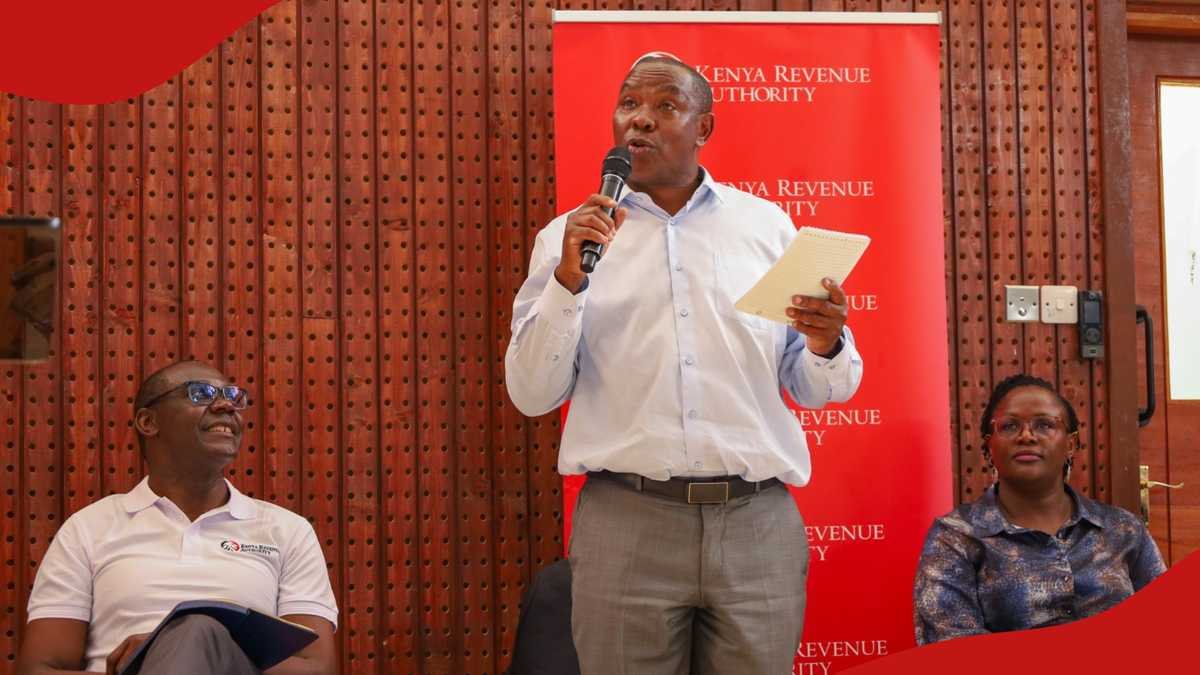
Small-scale farmers will not need to run their own electronic invoicing systems to comply with tax rules, after the Kenya Revenue Authority (KRA) outlined a reverse invoicing arrangement that lets factories and other produce buyers generate eTIMS invoices on their behalf, according to Tuko.
KRA Commissioner for Micro and Small Taxpayers George Obell explained the arrangement at the KRA Citizen Assembly, a taxpayer town hall held at Murang'a University on Tuesday, November 17.
Obell said the system is meant to solve a long-running problem in agricultural supply chains, where large processors buy from many smallholder suppliers who often lack the equipment, internet access or technical skills to issue eTIMS invoices themselves.
How reverse invoicing works
Under the arrangement, an approved buyer, such as a dairy processor, records the transaction directly in eTIMS, including the quantity of produce received and the agreed price.
A milk processor buying from smallholder farmers, for example, can generate an invoice for each delivery without every farmer having to operate a separate invoicing system.
Buyers also stand to gain, as the invoices count as valid documentation to support expense claims when they file their tax returns.
Safeguards for farmers
KRA has set several conditions before buyers can use the system:
- Buyers must complete a Know Your Customer process and receive explicit approval from the authority.
- Farmers must give informed consent before any invoice is raised in their name.
- Farmers receive an SMS or email notification every time a transaction is recorded.
- Buyers must capture the farmer's KRA PIN, the quantity supplied and the transaction price, and keep a full audit trail.
- Buyers must bear the operational costs of the reverse invoicing function and cannot pass them on to farmers.
Farmers can also track and validate the invoices raised in their name through their own eTIMS dashboard.
Not an entirely new system
Reverse invoicing was first introduced by KRA on December 27, 2024. At the time, it captured transactions worth KSh 800 million, with about 800 buyers using it to generate roughly 4,500 invoices for small suppliers.
The fresh push follows a KRA public notice issued on November 10, 2025, which confirmed that from January 1, 2026, income and expenses declared in tax returns would be checked against eTIMS records.
That requirement left businesses that buy produce from farmers in a difficult position, since many of those farmers could not issue compliant electronic invoices, leaving a gap in the paperwork needed to back up expense claims.
Part of a wider compliance drive
KRA presents reverse invoicing as one of several tools aimed at bringing informal and small-scale suppliers into the electronic tax system. Others include eTIMS Lite services, which can be accessed through eCitizen and USSD.
Obell urged farmers who face challenges with the process to visit KRA offices or contact the authority through its official communication channels for help.
Agriculture remains a major source of livelihoods in Kenya, and many farmers sell produce such as milk, tea and coffee to processors, making the arrangement relevant to a large number of rural suppliers.
This story was prepared by the Hamasta Newsdesk with AI assistance, based on reporting by Tuko. Read the original report. Photo: Tuko.




Show the impact of your work.
Impact stories, campaign videos and community engagement for NGOs and programmes.

More in Business
See all.jpeg)
StanChart Kenya pre-tax profit climbs 13pc to Sh14.9bn as fee income offsets rate squeeze
Oparanya urges Kisii, Nyamira cooperatives to tap climate finance to cut costs

Jambojet cuts fuel costs by 16% using flight data and single-engine taxiing
Stanbic Bank Kenya nine-month profit rises 10pc to Sh10.32bn
US-Linked Consortium Picked for Ksh8 Trillion Mrima Hill Project as Joho Sets Conditions
Global Community Remarks
0