
NASA's Voyager 1 reaches one light-day from Earth, a first for any human-made object
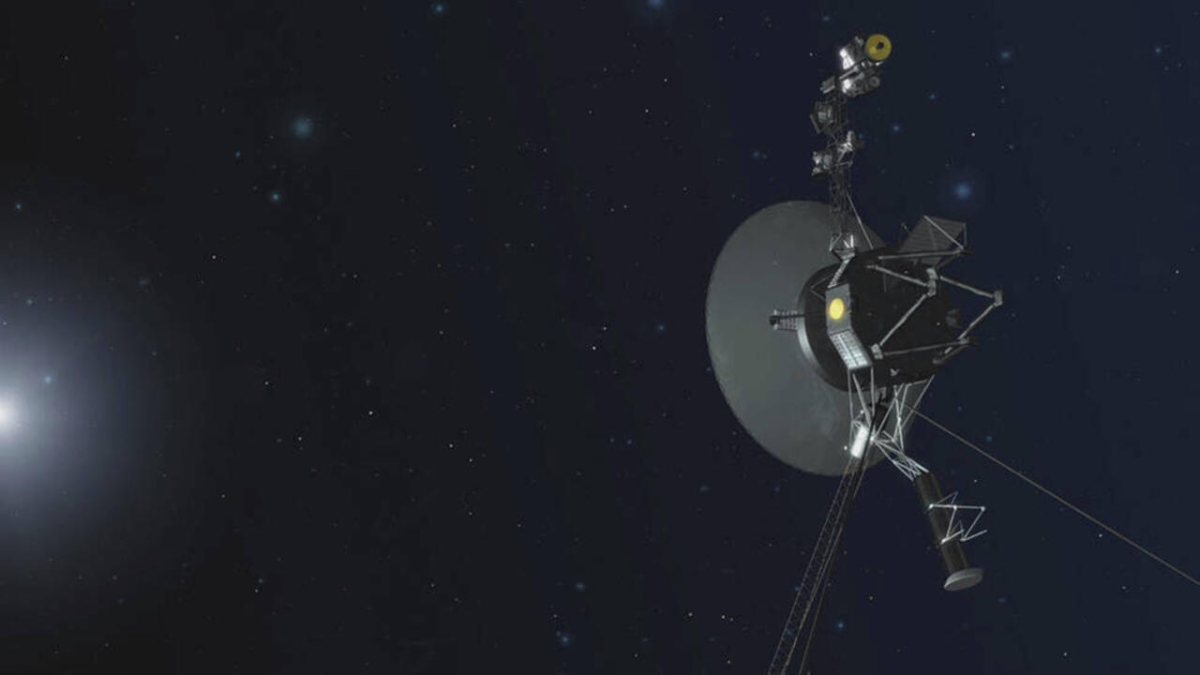
NASA's Voyager 1 spacecraft has become the first human-made object to travel one light-day from Earth, a distance of more than 26 billion kilometres, according to France 24.
Flight controllers received a call from the probe on Thursday, exactly 24 hours after the radio signal left the spacecraft. That is the time it takes light, the fastest thing in the universe, to cover the gap between the probe and our planet.
The milestone comes almost half a century after Voyager 1 was launched in 1977, and places it deeper in interstellar space than anything humanity has ever built.
A 'singular feat'
NASA officials hailed the achievement in statements reported by France 24. Joe Westlake, director of the agency's heliophysics division, described travelling a light-day as "a singular feat for a spacecraft", adding that Voyager was much more than a distant traveller.
Dave Gallagher, director of the Jet Propulsion Laboratory (JPL) in California, which runs the mission, called the crossing another historic moment in what he described as an extraordinary voyage of discovery.
The space agency could not formally confirm the record until the signal arrived at JPL. Even so, NASA marked the occasion a day early on social media, wishing followers a happy "Voyager light-day".
Data flow interrupted
The celebration has been tempered by a technical concern. According to NASA, no science or engineering data have reached Earth from Voyager 1 since Saturday.
However, the probe's carrier signal, which normally carries that data, continued to arrive. Together with calculations of the spacecraft's flight path, that signal allowed the team to confirm the light-day milestone. Controllers are now working to establish why the stream of data stopped.
Decades of firsts
Voyager 1 has repeatedly made history since leaving Earth. Its key milestones include:
- Flying past Jupiter in 1979 and Saturn in 1980
- Capturing the famous "Pale Blue Dot" image of Earth in 1990, the most distant photograph ever taken of our planet
- Becoming the most distant human-made object in 1998
- Leaving the sun's sphere of influence and entering interstellar space in 2012
Voyager 1 and its twin, Voyager 2, are NASA's longest-running space missions. Both are still sending back data, although most of their instruments have been switched off to conserve power and extend their lives. They stopped taking pictures long ago but typically return small amounts of valuable data on their unexplored surroundings almost every day.
Powered by plutonium, both probes are moving through space at about 61,000 kilometres per hour.
The slower twin
Voyager 2 actually launched two weeks before its sibling. But its longer route, which took in Uranus and Neptune as well as Jupiter and Saturn, meant it did not reach interstellar space until 2018. It is not expected to hit the one-light-day mark until 2035.
A message for the cosmos
Each spacecraft carries a Golden Record, a gold-plated phonograph disc loaded with sounds from Earth, intended as a time capsule for anyone or anything that might one day find it. The project was led by the late Cornell University astronomer Carl Sagan, who also coined the phrase "Pale Blue Dot" for Voyager 1's parting view of home.
NASA expects the records to survive for more than a billion years, long after the probes themselves fall silent.
This story was prepared by the Hamasta Newsdesk with AI assistance, based on reporting by France 24. Read the original report. Photo: France 24.



Know what people say about you.
Media monitoring, audience insights and strategic communication for your brand.


More in Technology
See all
Experts at Nairobi forum push for Africa's say in global AI and data rules

Waymo pulls driverless cars off US freeways after California safety ban

Transport Ministry Studies Plan to Convert Petrol and Diesel Cars into EVs

Eldoret innovator Cliff Temba builds automatic page turner for readers with disabilities

AI helps uncover critical decade-old security flaw in Java programming language
Global Community Remarks
0