
PS Ololtuaa urges private schools to partner public ones on AI and standards
The government has asked private schools to work more closely with public institutions and to stick to national education standards, warning that the quality of learning should not depend on the type of school a child attends.
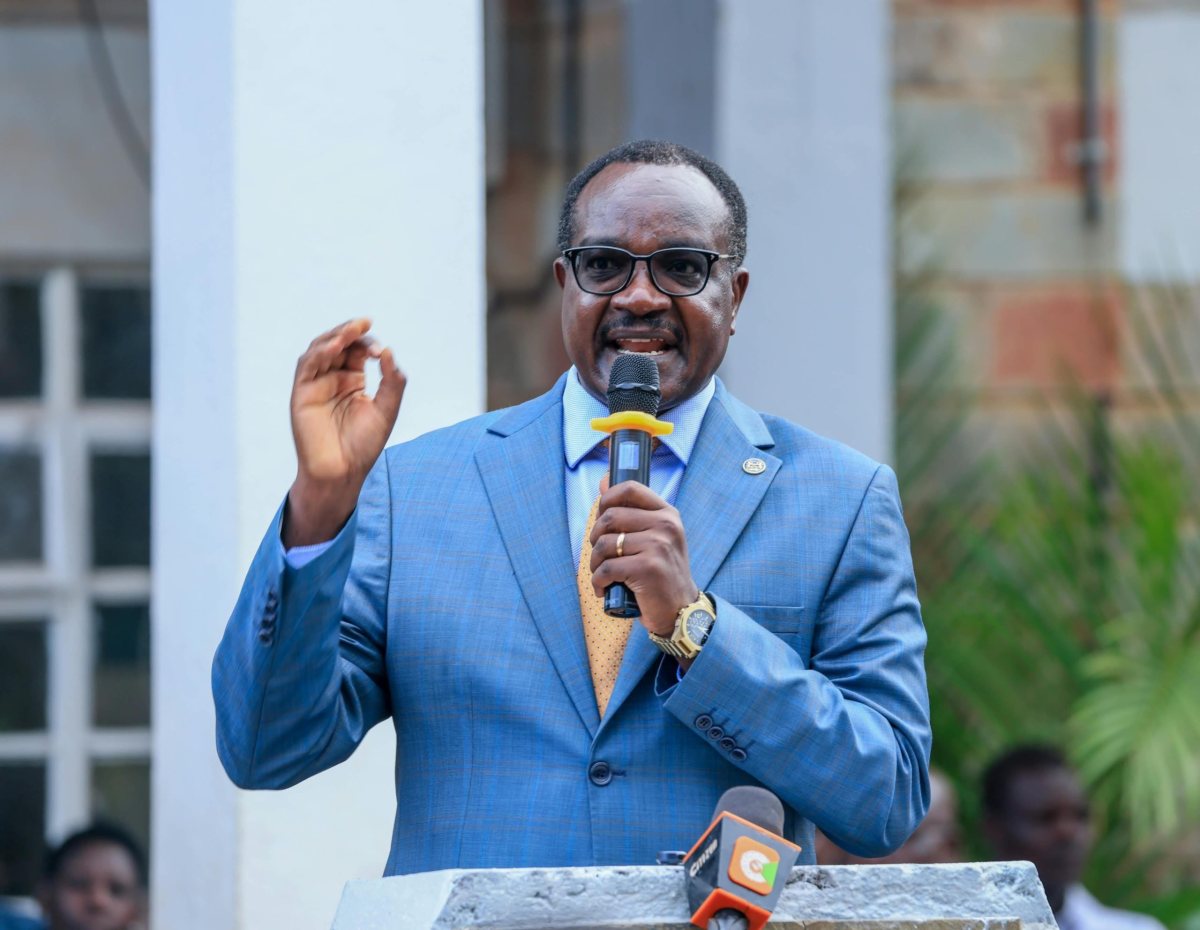
Basic Education Principal Secretary John Ololtuaa said children in both public and private schools were entitled to equal opportunities in accessing quality education, safety and care, according to Nation Kenya.
He was speaking on Friday at the Sarit Expo Centre in Nairobi, where he opened the fifth Private Schools Expo and Conference alongside the second AI Future Makers Workshop.
"In this country, there is no private child and no public child; there are only Kenyan children," Mr Ololtuaa said.
Same curriculum, same standards
The PS noted that learners in public and private schools follow one national curriculum and sit the same national assessments. For that reason, he argued, standards should be uniform across the two sectors.
He described private schools as strategic partners in widening access to education and improving learning outcomes. He urged their owners to share facilities, expertise and best practices with public schools, while meeting national standards and quality assurance requirements.
The expo, organised by Nation Media Group, brought together school owners, teachers, parents, education officials and technology partners to discuss innovation and the use of emerging technologies in learning.
Teachers central to CBE
Mr Ololtuaa's remarks come amid wider debate on the role of private providers in rolling out the competency-based education (CBE) system and in preparing learners for a technology-driven economy.
He said the government remained committed to fully implementing CBE, which aims to identify and nurture individual learners' talents, creativity and practical skills as they move between education levels.
According to the PS, teachers are key to the success of the reforms. He said the government continues to invest in their professional development and asked every school, public or private, to do likewise.
Responsible use of AI
The PS encouraged schools to adopt artificial intelligence and other digital tools, but stressed that this must be done responsibly. He pointed to data protection, online safety, academic integrity and ethics as areas requiring attention as learners use digital tools more often.
He told the gathering that AI should strengthen learners' critical thinking rather than take its place.
Mr Ololtuaa also called for continued investment in digital infrastructure so that new technology does not deepen gaps between learners in well-resourced schools and those in disadvantaged ones.
He said the government regards digital literacy as a key pillar of CBE, building on the Digital Literacy Programme, which introduced learners to digital tools in everyday learning. With AI emerging as the next stage of technological change, he said schools must prepare learners for an economy increasingly driven by innovation.
Beyond the classroom
The PS urged a stronger focus on science, technology, engineering and mathematics (Stem), digital skills, entrepreneurship and financial literacy to help young Kenyans compete at home and abroad.
He also asked schools to give attention to sports, arts and leadership, saying such activities help shape learners' character and life skills. Inclusion and learner wellbeing, he added, should remain at the heart of school life.
Parents were urged to stay involved in their children's learning and to make informed choices on schools and education pathways based on their children's strengths and interests.
Mr Ololtuaa further challenged private schools to keep investing in quality education, innovation and teachers, and asked technology partners to develop digital learning solutions that are affordable and accessible to all children.
This story was prepared by the Hamasta Newsdesk with AI assistance, based on reporting by Nation Kenya. Read the original report.



Know what people say about you.
Media monitoring, audience insights and strategic communication for your brand.


More in Education
See all.jpeg)
KJSEA results due in December, KCSE and KPSEA in January 2027, says CS Ogamba
Chandaria Foundation to spend Sh120m a year on university innovation hubs
Ogamba: Jobless Graduates Will Not Repay Student Loans Under New Funding Model
2026 KCSE exams end as government targets January 2027 for results
KJSEA 2026 results due in December ahead of Grade 10 placement, says CS Ogamba
Global Community Remarks
0