
Tankers struck near Oman as Iran tightens control of Strait of Hormuz
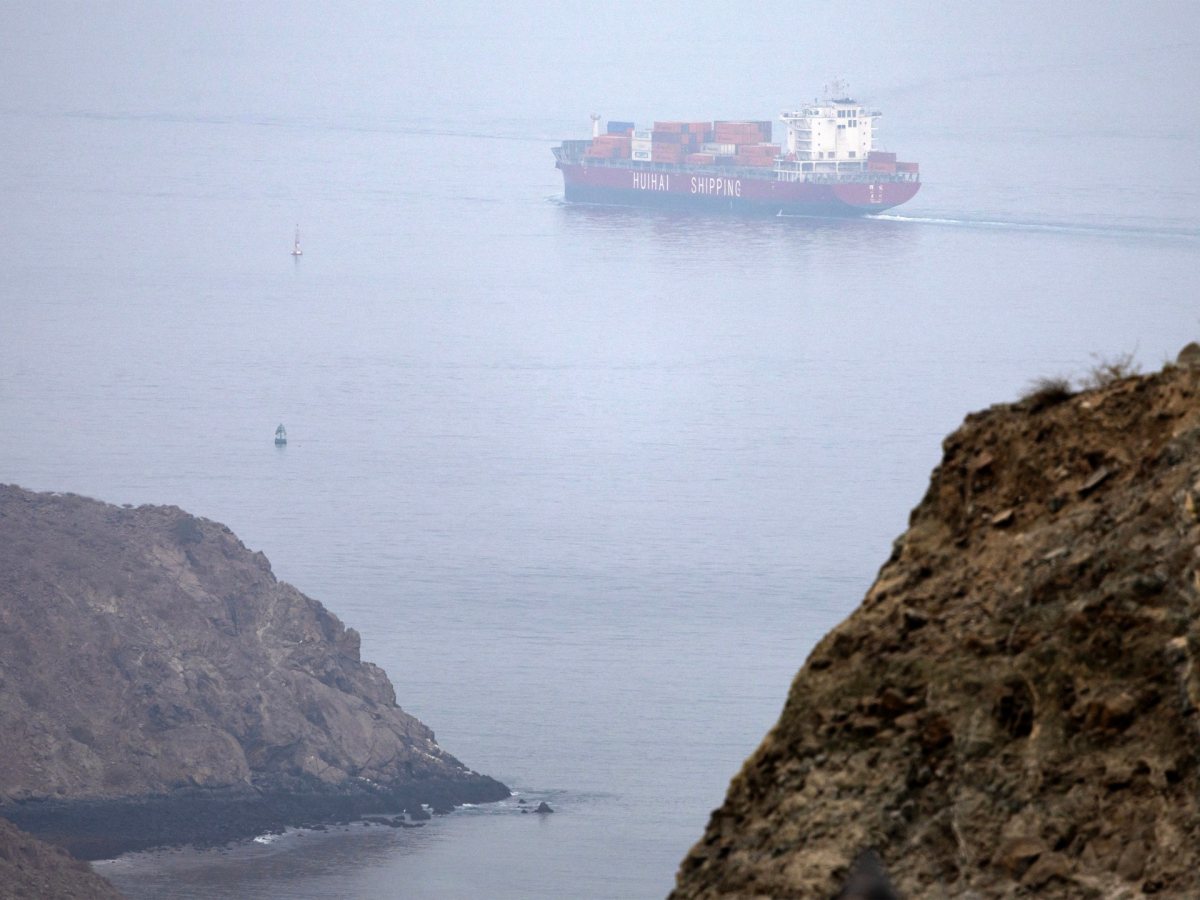
Two incidents involving tankers struck by unidentified projectiles were reported in the Strait of Hormuz on Saturday, as Iran presses ahead with restrictions on shipping through one of the world's most important energy corridors, according to Al Jazeera.
The United Kingdom Maritime Trade Operations (UKMTO) centre, a British agency that tracks threats to commercial vessels, said both incidents took place near Khasab, a port town on Oman's northern coast.
No casualties were reported. It was not clear whether the two reports concerned the same vessel or different ships.
Details of the incidents
According to UKMTO, one tanker was hit at its rear roughly 20km (13 miles) north of Khasab. In the second incident, a tanker was struck in its engine room about 31km (20 miles) east of the town.
Separately, Iran's navy said an oil tanker had caught fire after hitting a naval mine in a restricted area east of the strait. In a statement broadcast on Iranian state television, the navy said the ship had disregarded warnings and was sailing with its identification and navigation systems turned off.
Iran's account could not be independently verified, Al Jazeera reported, and it was unclear whether the burning tanker was linked to either of the incidents flagged by the British agency.
A sharp rise in incidents
The latest reports come amid a war involving Iran, the United States and Israel, which began when Washington and Tel Aviv attacked Iran in late February. Since then, Tehran has moved to tighten its hold on the strait, which carried nearly a fifth of the world's crude oil supplies before the conflict.
Al Jazeera's correspondent in Tehran, Resul Serdar, said incidents involving tankers had risen steeply over the past week. Citing statements from Iran's armed forces, he said about 25 incidents had been recorded since the previous Saturday, an average of roughly three a day, a trend he described as "quite dramatic".
Serdar said Iranian authorities insist the waterway is under their control and that any vessel passing through must coordinate fully with them and follow routes and lanes set by Iran.
Ships that fail to comply, according to the Iranian position relayed by Serdar, risk being attacked or striking sea mines laid by the Islamic Revolutionary Guard Corps (IRGC) or other Iranian forces.
"This is becoming a pattern," Serdar told Al Jazeera.
Message to the world
The correspondent said Tehran appeared to be deliberately escalating tensions to signal that if Iran could not sell its oil abroad, other countries would also be prevented from doing so. He added that Iran was also keen to demonstrate that it remained in command of the narrow passage linking the Gulf to international shipping lanes.
The United States has responded to the Iranian restrictions by blockading Iran's ports and deploying naval vessels to escort tankers through the waterway.
The standoff has heightened fears over the safety of a key route for global energy supplies, with commercial shipping caught in the middle of the contest between Washington and Tehran over access to the strait.
For oil-importing economies, including those in East Africa, disruption along such a major crude route is closely watched because of its potential impact on global fuel supplies.
This story was prepared by the Hamasta Newsdesk with AI assistance, based on reporting by Al Jazeera. Read the original report. Photo: Al Jazeera.

Tell your story on screen.
Commercials, documentaries, interviews and social video, from script to final cut.





More in International
See all
Mexican drug lord on FBI's most wanted list captured after shoot-out in Sinaloa
Iran weighs nuclear doctrine shift as war with US and Israel drags on
Russian missiles hit Zelenskyy's hometown Kryvyi Rih, killing boy, 7, and woman, 20
EU's Costa proposes 3% tax on big tech in slimmer 2028-2034 budget draft

Russian firm linked to Abramovich harvested data from Swedish websites, probe finds
Global Community Remarks
0