
COP31 talks in overtime as new draft deal seeks to rescue climate summit
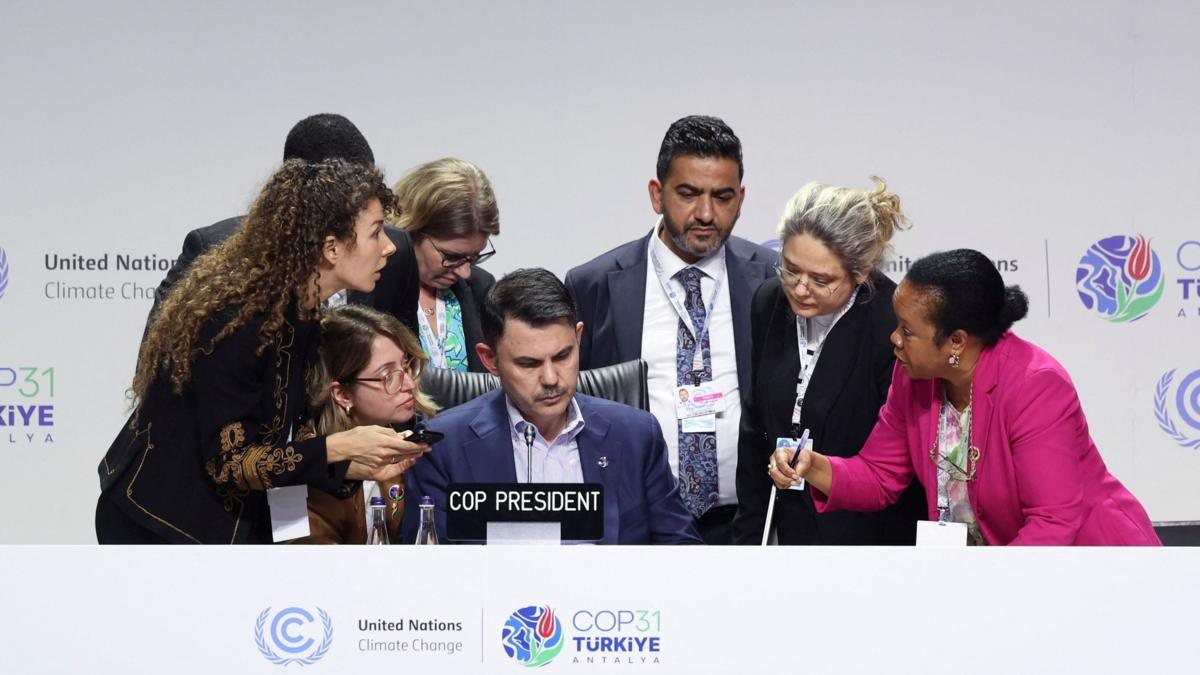
Negotiators at the UN COP31 climate summit in Antalya, Turkey, were due to reconvene on Sunday for a second day of overtime after a new draft agreement was released in a bid to prevent the talks from collapsing, according to BBC News World.
The text, published in the early hours of Sunday by co-hosts Turkey and Australia, is the third version circulated to delegates. Countries were expected to meet at 09:00 local time (06:00 GMT) to decide whether to adopt it.
Fossil fuel language still contested
The latest draft does not explicitly call for "transitioning away from fossil fuels". That gap in the previous version prompted threats of walkouts. However, the new text does recognise a commitment countries made three years ago to move away from fossil fuels.
It also contains, for the first time at a COP, an acknowledgement that the world is on course to miss the Paris Agreement goal of limiting warming to 1.5C. Scientists warn that beyond that threshold, millions more people will face rising seas and extreme heat. The deal is officially known as the Antalya Accords.
An initial draft earlier in the week had called for a quicker phase-out of fossil fuels, but a slimmed-down version released on Thursday removed every mention of coal, oil and gas. The dispute pushed the summit past its original Friday deadline.
The European Union and Saudi Arabia, sharply divided over the future of fossil fuels, were brought together on Saturday to seek a compromise. Ministers from Panama, Solomon Islands, Cote d'Ivoire and the EU had been pressing for fossil fuel commitments to be restored after producers led by Saudi Arabia pushed for their removal.
Panama's environment minister, Juan Carlos Navarro, said it was unacceptable for a COP decision not to mention fossil fuels. Tuvalu's climate minister, Maina Talia, described the issue as a "red line" for the low-lying Pacific nation.
Shortly before the new text emerged, EU Climate Commissioner Wopke Hoekstra warned there would be no deal if the bloc did not secure the climate action it considered necessary. The EU had not yet responded to the latest draft. The UK's chief negotiator, Energy Secretary Miatta Fahnbulleh, sounded more optimistic, saying her team was still working towards an agreement.
France's ecological transition minister, Monique Barbut, criticised references to carbon capture, use and storage, arguing they could give countries licence to keep burning oil and gas. Commitments to the technology have been scaled back in the newest text, which may ease European concerns.
Australia's Climate Change and Energy Minister Chris Bowen, who is leading negotiations, resisted the push for fossil fuel wording, arguing the summit was about implementation and should focus on the shift to clean energy.
Africa's finance demands unmet
The draft is likely to disappoint the Africa Group because it sets no specific figure for adaptation finance, deferring the decision to future meetings. Earlier versions had proposed raising adaptation funding to $120bn by 2035 before the figure was dropped.
Ghana's Environment Minister Zanetor Agyeman Rawlings, who chairs the African Group of negotiators, said the continent had come to claim what was rightfully owed to people bearing the brunt of developed nations' activities, not to beg.
Mohamed Adow of Powershift Africa was blunt. "I can tell you without any doubt that this has been the worst COP ever," he said.
Risk of suspension
COP31 President and Turkish Environment Minister Murat Kurum told delegates he believed outstanding concerns had been addressed, saying parties were "closer than ever" to agreement.
UN climate talks require consensus. If none is reached, negotiations could be suspended until next year, something that has happened only once since COP meetings began in 1995. Some delegations rescheduled Sunday morning flights on Saturday, raising fears that departures could leave too few countries present to pass a deal.
This story was prepared by the Hamasta Newsdesk with AI assistance, based on reporting by BBC News World. Read the original report. Photo: BBC News World.




Show the impact of your work.
Impact stories, campaign videos and community engagement for NGOs and programmes.

More in International
See all
Three dead, 36 missing after fire guts Indonesian candy factory in Banten
Darfur families displaced to Khartoum brace for cold winter as Sudan aid dries up
Displaced Gazans protest as Israeli strikes and demolitions continue near 'Yellow Line'
.jpeg)
Dashcam captures Russian strike on Lviv as barrage kills two, injures at least 10
Nigeria's young voters turn away from the ballot as 2027 election approaches
Global Community Remarks
0