
China and ASEAN miss 2026 target for South China Sea code of conduct
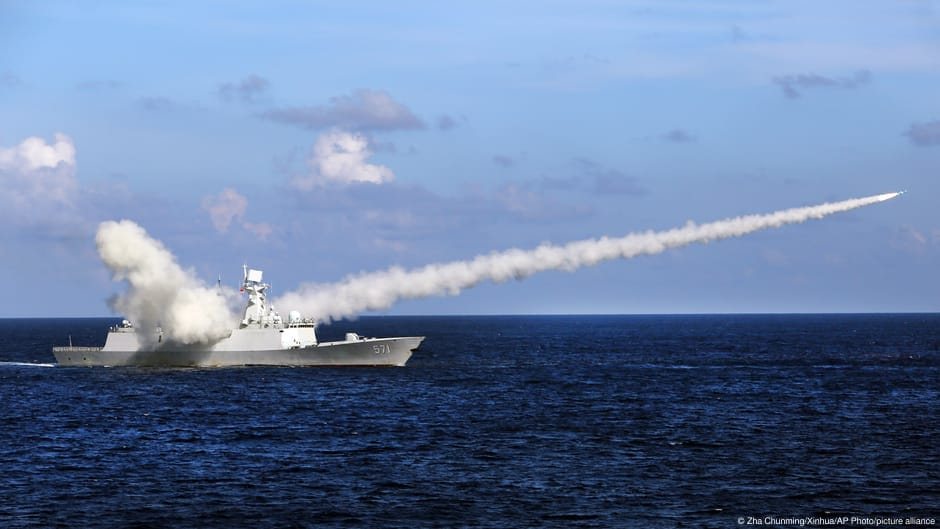
Efforts by China and Southeast Asian nations to agree on rules of behaviour in the South China Sea have fallen short once again. The Philippines was forced to drop its goal of finalising a code of conduct during its 2026 chairmanship of the Association of Southeast Asian Nations (ASEAN), according to DW News.
At the bloc's summit in Manila in mid-November, Philippine Foreign Secretary Theresa Lazaro said about 80% of the text had been negotiated. However, the most contentious issues remained unsettled, and the talks will now move to 2027 under Singapore's chairmanship.
A strategic waterway
The stakes go well beyond diplomatic language. The South China Sea is among the world's busiest shipping lanes, holds rich fishing grounds and may contain substantial oil and gas deposits. It is also an arena of strategic rivalry.
China claims much of the sea through its so-called Nine-Dash Line, a claim that overlaps with those of the Philippines, Vietnam, Malaysia and Brunei. A code of conduct is meant to set ground rules for how the parties deal with each other and to stop incidents at sea from spiralling.
Binding or voluntary?
The central dispute is whether the code should be legally binding. Felix Heiduk, head of the Asia research division at the German Institute for International and Security Affairs (SWP), told DW News there is still no consensus on that question after 12 years of negotiations with little major progress.
Andreas Ufen, a Southeast Asia expert at the German Institute of Global and Area Studies (GIGA), said Beijing has scant reason to restrict itself while it can pursue its interests without an agreement. He suggested China prefers to keep the dispute simmering without tying its hands.
Reservations are not confined to Beijing. Some ASEAN members would have to ratify a binding treaty at home, Ufen noted, while a non-binding code would amount to little more than a statement of intent.
Scope and definitions
Geography is another sticking point. Vietnam reportedly wants the Paracel Islands, which it calls Hoang-Sa and China calls Xisha, included in the code's scope, but China objects. Negotiators also disagree on what counts as an "incident": whether coast guard use of water cannons or blockades of supply vessels qualify, or only the use of military force.
Heiduk said such questions largely determine whether the code would be effective or remain only a declaration of intent.
A divided bloc
ASEAN's 11 members are far from united. The Philippines and Vietnam are the most outspoken critics of China, Malaysia and Indonesia take a more cautious line, while Cambodia and Laos have close economic ties with Beijing and no territorial claims in the sea.
Because ASEAN decides by consensus, any single member can block a common position. Heiduk described the lack of unity as a permanent obstacle, worsened by repeated confrontations between China and the Philippines. Ufen said Beijing could exploit these divisions, as it prefers dealing with countries one at a time.
A study by Singapore's ISEAS-Yusof Ishak Institute reached similar conclusions and cautioned against relying solely on a comprehensive binding treaty. It suggested partial agreements on areas such as crisis communication, sea rescue or marine environmental protection as possible first steps, or building on the non-binding 2002 Declaration on the Conduct of Parties in the South China Sea.
Limited expectations
Analysts warn that even a signed code would not end the dispute. "That would in no way solve the conflict in the South China Sea," Heiduk said, explaining that it could govern how incidents are handled but not settle competing territorial claims.
The US-based Center for Strategic and International Studies said after the Manila summit that the hardest sticking points almost certainly remain unresolved. Progress in 2027, observers say, will hinge on whether China accepts limits on its actions and whether ASEAN can find common ground.
This story was prepared by the Hamasta Newsdesk with AI assistance, based on reporting by DW News. Read the original report. Photo: DW News.




Show the impact of your work.
Impact stories, campaign videos and community engagement for NGOs and programmes.

More in International
See all
Mombasa Picked as Headquarters of African Maritime Administrations Body
US maritime agency memo flagged Iran blockade's role in soaring Gulf shipping costs

php2shell: Two critical PHP flaws put most Kenyan websites at risk. Here is what to do today
Three men, most of the world's nuclear warheads, one room: Trump, Xi and Putin to hold first-ever three-way summit in China next week
Koome swears in 18 PPDT members, urges early preparation for 2027 party disputes

Global Community Remarks
0