
Landlords face liability under new proposals to fight illicit alcohol
Landlords who knowingly rent out premises used as illicit alcohol outlets could be held liable as accomplices under a raft of proposals presented to Deputy President Kithure Kindiki, according to Nation Kenya.
The recommendations are contained in a report by the National Steering Committee on Combating Illicit Alcohol and Drugs. Themed 'Okoa Jamii, Jenga Taifa', the report sets out legislative and administrative measures intended to sustain the gains of ongoing crackdowns across the country.
Landlords and property in the spotlight
Under the proposals, a property owner would be treated as an aider and abettor if it is proved that they knew, or deliberately ignored, that their premises were being used for the illicit trade.
The committee also wants police to impound vehicles, machinery and other property used to transport illicit alcohol, Nation Kenya reported.
Public to report distillers
Members of the public would be given a bigger role in exposing unauthorised manufacturing plants and illegal distilleries. According to the report, the government will set up a toll-free number for people to report such sites directly.
The system is to allow anonymous reporting and protection for whistleblowers under witness protection laws. Each report would be verified before action is taken, in line with data protection rules.
Enforcement will be carried out by the Anti-Counterfeit Authority, the Kenya Bureau of Standards, the Kenya Revenue Authority, the National Authority for the Campaign against Alcohol and Drug Abuse (NACADA) and the National Police Service.
Traceability and zoning
Alcohol manufacturers would be required to document and map their distribution chains, with products carrying secure digital authentication markers to prevent cloning, as part of efforts to weed out dangerous counterfeit drinks.
The committee further recommends zoning restrictions under which bars located near basic education institutions and residential areas would be declared null and void and closed immediately.
Kindiki vows tighter taxation
Receiving the report, Prof Kindiki declared war on harmful alcohol and drug abuse and pledged support for people struggling with addiction. He said the committee's charter strengthens operations being run by a multi-agency team countrywide and provides a framework for coordinating national and county governments, the private sector, civil society and communities.
The Deputy President also said the tax regime in the sector would be tightened.
"We have discovered only a few licensed manufacturers are honouring their tax obligations," Prof Kindiki said.
Pending Bill
The report comes about three weeks after the Alcoholic Drinks and Drugs Control Laws (Amendment) Bill, 2026 was introduced, setting stricter conditions for manufacturers and sellers.
Among its provisions, the Bill would:
- Ban the sale of alcohol to anyone armed with an offensive weapon;
- Restrict the concentration of alcohol outlets in one area;
- Prohibit online advertising of alcohol;
- Require alcohol outlets to be at least 300 metres from nursery, primary, secondary and other learning institutions for people under 21;
- Bar national and county public officers involved in enforcement from owning or operating alcohol outlets, directly or through proxies;
- Stop landlords from leasing premises for making, storing or selling alcohol in residential areas or within the prohibited distance of schools.
The Bill also introduces a Solatium compensatory levy on manufacturers and importers, charged at two shillings per litre of alcoholic drink produced or imported by licensed firms in a financial year.
Some of the proposed measures have drawn criticism. The Kenya Transporters Association has warned they risk punishing legitimate businesses, while a lobby group has cautioned that tighter restrictions could push consumers towards illicit brews, Nation Kenya reported.
This story was prepared by the Hamasta Newsdesk with AI assistance, based on reporting by Nation Kenya. Read the original report.


Take your event live to thousands.
Multi-camera live streams, panel discussions and digital broadcasts with professional crews.




More in Politics
See all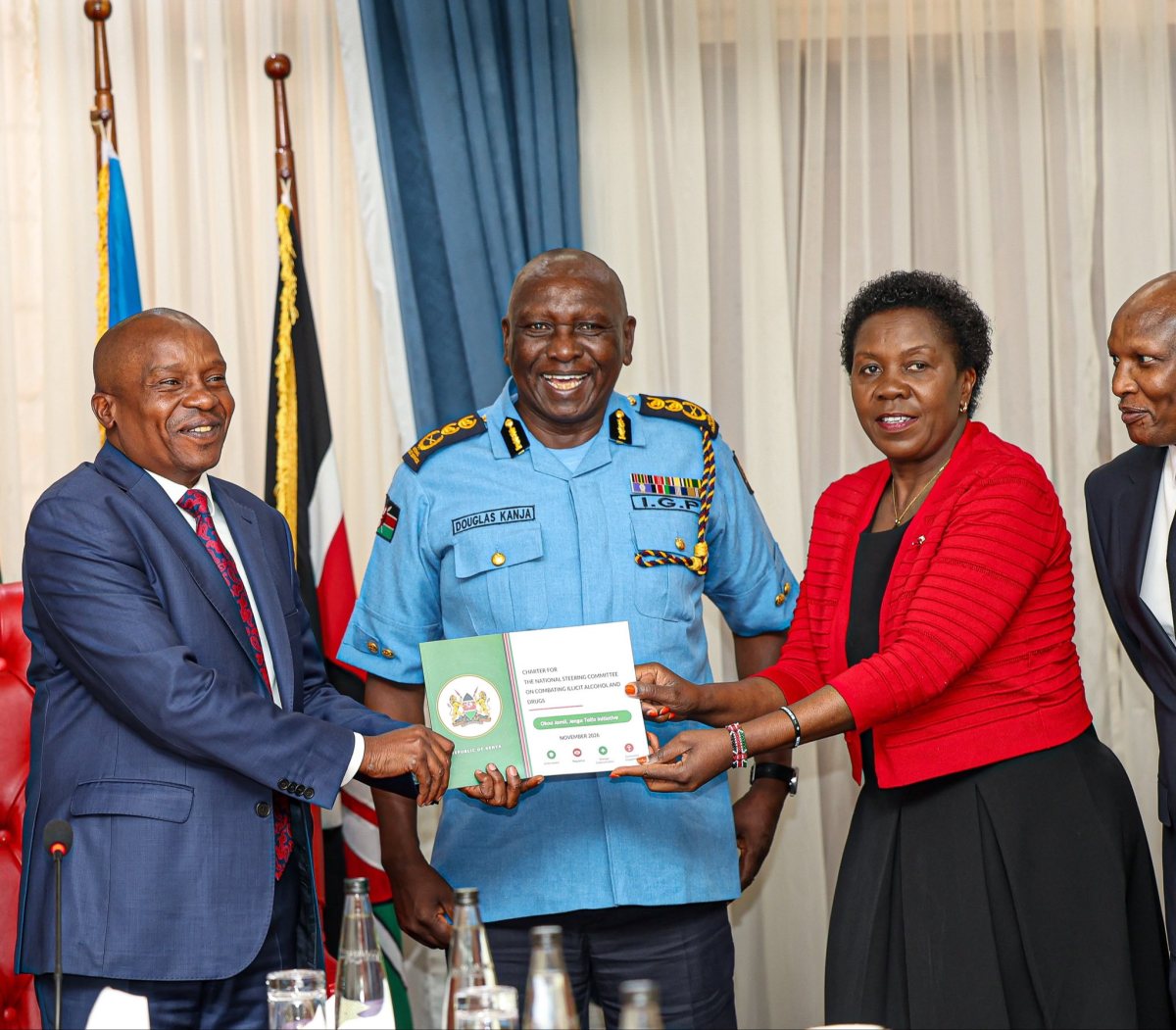
Kindiki receives charter for nationwide war on illicit alcohol and drugs
NACADA destroys over 29,000 litres of kangara in Kahawa West raid, one arrested
Kindiki: Government to seize cartels' assets and license traditional brews that meet KEBS standards

Mt Kenya leaders stake claim to Deputy President slot as Kindiki allies push 'Kumi ya Kindiki' and Waiguru eyes the seat
KRA's rental tax net closes in on over one million landlords as eRITS matches property records with declarations
Global Community Remarks
0