
Nairobi residents paid to wear camera caps that record daily life for AI training
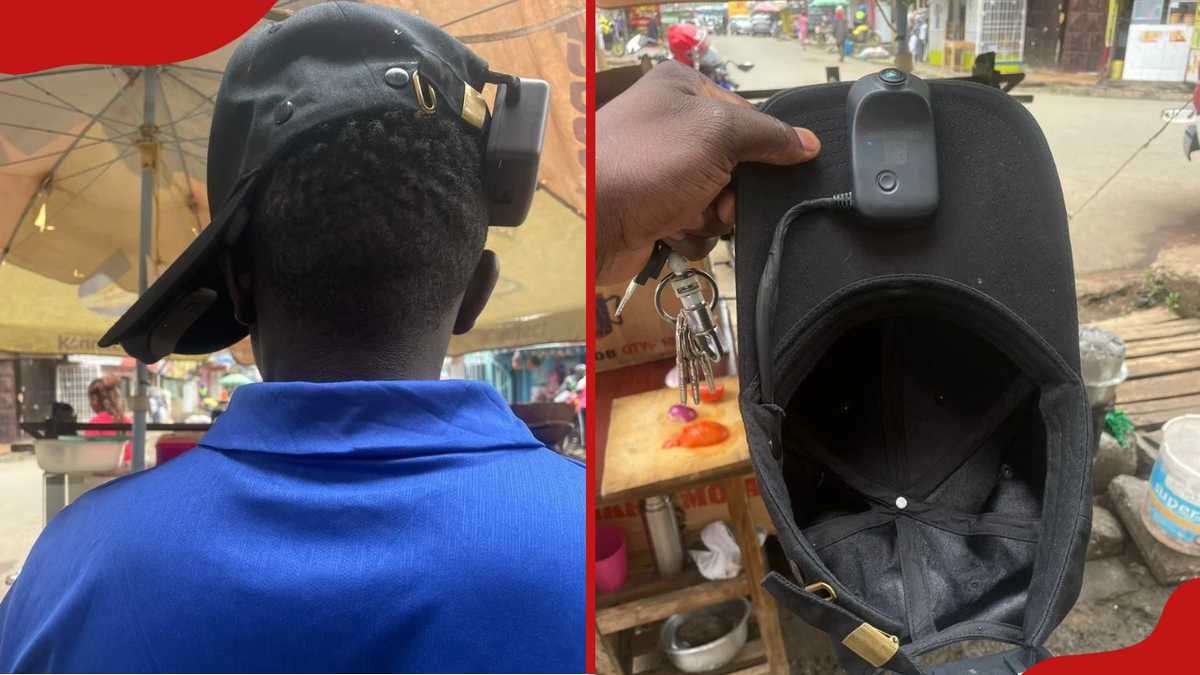
Residents in several Nairobi neighbourhoods are reportedly being paid to wear caps fitted with miniature cameras that record their everyday routines. The footage is believed to feed the development of artificial intelligence and robotics systems.
According to Tuko, the devices have been seen in Kasarani, Umoja and Utawala. They have drawn curious looks from residents, some of whom have questioned why ordinary people would film their daily encounters.
How the cameras work
The gadgets are described as wearable first-person camera rigs. Each one has two small lenses mounted next to each other on the cap.
A typical camera films from a fixed spot. These devices instead capture the scene from the wearer's point of view as they move about.
The recordings reportedly show routine activities, including:
- handling tools
- sorting items
- preparing food
- picking up objects
- packing goods
Tuko, citing K24 Digital, reported that the footage is linked to an emerging field known as embodied AI. This area of research aims to build machines that can operate in, and interact with, the physical world.
For robots to carry out everyday chores, they must first learn how people grip objects, use tools and move things from one place to another. Footage filmed from a human's perspective gives developers real examples of those movements, which can then be used to train machines to copy them.
The report indicates that the caps are collecting real-world material rather than relying only on staged demonstrations.
What wearers are paid
Payment has also drawn attention. Some wearers told Tuko during a spot check that they earn about KSh 50 an hour.
Social media posts, however, have put the figure at about KSh 90 a day. The two figures have not been independently reconciled.
Casual labourers, mechanics and laundry workers, popularly known as mama fua, are among those reportedly seen wearing the devices.
The companies or organisations commissioning the recordings have not been publicly identified. The terms under which participants are engaged also remain unclear.
Privacy and consent concerns
The practice could support advances in AI and robotics. Even so, it has raised questions about privacy and consent.
The cameras record whatever is in front of the wearer, so they may capture shoppers, customers, traders and passers-by who have no idea they are being filmed. It is unclear whether people who appear in the footage are told about the recording or have agreed to it.
Other open questions include:
- who owns the recordings
- where the footage is stored
- who can access it
- how long it is kept
- whether the devices also record audio
- what safeguards exist to stop the data being misused
Kenya has a Data Protection Act, passed in 2019, which governs how personal data is collected and processed. No public statement on the camera caps has been reported from the authorities.
For now, the caps remain an unusual sight on Nairobi's streets. They show how ordinary daily chores are quietly becoming training material for the next generation of machines.
This story was prepared by the Hamasta Newsdesk with AI assistance, based on reporting by Tuko. Read the original report. Photo: Tuko.
Every moment, captured beautifully.
Events, corporate portraits, products and editorial shoots by our newsroom photographers.






More in Technology
See all
Kenya's Data Commissioner Immaculate Kassait Wins Global Buttarelli Privacy Award

Internet metering bill draws fire over privacy, cost fears
.jpeg)
ARTIFICIAL INTELLIGENCE IN THE EMPLOYMENT SPACE

Eight Kenyan university students head to China for Huawei technology training

Cameras on the highways, plates off the matatus: NTSA launches festive crackdown as operators cry foul over 'punishing the vehicle, not the driver'

Global Community Remarks
0