
High Court fast-tracks case against IEBC's Sh17.6bn Smartmatic election tech tender
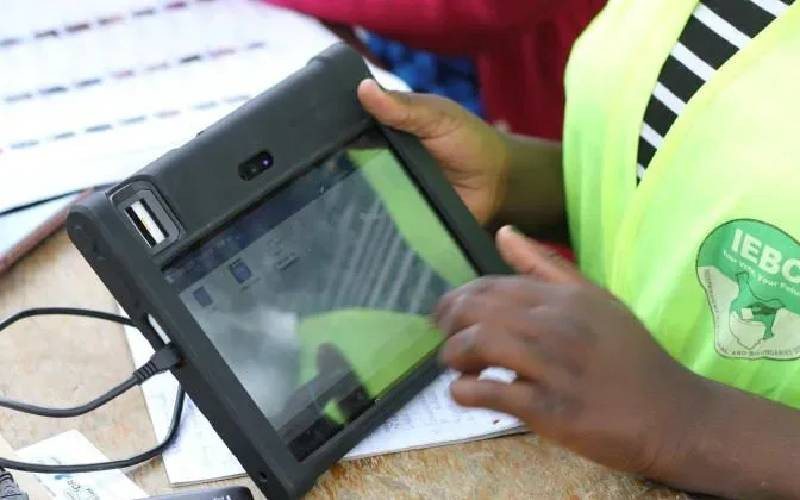
The High Court has fast-tracked a petition seeking to block the Independent Electoral and Boundaries Commission (IEBC) from awarding a Sh17.6 billion election technology contract ahead of the 2027 General Election, according to The Standard.
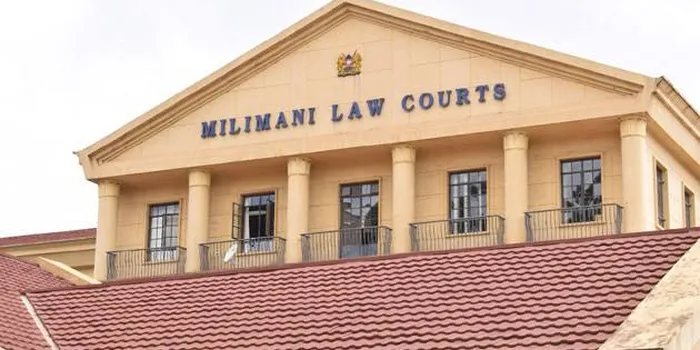
Justice David Mburu of the Milimani High Court certified the application as urgent on Monday and ordered IEBC and the other respondents to respond to the case, which challenges the procurement of an Integrated Electoral Management System (IEMS) intended to support the running of next year's polls.
Tight timelines
Under the court's directions, petitioners Kelvin Koome and Zedekiah Samson must serve IEBC, its Chief Executive Officer, Smartmatic and other interested parties by close of business on November 24.
Once served, the respondents and interested parties have four days to file and serve their replies to both the application and the main petition. The case will be mentioned on November 30, when the court will check compliance and issue further directions.
What the petitioners want
The two are asking the court to stop IEBC from further evaluating, approving, awarding or signing a contract with Smartmatic under Tender Number IEBC/OIT/001A/2026–2027 until the constitutional issues they have raised are settled.
Their petition questions the suitability, integrity, cybersecurity safeguards and pricing of Smartmatic International Holding B.V. and Smartmatic USA Corp, which are among the firms involved in the procurement.
They argue the tender raises serious constitutional questions about the integrity of the electoral process and how public money is spent.
Price gap
According to the petition, Smartmatic's bid stood at about Sh17.6 billion, which they say was more than Sh3.3 billion higher than other technically compliant bids of roughly Sh14.3 billion.
The petitioners say the gap casts doubt on value for money, cost-effectiveness and the way the financial evaluation of the bids was conducted.
US bribery case cited
The petition also points to criminal proceedings announced by the United States Department of Justice in October 2025 involving SGO Corporation Limited, which American authorities described as part of the corporate structure commonly known as Smartmatic or the Smartmatic Group.
Those proceedings concern allegations of bribery and money laundering linked to election technology contracts in the Philippines. The petitioners say the indictment alleges that at least USD1 million in bribes went to a former chairman of the Philippine electoral commission, allegedly funded by over-invoicing voting machines.
However, they have told the court they are not asking it to treat the foreign allegations as proof of guilt or as grounds for automatic disqualification. Rather, they want IEBC to show that it carried out adequate, independent due diligence before considering the companies for the Kenyan contract.
Past technology concerns
The petitioners further cite earlier problems with election technology in the Philippines, including the reported corruption of about 700 memory cards shortly before the 2019 elections and claims of unauthorised changes to election-server scripts during the 2016 polls.
Closer to home, they refer to the European Union Election Observation Mission's report on Kenya's 2022 General Election, which flagged weaknesses in access controls. The report noted that several users could log into the system through a single account and exercise privileges beyond those assigned to them.
The petitioners argue that these issues must be weighed against Article 86 of the Constitution, which requires voting systems to be simple, accurate, verifiable, secure, accountable and transparent.
Parties to the case
IEBC, its accounting officer and the two Smartmatic entities are listed as respondents. The Public Procurement Regulatory Authority, the Ethics and Anti-Corruption Commission and the Attorney General have been named as interested parties.
The respondents' replies to the petition were not detailed in the report.
This story was prepared by the Hamasta Newsdesk with AI assistance, based on reporting by The Standard. Read the original report. Photo: The Standard.





Show the impact of your work.
Impact stories, campaign videos and community engagement for NGOs and programmes.

More in Crime & Justice
See all
Smartmatic bid for Kenya's 2027 KIEMS kits sparks procurement integrity questions
Gachagua welcomes IEBC talks invite but demands full day to air Smartmatic, ID concerns
Gachagua gives IEBC January deadline, threatens to mobilise Kenyans to its offices
.jpeg)
Kalonzo Dares IEBC to Name 2027 Presidential Winner by Morning of August 11
High Court fast-tracks challenge to SRC pay rules over claims National Assembly interfered with commission
Global Community Remarks
0