
KeNHA Eyes Japanese Plastic-Asphalt Technology as Bitumen Shortage Stalls Roads
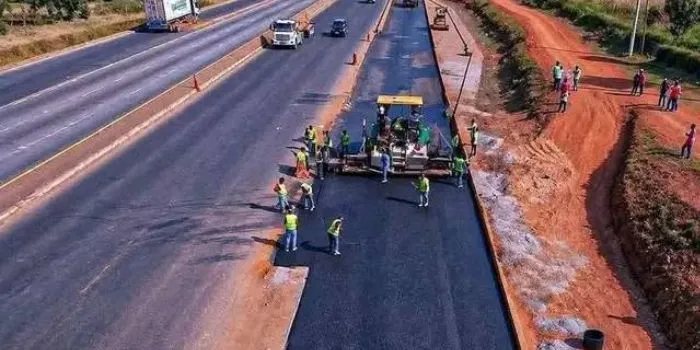
The Kenya National Highways Authority (KeNHA) is studying a Japanese road-building technology that mixes recycled plastic waste into asphalt, as a shortage of bitumen continues to slow major road projects across the country.
According to Kenyans.co.ke, the authority, working alongside the Kenya Urban Roads Authority (KURA), hosted a delegation from Japan to discuss research into the use of recycled polyethylene terephthalate (PET) in road surfaces. PET is the plastic commonly used to make water and soft-drink bottles.
Japanese delegation presents early findings
In a statement issued on Tuesday, November 24, KeNHA said the visiting team included representatives of the Japan International Cooperation Agency (JICA), Nippon Road Company, Kao Corporation and Shimizu Corporation.
The talks centred on a technology known as NEWLAC, which uses a chemical additive to blend recycled plastics into asphalt. The Japanese side shared preliminary results from material tests, which KeNHA said pointed to the method's potential to improve how roads perform.
The authority said the innovation could make roads more durable, more resistant to water and generally more resilient, offering a possible new way of tackling road deterioration.
KeNHA described the technology as holding "promising prospects for sustainable road construction", noting that it would also encourage plastic recycling.
Environmental benefits
Beyond road performance, the proposal is being presented as a way of putting discarded plastic to productive use. Turning used bottles into a component of road surfaces could reduce the volume of plastic waste ending up in the environment, according to the authority.
Kenya has in recent years grappled with plastic pollution, and the idea of using waste plastic in infrastructure has drawn interest as a way of addressing both waste management and construction needs.
Bitumen shortage delays projects
The exploration of the technology comes at a time when the country is facing a shortfall in bitumen, the black, sticky material widely used to bind road surfaces and keep them firm and long-lasting.
The Ministry of Roads and Transport has attributed the reduced supply in recent months to ongoing conflicts in the Middle East, Kenyans.co.ke reported.
The shortage has held up several key projects. Among them is the opening of the Rironi-Naivasha stretch of the Rironi-Mau Summit Highway, one of the country's most significant road upgrades.
Could plastic cut bitumen use?
Researchers are also examining whether adding recycled plastics to asphalt could lower the amount of bitumen needed in road construction. According to Kenyans.co.ke, studies so far indicate that recycled PET could replace up to 10 per cent of bitumen in a mix without undermining its stability.
If adopted, such an approach could help reduce the country's dependence on conventional road-building materials, which are vulnerable to global supply disruptions, while potentially improving pavement quality.
KeNHA did not indicate when, or whether, the technology would be rolled out on Kenyan roads. The discussions remain at the research stage, with the Japanese partners having so far shared only preliminary testing results.
What we know
- KeNHA and KURA hosted a Japanese delegation from JICA, Nippon Road Company, Kao Corporation and Shimizu Corporation.
- The talks focused on NEWLAC, a technology that blends recycled PET plastic into asphalt using a chemical additive.
- Early tests suggest improved durability, water resistance and resilience of roads.
- A bitumen shortage linked to Middle East conflicts has delayed projects including the Rironi-Naivasha section of the Rironi-Mau Summit Highway.
- Studies suggest recycled PET could replace up to 10 per cent of bitumen without affecting mix stability.
This story was prepared by the Hamasta Newsdesk with AI assistance, based on reporting by Kenyans.co.ke. Read the original report. Photo: Kenyans.co.ke.




Know what people say about you.
Media monitoring, audience insights and strategic communication for your brand.


Read also

NEMA Arrests Njiru Businessman in Nairobi Crackdown on Banned Plastic Bags

KURA invites bids for five road projects in Western and Nyanza towns

KURA to Partially Close Gitanga Road in Kawangware for 10 Days, Names Diversions

KeNHA Warns of Mombasa Road Disruption for World AIDS Day Half Marathon

KeNHA Announces Night Closures on Thika Superhighway for Kihunguro Footbridge Works
Global Community Remarks
0