
Kenya to demolish Kenya House in New York in bid to cut KSh 3b embassy rent bill

The government plans to demolish Kenya House in New York and put up residential units for staff on the three-acre property, as part of a broader effort to end the KSh 3 billion it spends each year renting diplomatic premises abroad, according to Tuko.
Foreign Affairs Principal Secretary Abraham Korir Sing'oei disclosed the New York redevelopment plan when he appeared before the National Assembly Committee on Defence, Intelligence and Foreign Relations on November 23.
The committee, chaired by Belgut MP Nelson Koech, raised concerns over underfunding at several of Kenya's missions abroad.
PPP deal covers more than 62 properties
Beyond the New York project, the Ministry of Foreign and Diaspora Affairs has signed a Transaction Advisory Agreement with Rock Investment Bank under a Public-Private Partnership (PPP) framework.
The deal is intended to unlock the value of more than 62 diplomatic properties owned by the government around the world, while ensuring they remain in public hands.
Sing'oei signed the agreement together with Cyrell Odede, the Principal Secretary for Public Investments and Assets Management, and Kefa Seda, Director-General of the Public Private Partnerships Directorate.
Under the arrangement, the PPP Directorate will provide technical oversight in line with the Public Private Partnerships Act, 2021. Rock Investment Bank will handle feasibility studies, project preparation and financial structuring during a pilot phase.
Pilot to start in six African capitals
The first phase will focus on government-owned properties in the following cities:
- Cairo
- Lusaka
- Harare
- Bujumbura
- Juba
- Kinshasa
Odede explained the financial reasoning behind the plan, noting that Kenya had for years paid rent on premises it did not own, with no lasting benefit to taxpayers.
"The initiative will help ease long-term pressure on the Exchequer while preserving public ownership of strategic national assets," Odede said.
Rent bill exposed to currency swings
The KSh 3 billion annual rent bill represents about 15% of the Foreign and Diaspora Affairs ministry's recurrent budget, Tuko reported.
Because the rent is paid mostly in foreign currencies, the government is exposed to exchange rate risk, meaning the cost in shillings can rise when the local currency weakens.
By developing land it already owns using private-sector financing, the government hopes to turn a recurring expense into permanent infrastructure and reduce its reliance on leased premises in Africa and elsewhere.
The ministry did not give a timeline for the demolition of Kenya House or for the completion of the planned staff residences in New York, according to the report.
The plan comes as MPs on the Koech-led committee press for better funding of Kenya's diplomatic missions, several of which they say are operating under financial strain.
This story was prepared by the Hamasta Newsdesk with AI assistance, based on reporting by Tuko. Read the original report. Photo: Tuko.




Know what people say about you.
Media monitoring, audience insights and strategic communication for your brand.


More in Business
See all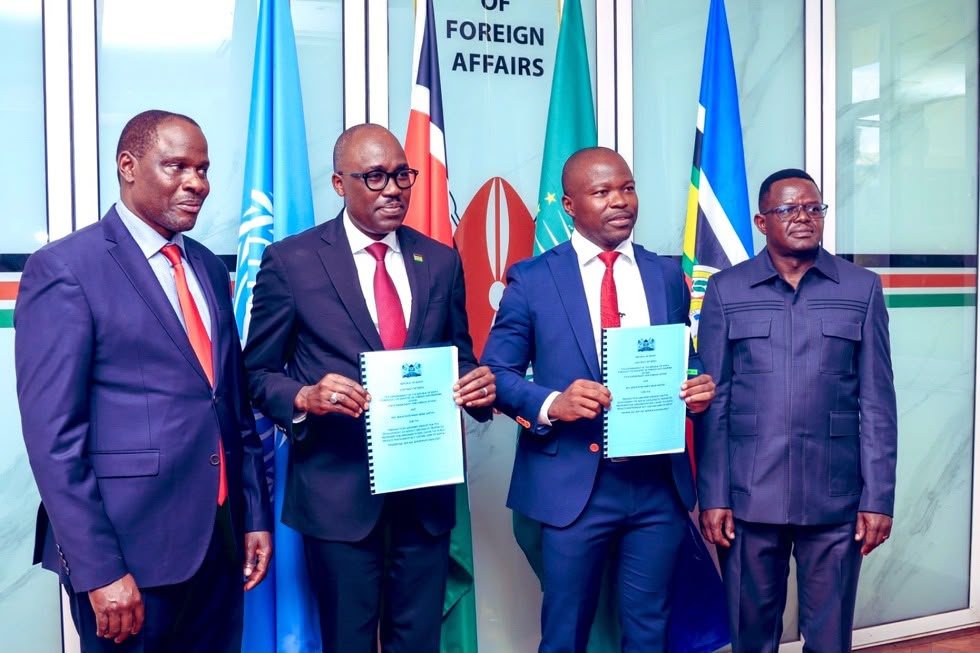
Kenya taps private sector to develop embassy properties and cut KSh3bn rent bill

Three Nairobi Malls Up for Sale, Largest Earning KSh 1.32 Billion in Annual Rent
Senator Mogeni Demands Answers Over Planned Closure of Kenya's Embassy in Bern

Embu-born Kenyan drives 9 hours to Sifuna's US rally, pledges KSh 100m diaspora support
12,000 Kenyans in Switzerland lose their embassy: Bern mission shuts consular doors on November 30 as Kenya heads for Azerbaijan and Congo
Global Community Remarks
0