
Nairobi Plans Scanners and Plate-Reading Cameras to Catch CBD Parking Fee Evaders
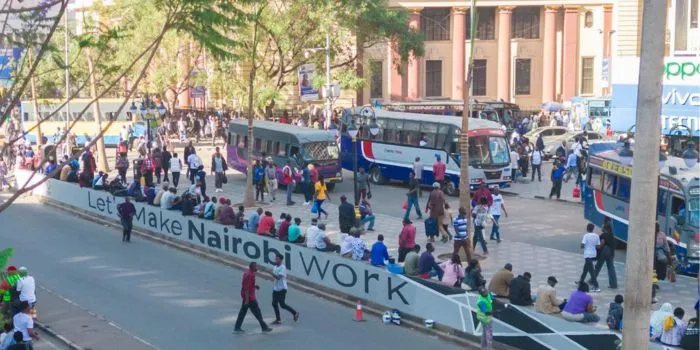
Motorists who dodge parking fees in Nairobi's Central Business District (CBD) could soon be identified by cameras and handheld devices. The county government plans to adopt new technology to tighten enforcement and raise more revenue, according to Kenyans.co.ke.
The proposal appears in the County Fiscal Strategy Paper (CFSP) for 2027. The paper sets out the measures the county administration intends to take to improve revenue collection.
The document calls on the county to "deploy handheld scanners and number plate cameras in the CBD and commercial nodes."
How the system would work
Under the plan, parking marshals would use the scanners and number plate recognition cameras to identify vehicles and issue penalty notices digitally.
The fines would be linked to the NairobiPay platform, so that parking penalties are tied to vehicle records.
The system would apply to street parking in the following areas:
- The CBD
- Westlands
- Upper Hill
- Kilimani
- Other designated zones under the zoned parking framework set up by the Nairobi County Finance Act 2026
The county also plans to publish parking occupancy data for the different zones. The aim is to improve monitoring and show how well motorists are complying.
Phased rollout
The county would first buy the equipment. Parking marshals would then be trained, and penalty records would be integrated with vehicle information.
The county says it will carry out a data protection impact assessment as part of the administrative process.
The proposal also states that the county would only consider reviewing parking charges across zones after service delivery improves.
Revenue targets
The enforcement plan is part of a wider push to grow Nairobi's internally generated revenue and reduce its reliance on transfers from the national government.
Parking fees are expected to make up 15 per cent of the county's own-source revenue target of Ksh22.61 billion.
Land rates are projected to bring in the largest share, at 33.8 per cent. The other main sources are:
- Unified business permits: 16 per cent
- Building plans and inspections: 15.4 per cent
- Billboards and advertisements: 6.1 per cent
The CFSP also shows that the county expects Ksh22.607 billion from the national government's equitable share. It projects a further Ksh4.446 billion from hospital collections, Ksh472.7 million from liquor licensing and Ksh135 million from the Gaming and Betting Fund.
Public participation
Nairobi residents can give their views on the proposals at ward-based public participation meetings scheduled for November 25 and 26.
The county is also looking at other ways to ease parking pressure in the CBD. One plan would redevelop Sunken Park into a multi-storey mobility hub with 3,800 parking spaces. The current facility has 240 slots.
This story was prepared by the Hamasta Newsdesk with AI assistance, based on reporting by Kenyans.co.ke. Read the original report. Photo: Kenyans.co.ke.

Tell your story on screen.
Commercials, documentaries, interviews and social video, from script to final cut.





More in Business
See all
KAA Proposes Higher Parking Fees and New Ride-Hailing Charges at Kenyan Airports
KRA ordered to refund StanChart Sh933m in card fees tax, opening door for other banks

Cameras on the highways, plates off the matatus: NTSA launches festive crackdown as operators cry foul over 'punishing the vehicle, not the driver'
NTSA Moves Reflective Number Plate Applications to eCitizen in Three Steps
Carrefour pulls down the shutters at Comet House, its first Nairobi CBD store, four years after opening

Global Community Remarks
0