
UK reportedly moves RAF jets into hangars over fears of drone attacks
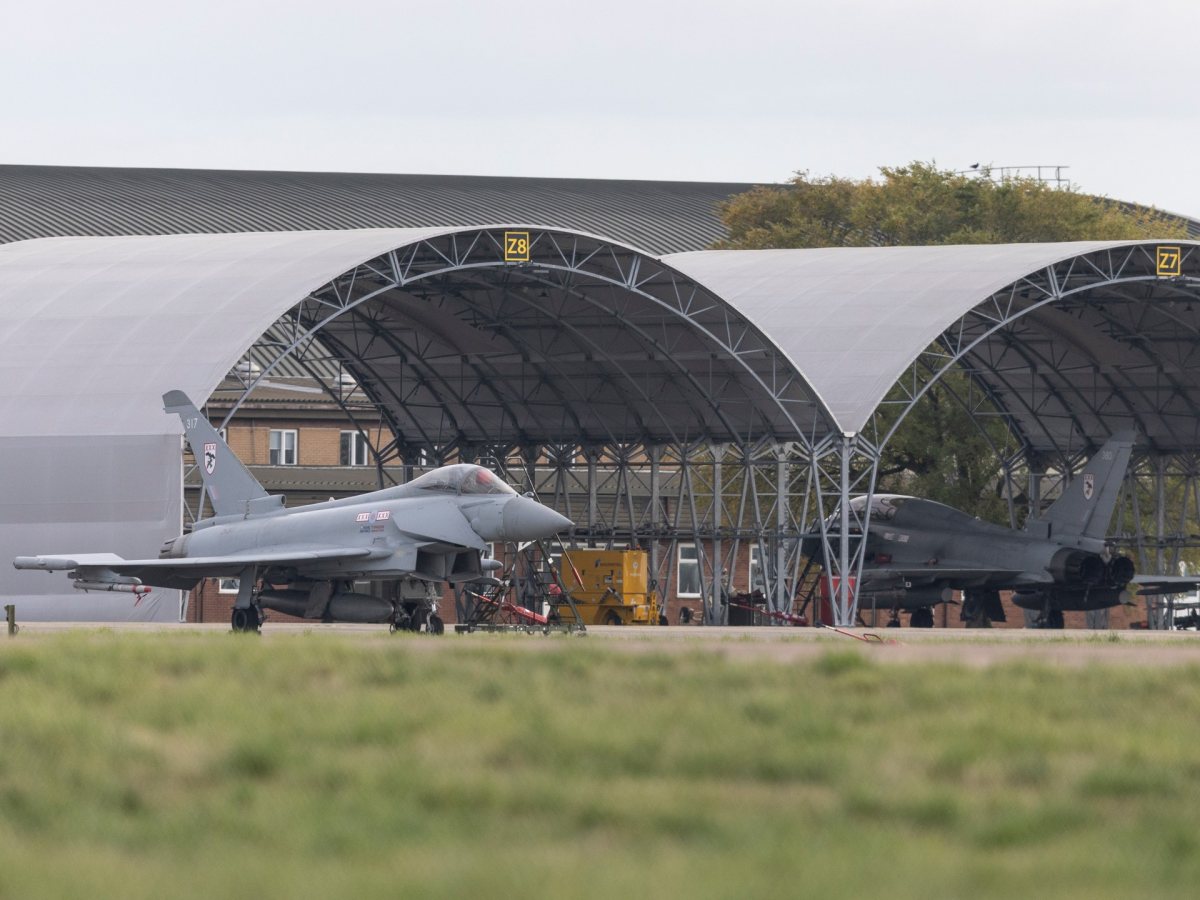
The Royal Air Force (RAF) has reportedly begun moving its warplanes into hangars and hardened shelters overnight to guard against possible drone attacks, according to Al Jazeera, citing reports by British media outlets.
The Times and Sky News reported on Wednesday that aircraft would be stored under cover at night, while anti-drone nets would be fitted to protect any jets left in the open.
Britain's Ministry of Defence (MoD) did not confirm the reports. In a statement, it said it takes the security of its bases, equipment and personnel very seriously and is "always adapting to counter any potential threats".
Experts back the approach
Justin Bronk, a senior researcher at the London-based Royal United Services Institute (RUSI), told Al Jazeera the reported measures would be a sensible and logical step if intelligence pointed to a likely drone threat.
He said the RAF's main fighter bases, Coningsby, Marham and Lossiemouth, still have hardened aircraft shelters dating from the Cold War. These have been kept in usable condition for storage, protection and limited maintenance.
However, Bronk warned there are not enough such shelters to house every jet at each base. He explained that squadrons were consolidated into so-called "super bases" after the Cold War, based on what he described as a mistaken belief that such protection was no longer needed.
According to Bronk, standard hangars and hardened shelters both protect aircraft from small drones flown by infiltrated hostile cells or terrorists. Only hardened shelters, however, would withstand larger one-way attack drones such as Russia's Geran series, which is based on an original Iranian design, in a hypothetical wartime strike.
He described the shelters as a relatively cheap, low-risk and effective way of making fighter fleets more resilient, noting that their thick concrete and blast doors offer almost total protection from drones. An unintercepted cruise missile, he added, could destroy at most one jet with a direct hit.
Security spending
The MoD said it is investing an additional £470 million (about $615 million) to strengthen security at military sites, including physical protection, surveillance and counter-drone systems.
It added that £15 million (about $19.6 million) had already gone into drone and counter-drone technology, and that restricted airspace had been introduced over 44 critical defence sites.
Rising concern over Russia and Iran
British authorities have repeatedly warned of threats posed by Russia and Iran, and the government has urged the public to prepare for various contingencies.
In an October report, members of Parliament said the military needed to make "dramatic progress" to be ready for a possible Russian attack on a NATO member.
On Tuesday, the domestic intelligence agency MI5 and the MoD issued a joint alert to UK companies supplying Ukraine's military, warning of increasing Russian sabotage attempts.
Recent incidents at bases
Earlier this month, US forces responded to possible unauthorised drone activity over RAF Lakenheath in eastern England, which hosts American warplanes. A US Air Force spokesperson said no personnel, aircraft or infrastructure were affected.
On September 27, an Iran-linked security scare hit RAF Fairford in southwest England, a base used by US aircraft. A group of men allegedly drove three vans to a nearby village and abandoned them with filled petrol barrels inside, prompting a bomb scare and an evacuation.
Washington had used Fairford in its war on Iran and, days after the incident, withdrew all its B-1 bombers from the base. Two men have since been charged in a UK court and three in the United States.
The US military also pulled its planes from RAF Mildenhall, close to Lakenheath, on November 9 following a threat from Iran, according to The Wall Street Journal and The Financial Times.
This story was prepared by the Hamasta Newsdesk with AI assistance, based on reporting by Al Jazeera. Read the original report. Photo: Al Jazeera.
Every moment, captured beautifully.
Events, corporate portraits, products and editorial shoots by our newsroom photographers.






More in International
See all
Bahrain intercepts drones as Iran's IRGC claims strike on US radar at Isa airbase
Ethiopia takes delivery of Russian Su-35 fighter jets, Abiy says S-400 air defence systems to follow
Kuwait intercepts drones as US and Iran trade strikes on Qeshm Island and Bahrain
Japan scrambles fighter jets after suspected Russian planes breach its airspace
'The Strait of Hormuz is closed': Sirens wake Bahrain at 4am as Iran sends six drones at a US base, its second strike in three days

Global Community Remarks
0