
Treasury needs MPs' approval before funding EADB under new law signed by Ruto
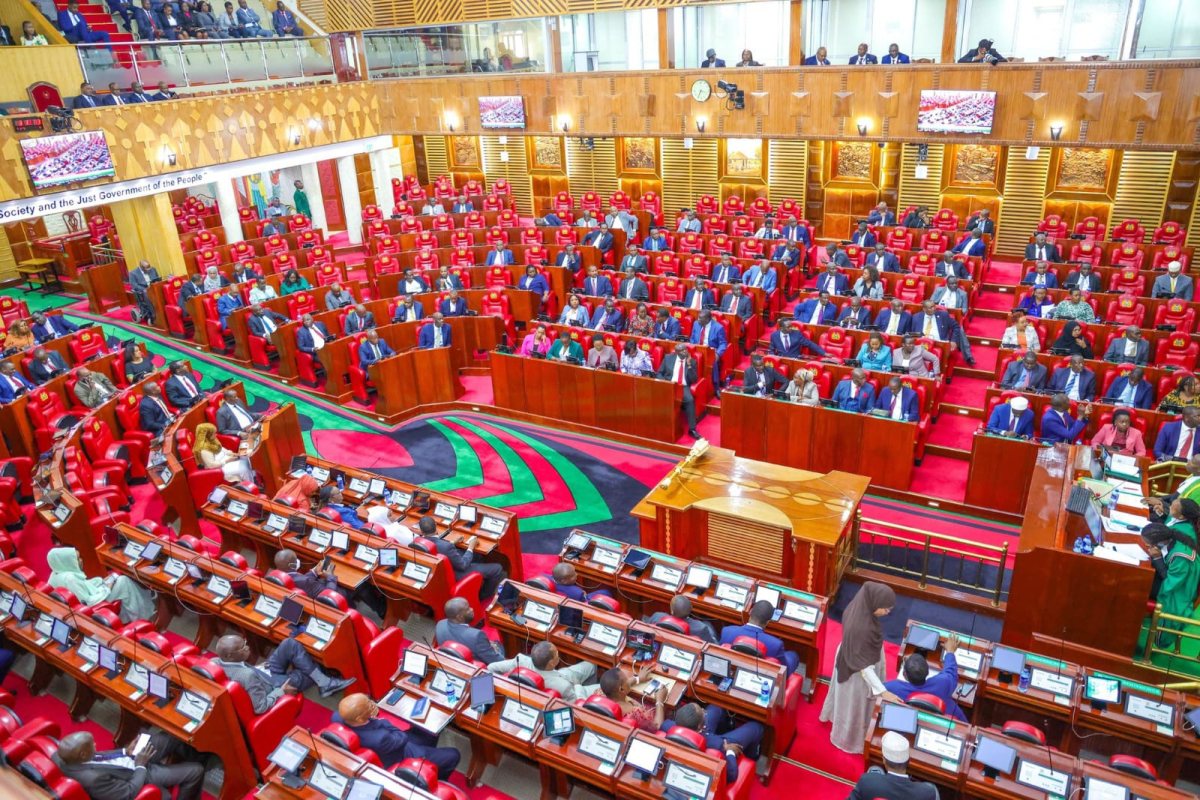
The National Treasury Cabinet Secretary can no longer commit public money to the East African Development Bank (EADB) without first getting approval from Members of Parliament, following the enactment of a new law on Thursday.
President William Ruto signed the East African Development Bank Bill 2026 into law, giving the National Assembly the final word on any funds drawn from the Consolidated Fund for the regional lender, according to KBC.
Court ruling prompted the changes
The amendments follow a High Court decision that found section 2(1) and (2) of the EADB Act unconstitutional. The court ruled that the provisions violated Articles 10, 95(4)(b), 201, 206 and 228(5) of the Constitution.
The case was filed by Paul Lihanda Nusu, who challenged the constitutionality of several provisions and amendments to the East African Development Bank Act, Cap 493A.
Under the old section 2 of the Act, the Treasury Cabinet Secretary was allowed to commit and release funds from the Consolidated Fund to the bank without the approval of the National Assembly or authorisation from the Controller of Budget.
What the new law requires
Under the revised framework, the Cabinet Secretary must obtain the prior approval of the National Assembly before authorising any charge on, or issuance of, public funds from the Consolidated Fund to the bank.
The law also ties payments to the bank to the budget process. According to a brief from the National Assembly cited by KBC, payments by the Cabinet Secretary to the bank must be made as provided for in an Appropriation Act and with the approval of the Controller of Budget.
The brief said this was in line with Article 228(4) and (5) of the Constitution, which sets out the Controller of Budget's mandate over the authorisation of withdrawals from public funds.
The main changes include:
- Prior approval: The National Assembly must approve any charge or release of funds from the Consolidated Fund to the EADB.
- Budget link: Payments must be provided for in an Appropriation Act.
- Controller of Budget: Withdrawals require the approval of the Controller of Budget.
- Reporting: The Cabinet Secretary must submit a report to the National Assembly on payments made to the bank.
Oversight and accountability
The changes are intended to strengthen legislative oversight and accountability in keeping with the public finance principles set out in the Constitution, KBC reported.
The Consolidated Fund is the main account into which government revenue is paid, and the Constitution places controls on how money is withdrawn from it. The new law brings the country's contributions to the EADB under those same checks.
Kenya's stake in the bank
Kenya is one of the Class A investors in the EADB, a group that together holds 92 per cent of the bank's shares. The other Class A shareholders are Uganda, Rwanda and Tanzania.
As of last year, Kenya held a 23.30 per cent stake in the bank, valued at Ksh 8.3 billion, according to KBC.
With the law now in force, any future capital contributions or other payments by Kenya to the regional lender will need to pass through Parliament and the Controller of Budget before the money leaves the Treasury.
This story was prepared by the Hamasta Newsdesk with AI assistance, based on reporting by KBC. Read the original report. Photo: KBC.

Tell your story on screen.
Commercials, documentaries, interviews and social video, from script to final cut.





More in Politics
See all
Senators raise devolution concerns over Treasury control of county bank accounts
MPs Grill Treasury Over 13 New Foreign Loans as Public Debt Hits Ksh13.5 Trillion

Treasury Plans Start-up Funding for University and College Graduates Under NYOTA

CBK's Thugge backs Treasury plan to move county funds to Central Bank

Sakaja and Babu Owino trade legal threats over approval of collapsed Eastleigh building

Global Community Remarks
0