
Census: One TSC teacher for every 74 learners in public junior schools
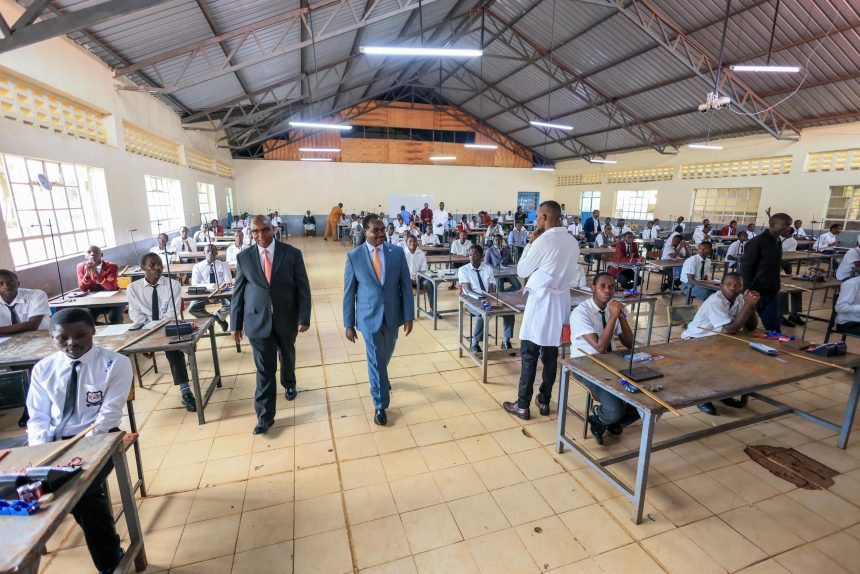
Public junior schools in Kenya have an average of 74 learners for every teacher employed by the Teachers Service Commission (TSC), nearly double the recommended ratio of 40, according to the 2024 Kenya School Census.
The census, released on Thursday by the Kenya National Bureau of Statistics (KNBS), paints a picture of schools under strain from rising enrolment, with teacher shortages, limited classroom space and inadequate facilities reported across the country, KBC reports.
Interns and BoM teachers narrow the gap
The picture improves when other categories of teaching staff are counted. Including teachers hired by Boards of Management (BoM) brings the ratio down to 59 learners per teacher, while adding TSC interns lowers it further to 34.
Economic Planning Principal Secretary Bonface Makokha, speaking at the launch of the report, admitted the staffing shortfall and said the data would help the government revise its plans and tackle disparities between regions.
"This gap will widen as junior-school cohorts grow unless we plan for it now," Makokha said, according to KBC.
The PS said the government had already hired 100,000 teachers, and that another 20,000 are expected to be recruited from next year. The release of the census coincides with government plans to bring the additional teachers on board in the coming months.
Northern counties hardest hit
The data reveals wide differences between counties. Mandera recorded the most stretched staffing in public junior schools, with 140 learners for every TSC teacher.
It was followed by Marsabit at 134 learners per teacher, Kirinyaga at 133 and Wajir at 130, based on TSC teachers alone.
Classrooms and special needs
The census counted 492,652 classrooms across pre-primary, primary, junior and secondary schools. Of these, 87.3 per cent were permanent structures, while the remaining 12.7 per cent were temporary.
Public schools fared better on this measure, with 91.7 per cent of their classrooms permanent, compared with 76.5 per cent in private schools.
Only 2.4 per cent of classrooms countrywide had been modified to cater for learners with special educational needs, highlighting a significant gap in inclusive facilities.
Crowding worst in secondary schools
Congestion varied by level of education. Junior schools averaged 37 learners per classroom nationally, rising to 41 in public institutions.
Secondary schools were more crowded, averaging 46 learners per classroom nationally and 48 in public schools.
Turkana County recorded the most congested pre-primary classrooms, with an average of 76 learners in each, while its secondary schools averaged 64 learners per classroom.
17.8 million learners
Overall, the census recorded 17.8 million learners in basic education institutions. Boys made up 50.7 per cent of the total and girls 49.3 per cent.
Boys were slightly in the majority in primary schools, at 51.2 per cent, and in junior schools, at 51.3 per cent. In secondary schools, however, girls accounted for 50.6 per cent of learners.
The findings are expected to inform government decisions on teacher recruitment and school infrastructure as the junior school system continues to expand.
This story was prepared by the Hamasta Newsdesk with AI assistance, based on reporting by KBC. Read the original report. Photo: KBC.

Tell your story on screen.
Commercials, documentaries, interviews and social video, from script to final cut.





More in Education
See all
KNBS Census: 530 Training Institutions in Kenya Operating Without Licences

KUPPET Rejects Ruto's Comprehensive School Model, Wants Independent Junior Schools
MPs Grill Planning Department Over Ksh18.6bn Request for 2029 Census Preparations

TSC Retrains 1,600 Senior School Teachers in Media Technology, Theatre and Film
TSC Takes Teacher Qualification Reforms to Parliament Committee
.jpeg)
Global Community Remarks
0