
EACC sets December 31 deadline for public bodies to report conflict of interest controls
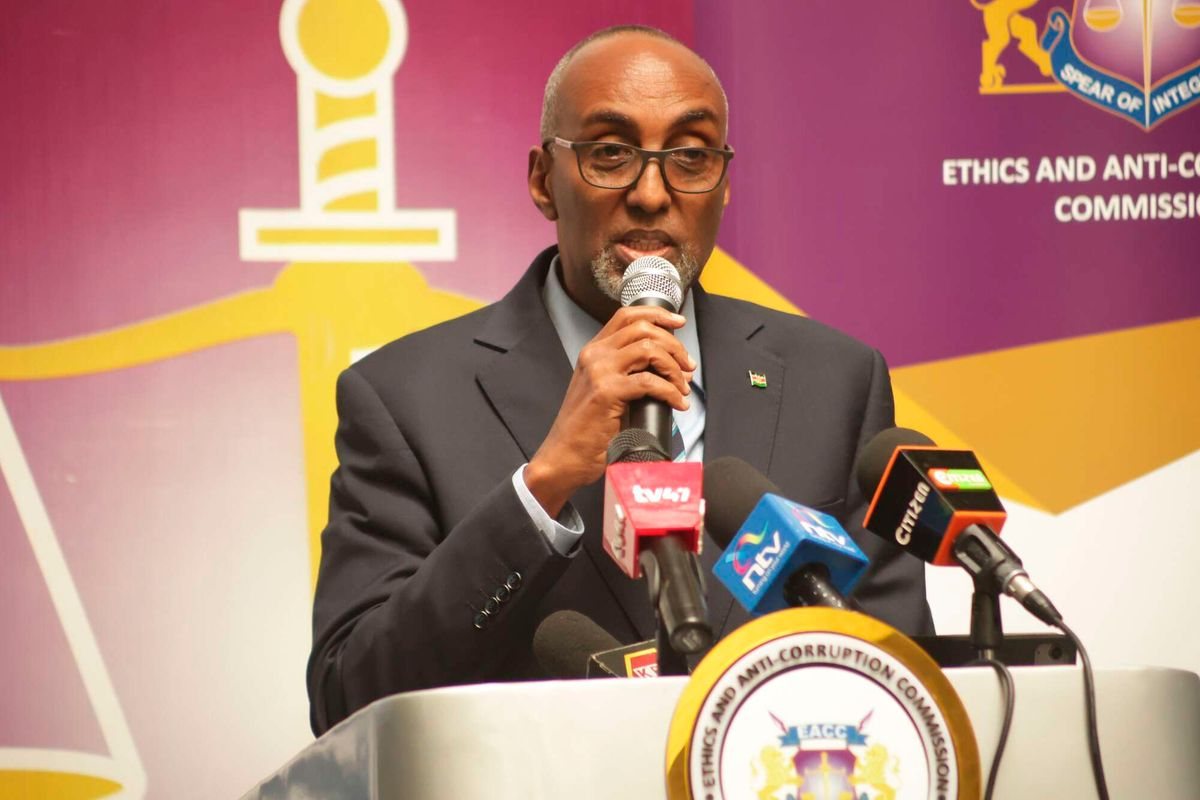
Public institutions across Kenya have until December 31, 2026 to show the Ethics and Anti-Corruption Commission (EACC) how they are preventing officers from using their positions to advance private interests, Business Daily reports.
The commission on Wednesday notified all reporting entities that they must file compliance reports for the 2025/2026 financial year. The reports must set out the measures each institution has adopted to detect, disclose and manage conflicts of interest.
"The Commission notifies all reporting entities of the obligation to submit a compliance report," EACC Chief Executive Abdi Mohamud said, according to the publication.
Who must report
The requirement is wide-ranging. It covers State organs, the national government, county governments and their departments, State corporations and publicly owned companies.
Public schools, universities and colleges are also included. So are entities in public-private partnerships, bodies that collect statutory levies and fees, and organisations that use public money to deliver government programmes and services.
What the reports must contain
Institutions are expected to give details of:
- Registers of conflicts of interest and how they are kept
- Procedures for handling gifts, benefits and outside employment
- Records of officers who have stepped aside from decision-making
- Safeguards against conflicts in procurement and contract awards
- Staff training and awareness programmes
- Disciplinary action taken against officers who break the rules
A law shaped by lender pressure
The obligation flows from the Conflict of Interest Act, which took effect on August 19, 2025. The law targets the abuse of public office for private gain, including situations where officers influence tenders awarded to businesses in which they have a personal stake.
According to Business Daily, the legislation formed part of a wider reform package supported by the International Monetary Fund and the World Bank to strengthen public financial management. The two lenders have identified corruption as a source of fiscal risk, since it can drive up public spending without corresponding economic or social benefits.
Kenya passed the law in July 2025 after the World Bank held back a Sh96.9 billion ($750 million) loan over delays in agreed reforms, among them the Conflict of Interest Bill.
The push had started years earlier. In January 2019, then-President Uhuru Kenyatta directed the Attorney-General to draft legislation restricting public officers from engaging in private business that conflicted with, or benefited from, their official roles.
Roots in the Ndegwa Commission
The issue goes back to 1971, when the government adopted recommendations of the Ndegwa Commission allowing civil servants to run private businesses. The aim was partly to encourage their involvement in the private sector and to boost their incomes.
Over time, however, some officers exploited the arrangement to win government contracts for their own firms, oversee projects awarded to companies they owned and influence payments to those businesses, the publication notes.
High-profile cases
Several cases in recent years have kept the matter in the spotlight. Former Samburu Governor Moses Lenolkulal was convicted in 2024 over a fuel supply arrangement between his county and Oryx Filling Station.
Former Kiambu Governor Ferdinand Waititu was convicted in February 2025 over a Sh588 million road tender awarded to Testimony Enterprises, a company linked to him.
Cases involving former Kakamega Governor Wycliffe Oparanya, now Cabinet Secretary for Cooperatives and MSMEs Development, and former Bungoma Governor Wycliffe Wangamati have also drawn attention to private interests in public procurement.
Separately, the Auditor-General flagged possible conflicts of interest in fibre-optic contracts under the Digital Superhighway programme won by Nightigale Enterprises, later renamed Nightigale (EA) Limited, while its owner, businesswoman Mary Wambui Mungai, chaired the Communications Authority of Kenya. The High Court later directed that the allegations be handled by the EACC.
This story was prepared by the Hamasta Newsdesk with AI assistance, based on reporting by Business Daily. Read the original report. Photo: Business Daily.





Show the impact of your work.
Impact stories, campaign videos and community engagement for NGOs and programmes.

More in Business
See all
'The judgment must translate into action': Anti-graft lobby gives EACC and DPP 14 days to reopen CS Oparanya's Sh56.7 million kickbacks file
EACC begins Kakamega HR review, urges counties to tighten payroll and hiring controls
.jpeg)
Liberia leads UN peer review of Somalia's anti-corruption measures in Nairobi
EACC Warns Surveyors Against Land Corruption, Calls for Protection of Public Property.
EACC sues ex-KeRRA deputy director for Ksh40.3m over alleged forged degree
Global Community Remarks
0