
Financial support no ground to avoid prison for murder, judge rules in Sharon case

The High Court has rejected an appeal by Sharon's mother to spare former governor Obado a prison sentence so he could continue supporting her daughter's three children.
Justice Cecilia Wairimu Githua ruled out a non-custodial sentence. She said the seriousness of the offence could not be outweighed by financial considerations.
Obado was sentenced alongside his former personal assistant, Michael Juma Oyamo, who also received 25 years in prison. Former Migori County Clerk Caspal Ajwang Obiero received an 18-year prison sentence.
A mother's plea for leniency
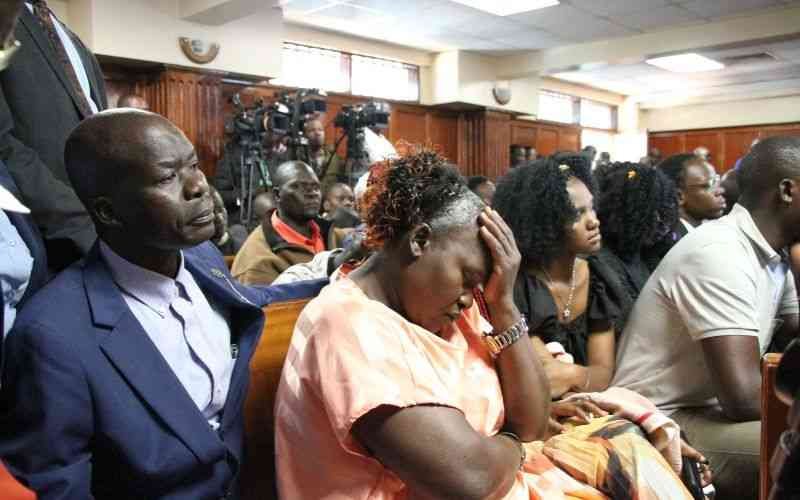
During the September 16, 2026, mitigation hearing, Sharon's mother, Melida Auma, made an emotional appeal to the court, asking the judge not to send the former governor to prison.
Auma told the court that the family had forgiven Obado. She said they preferred that he remain outside prison so he could continue supporting Sharon's children.
She also expressed fears that a severe sentence would cause the family further emotional suffering, describing the prospect of Obado's imprisonment as another death in her life.
The family's appeal came after Obado and his two co-accused, Oyamo and Obiero, were convicted of Sharon's murder on July 23, 2026.
Sharon, a 26-year-old Rongo University student who was seven months pregnant, was murdered in September 2018. Her killing attracted nationwide attention and led to a lengthy criminal investigation and trial.
Why the court rejected the family's plea
Despite acknowledging the family's wishes, Justice Githua said the court had an independent responsibility to impose a sentence that reflected the seriousness of the offence.
The judge considered the mitigating circumstances presented by the accused. These included their family circumstances, first-offender status, prospects of rehabilitation and willingness to reconcile with Sharon's family.
However, she concluded that the aggravating circumstances outweighed the mitigating factors.
The judge cautioned against creating a precedent in which people convicted of serious offences could avoid imprisonment by providing financial assistance to victims' families.
She said punishment for a serious crime such as murder should not be determined primarily by the financial dependence of the victim's family on the offender.
Justice Githua also observed that Obado's financial support for Sharon's children should ideally continue regardless of the sentence imposed.
The financial burden left behind
Beyond the emotional appeal, Sharon's family outlined the financial difficulties they had experienced since her death.
During the sentencing proceedings, the family said it had spent approximately KES 1.2 million attending court proceedings and another KES 3.5 million on funeral expenses.
The family told the court it had been forced to sell a one-acre piece of land and a cow to meet some of the expenses associated with the case.
They sought compensation and restitution to support Sharon's children, siblings and ageing parents.
However, the judge declined to issue a compensation order. She said the court had not been presented with sufficient evidence to establish the extent of the financial losses suffered by the family.
Three men convicted, different sentences
In her sentencing remarks, Justice Githua described Obado as the principal architect of the criminal enterprise that led to Sharon's murder. Oyamo was found to have facilitated the execution of the plan.
Obiero was found guilty of participating in the events surrounding the crime.
According to the court, the different sentences reflected its assessment of the individual roles played by the three convicts.
What happens to Sharon's children?
The sentencing has left a difficult question over the welfare of Sharon's three children, whose financial needs formed a central part of their grandmother's appeal for leniency.
Although the judge indicated that Obado's financial support should ideally continue despite his imprisonment, the practical arrangements for sustaining that support remain a concern.
Following the sentencing, the family's lawyer questioned how Obado would continue supporting the children while serving his prison term.
The family later expressed dissatisfaction with the sentence and indicated its intention to challenge the decision.
For Sharon's family, the November 27 ruling represents both the conclusion of a lengthy trial and the beginning of another difficult chapter concerning the welfare of the children she left behind.
Every moment, captured beautifully.
Events, corporate portraits, products and editorial shoots by our newsroom photographers.






More in Crime & Justice
See all
Obado and two former aides face sentencing today over Sharon Otieno murder

Former Migori Governor Okoth Obado jailed for 25 years over Sharon Otieno murder
Sharon Otieno's family to appeal Obado's 25-year sentence, seeks non-custodial term

Linda Mwananchi supporters hit back at Jalang'o over call for Sifuna to rejoin ODM

Norse Atlantic collapses as Iran war fuel shock claims another airline

Global Community Remarks
0