
German courts swamped by AI-written lawsuits as ministers weigh filing fees
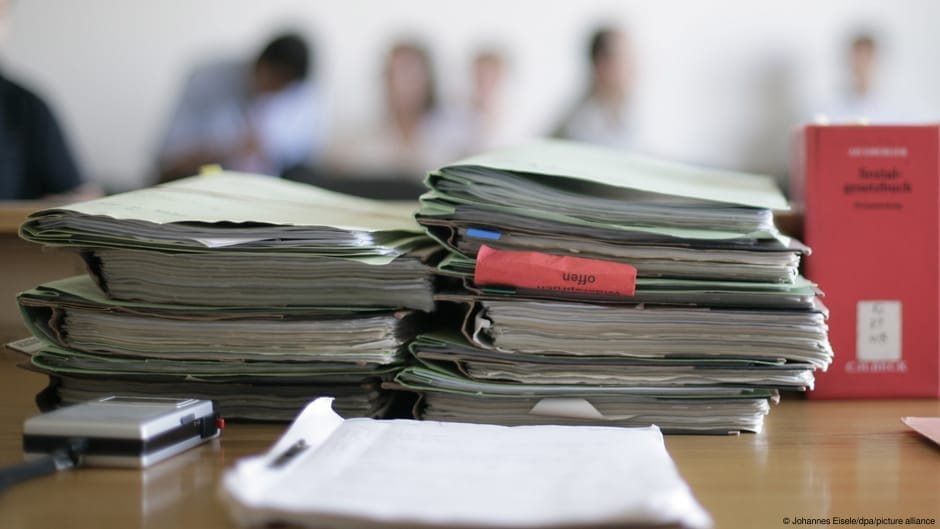
Courts in Germany are struggling with a rising volume of lawsuits and complaints drafted with artificial intelligence tools, many of them lengthy, error-filled and padded with irrelevant legal arguments, according to DW News.
The problem is most visible in the country's social courts, where ordinary citizens can lodge complaints without a lawyer. Most of these cases involve appeals against sanctions or reductions to unemployment benefits, or official demands that benefits be repaid. Others concern different welfare payments or sudden increases in health insurance contributions.
Sharp rise in caseloads
Marcus Howe, a judge and spokesperson for the state social court in Berlin, told DW News that his court was handling 28% more cases this year than in 2025. He said the jump was surely partly due to AI, but noted that tougher sanctions on unemployment benefits, brought in by the federal government this year, may also have contributed.
Similar trends have been reported elsewhere. Legal Tribune Online reported that urgent proceedings at the eight social courts in North Rhine-Westphalia, Germany's most populous state, climbed from about 1,400 in the first quarter of 2025 to 3,600 in the same period of 2026.
Easy to spot, hard to process
Howe said judges can usually identify AI-generated filings quickly because of their different fonts and layouts, and because the worst examples are bloated with material unrelated to the case. He added that such documents feel impersonal, making it harder to understand the person behind the complaint and the real issue at stake.
Friedrich-Johannes Graf von Pfeil, president of the social court in Potsdam, Brandenburg, said he had received one complaint that ran to 800 pages. He told DW News that AI-drafted filings often contain specialist legal language no ordinary citizen would use, with little about the actual facts.
"But you still have to respond to all of it," von Pfeil said.
Judges are required to examine all submitted material, including references to court rulings that are either irrelevant or were invented by the AI tool. Von Pfeil said courts cannot simply use AI to summarise the documents, because external systems would raise security and data protection concerns, particularly as filings often include sensitive medical records.
Fee proposal divides opinion
At a conference this month, Germany's state and federal justice ministers agreed to form a working group on the issue. Some conservative ministers have called for a charge on urgent complaints. Christian Heinz, the Christian Democrat justice minister in Hesse, said a fee of €15 should be considered. Another proposal would require people to pay court costs for cases judged to have little chance of success or to abuse the system.
The VdK, a social welfare association that offers legal advice to people dealing with welfare authorities, strongly opposes the ideas. Holger Lange, head of its federal legal department, said vulnerable people must be able to reach the social courts without fearing costs. Instead, he argued for better digital access, such as online portals with simple questions and word limits on submissions.
Howe is also sceptical, saying social courts are meant to have low barriers to entry and that the situation does not yet justify fees. Von Pfeil believes a fee would be worth trying, but acknowledged that many people might apply for legal aid, adding bureaucracy and cost for the state.
Longer-term picture
The recent increase follows years of decline. Pending cases at the social courts fell from more than 445,000 at the end of 2017 to 325,000 at the end of 2024, a trend analysts link to economic conditions and changes in unemployment benefit rules.
Lange suggested the new rise may partly reflect a hidden demand for legal protection among people who had previously been reluctant to claim their rights. While he conceded that AI-generated complaints can contain errors and fabrications, he stressed that using AI does not make an appeal invalid, and that courts must always consider who is behind a complaint.
This story was prepared by the Hamasta Newsdesk with AI assistance, based on reporting by DW News. Read the original report. Photo: DW News.




Know what people say about you.
Media monitoring, audience insights and strategic communication for your brand.


More in International
See all
Kenyans working in Germany rise to 9,500 under migration deal, Ruto says
Germany's job market unlikely to recover before summer, says labour agency chief

Mélenchon calls for 'thorough overhaul' of France's relationship with Germany

Ruto, Germany's Steinmeier Agree Faster Visas and Language Training for Kenyan Workers

Kenya signs deal with German exam body TELC to ease path to jobs in Germany

Global Community Remarks
0