
More than 1,000 refugees and migrants rescued off Crete as storms close in
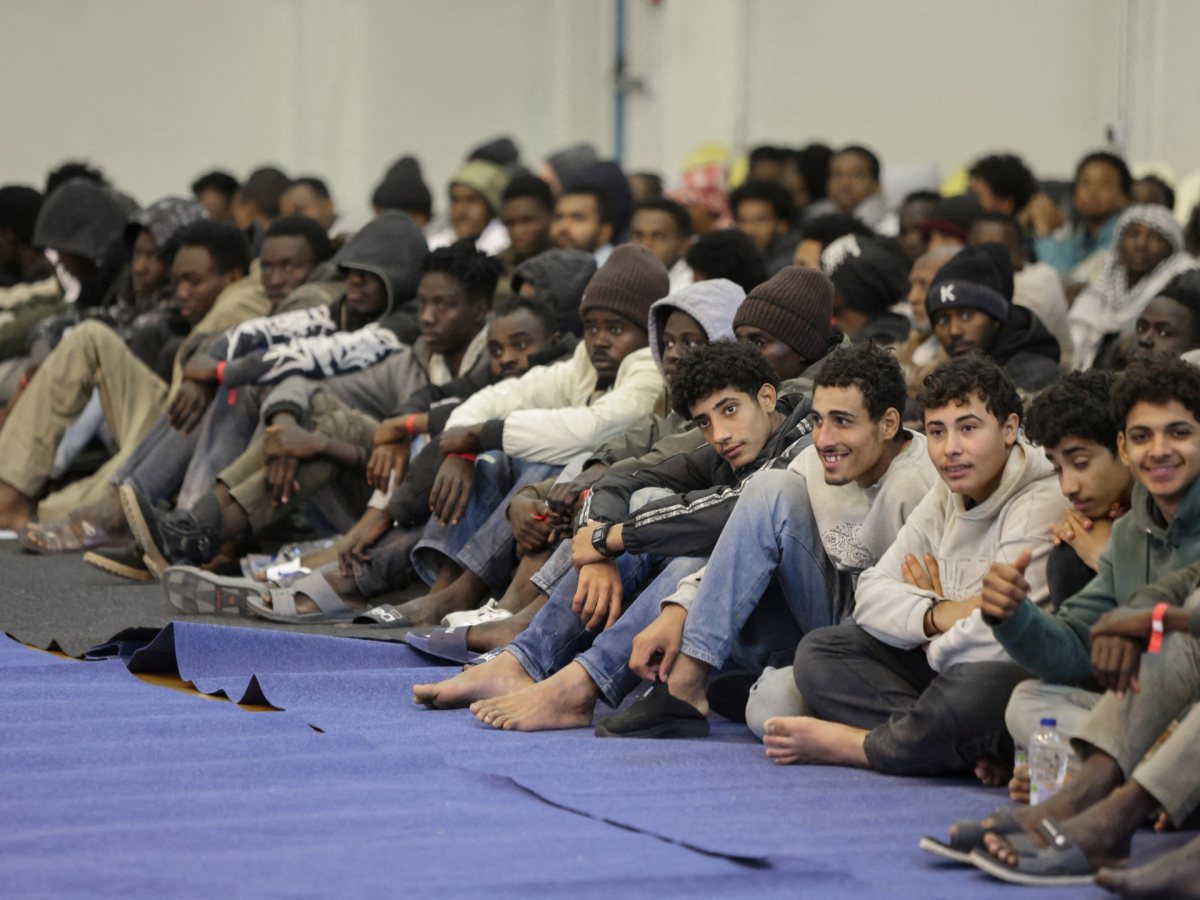
More than 1,000 refugees and migrants were rescued at sea off the southern Greek island of Crete on Saturday, and many of them are now without proper shelter as heavy rain and gale-force winds bear down on the island, according to Al Jazeera.
A Greek coastguard official told the Reuters news agency that the rescues were carried out in several separate operations. Roughly 700 more people made it to the island's shores on their own.
Two people were killed and four others hurt when their boat hit rocks on Gavdos, a small island lying south of Crete. Greece's Migration and Asylum Minister, Thanos Plevris, gave the casualty figures in an interview with the Greek broadcaster SKAI on Sunday. Reuters reported that the two bodies were recovered on Saturday.
More boats spotted by EU drones
The arrivals continued into Sunday. The Greek coastguard said 190 more people were rescued from three boats after drones operated by Frontex, the European Union's border agency, detected them.
According to Plevris, about 2,500 refugees and migrants are currently on Crete. Some 1,300 of them are in Heraklion, the island's main city, and about 300 are in the town of Ierapetra.
Camping outdoors as weather turns
Greek media reported that hundreds of people have been sleeping in the open in Heraklion and Ierapetra, with storms forecast to reach Crete by Monday.
Footage aired by Greek outlets showed large groups being taken by bus to Heraklion's port. Many remained outside there because a temporary accommodation centre had already filled up.
In Ierapetra, a site once used to house new arrivals was found to be unsuitable. Plevris said authorities had sent 11 tents and two prefabricated housing units to the town as a stopgap.
The minister said the new arrivals would be moved by ship to reception centres on the Greek mainland over the coming week. Those judged eligible for refugee protection are to be placed in government-run facilities.
Sudanese fleeing war make up most arrivals
Plevris told SKAI that most people landing on Crete are Sudanese nationals escaping the war in their country, with Bangladeshis forming the next-largest group.
He said those fleeing Sudan's conflict were taking serious risks to reach Europe, and described the sea crossing from Libya as one of the most perilous migration routes.
Greece has long served as a gateway into Europe for people travelling from Africa, Asia and the Middle East. The Greek newspaper Kathimerini reports that more than 25,000 people have arrived on Crete since the start of the year, out of at least 41,000 who have entered Greece by land and sea.
Deportation push and Rwanda plan
At the same time, Greece has stepped up the return of asylum seekers whose applications have been rejected this year.
It is also one of five EU member states seeking to send rejected asylum seekers to a proposed deportation centre in Rwanda, with transfers expected to begin next year, according to Al Jazeera.
The developments underline the growing role of the central Mediterranean route from Libya, which Sudanese civilians displaced by their country's war are increasingly using in an effort to reach Europe.
This story was prepared by the Hamasta Newsdesk with AI assistance, based on reporting by Al Jazeera. Read the original report. Photo: Al Jazeera.
Every moment, captured beautifully.
Events, corporate portraits, products and editorial shoots by our newsroom photographers.






More in International
See all
Guatemala arrests ex-colonel over alleged killings of 400 Ixil Maya in 1982

Eisenkot cool on unity government with Netanyahu after Tel Aviv talks
Gunmen kill 11 coal miners in Pakistan's restive Balochistan province

Spain exit poll puts conservatives and far right on brink of majority

Netanyahu offers Eisenkot first turn as PM in bid to break Israel's coalition deadlock

Global Community Remarks
0