
Guatemala arrests ex-colonel over alleged killings of 400 Ixil Maya in 1982
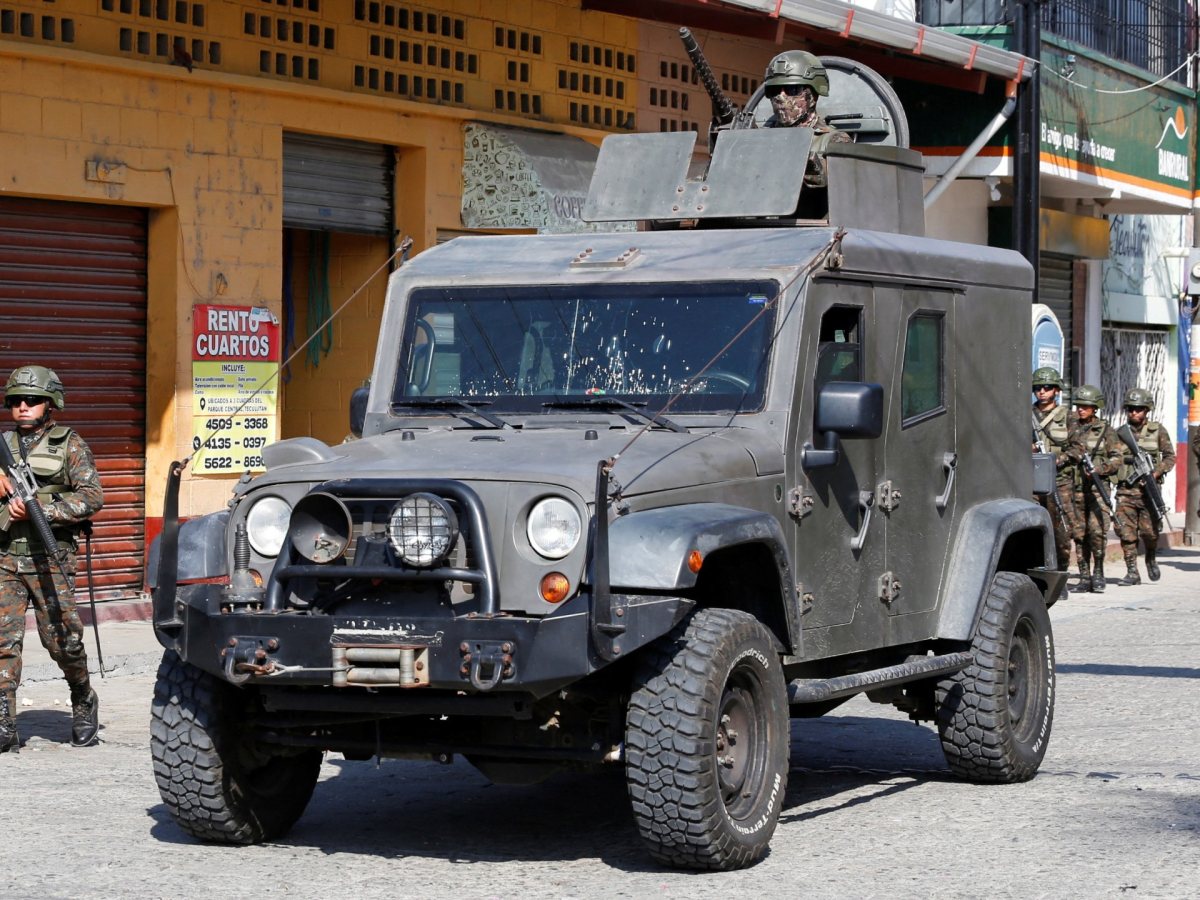
Guatemalan authorities have detained a retired army colonel accused of involvement in the killing and forced disappearance of hundreds of Indigenous Ixil Maya people in 1982, at the height of the country's civil war, according to Al Jazeera.
Otto Guillermo Eduardo Noack Sierra, 73, was taken into custody on Friday as he entered Guatemala. His arrest was announced on Saturday by two human rights organisations: the Association for Justice and Reconciliation (AJR) and the Human Rights Office of the Archdiocese of Guatemala (ODHAG).
Noack had reportedly been wanted under an international arrest warrant. He has asked to be moved to a private hospital while remaining in police custody.
Accusations of torture and mass graves
The two groups accuse Noack of overseeing the deaths and disappearances of at least 400 members of the Ixil Maya community at a military installation near San Juan Cotzal, a municipality roughly 100km north of Guatemala City.
In a joint statement, they alleged that army units under his command unlawfully rounded up hundreds of men and women and took them to the facility. There, the groups said, detainees were interrogated under torture, executed without trial and buried in mass graves.
The organisations further alleged that massacres followed in the victims' home villages, where children, pregnant women and elderly people were among those killed.
Rights campaigners have described the arrest as a step towards justice for the victims and their families.
A 'second phase' of the genocide case
According to the AJR and ODHAG, Noack's detention marks the start of a second phase of Guatemala's genocide case. This stage will focus on abuses committed before Efrain Rios Montt took power, during the military government of Fernando Romeo Lucas Garcia, who ruled from 1978 to 1982. Lucas Garcia died in exile in 2006.
His brother, Manuel Benedicto Lucas Garcia, a former chief of staff of the Guatemalan army, is accused of planning abuses against the Ixil Maya. He is awaiting a retrial on genocide charges after his trial was suspended in 2024.
Rios Montt, another wartime leader, was convicted of genocide in 2013, becoming the first former head of state to receive such a verdict, Al Jazeera reports. The conviction was later overturned by a court, and he died in 2018 before a retrial could take place.
In the decades after the war, Noack continued working in the public sector, including with Guatemala's national port authority and its maritime transport commission, according to the report.
A war that killed some 200,000 people
Guatemala's civil war lasted 36 years, from 1960 to 1996, pitting government forces against left-wing rebel groups. The United States supported the country's military-led, right-wing government during that period.
About 200,000 people were killed in the conflict, according to the Commission for Historical Clarification, a United Nations-backed truth body. It found that 83.3 per cent of the victims belonged to Guatemala's Mayan population, which today accounts for more than 40 per cent of the country's people. The killings of Mayan communities have been widely condemned as genocide.
The commission attributed 85 per cent of human rights violations to the army. Military commissioners were held responsible for 11 per cent and other security forces for 4 per cent.
Civil defence patrols, which frequently worked alongside the government, were found to have taken part in 18 per cent of the violations.
For survivors in the Ixil region, the case against Noack is likely to renew attention on crimes that have gone largely unpunished more than four decades on.
This story was prepared by the Hamasta Newsdesk with AI assistance, based on reporting by Al Jazeera. Read the original report. Photo: Al Jazeera.

Tell your story on screen.
Commercials, documentaries, interviews and social video, from script to final cut.





More in International
See all
World Court set to rule on The Gambia's Rohingya genocide case against Myanmar
UK, Gambia and 12 other nations back ICJ ruling on Myanmar's Rohingya genocide
Thirty-two years after fleeing, via Kenya, Canada and a US prison: America deports Rwanda genocide suspect Jean Leonard Teganya to Kigali
Gambia hails ICJ ruling that Myanmar committed genocide against Rohingya
Amnesty urges ICC to probe Israel for genocide over harm to births in Gaza
Global Community Remarks
0