
Kiir orders South Sudan officials to seek his approval before foreign travel after Kenya visit

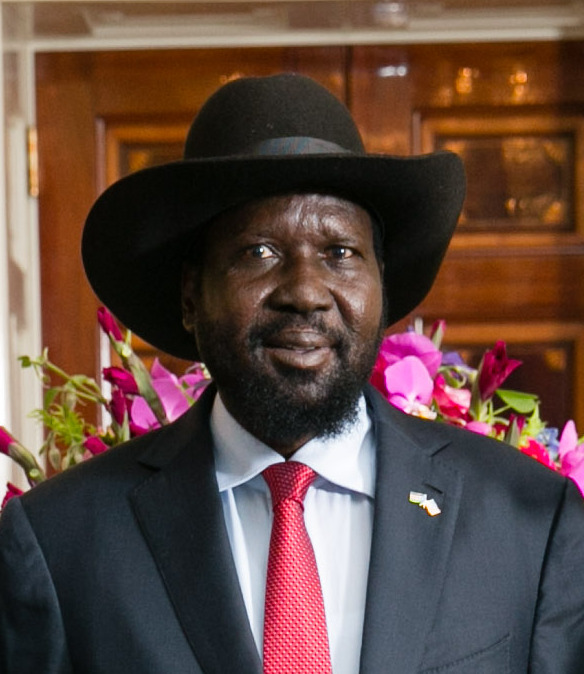
South Sudan President Salva Kiir has directed senior government officials and members of the security forces to obtain his permission before travelling abroad, days after returning from diplomatic visits to Kenya and South Africa.
Kiir restated the directive on Saturday, 10 October, while briefing an expanded meeting of the caretaker government in Juba on his trips, Radio Tamazuj reported. A statement from the President's Office said he "reiterated his directive requiring holders of constitutional offices to obtain permission before travelling", stressing "accountability and continuity in the conduct of government business".
Who is affected
According to reports, the restriction applies to constitutional office holders, military personnel and police officers, and will remain in force for three months.
A document dated 3 October, reportedly issued by the Chieftaincy of Military Intelligence and circulated earlier this month, goes further. It requires personnel of the South Sudan People's Defence Forces and other organised forces, from the rank of Second Lieutenant to General, to seek Kiir's approval as Commander-in-Chief. South Sudanese media say it also covers senior civilian officials, including ministers, government advisers, undersecretaries and directors-general. The authenticity and implementation of that document have not been independently verified.
The government says the measure is intended to guard against foreign interference in the electoral process. Political observers in Juba, however, see it as an attempt by Kiir to tighten his grip on the state ahead of the vote.
The Kenya and South Africa trips
Kiir held talks with President William Ruto in Nairobi in early October, in what was his first foreign trip since he dissolved the transitional unity government on 22 September. The talks focused on bilateral cooperation and preparations for the elections, and Kenya reportedly said it was ready to support the electoral process. Kiir then travelled to Pretoria, where President Cyril Ramaphosa also pledged support.
Kenya has long played a central role in South Sudan's affairs, having hosted the talks that led to the 2005 Comprehensive Peace Agreement and, more recently, the Tumaini peace initiative with opposition groups.
A country in transition
When he dissolved the unity government last month, Kiir also dissolved the legislative assemblies and dismissed the five vice-presidents, appointing a caretaker administration to run the country while election preparations continue. A two-week inter-party dialogue in Juba ended on 7 October with a focus on election-related issues.
South Sudan, which gained independence from Sudan in 2011, is scheduled to hold its first general election on 22 December. The expanded caretaker cabinet reaffirmed its commitment to holding the polls in December.
Restrictions on officials' travel are not new in Juba. Kiir has issued similar orders in the past requiring ministers to get presidential clearance before trips abroad, and earlier this year a visit to Kenya by one of the vice-presidents was reportedly blocked over a lack of presidential clearance.
Photo: U.S. Department of State / Wikimedia Commons, Public domain




Show the impact of your work.
Impact stories, campaign videos and community engagement for NGOs and programmes.

More in International
See all
Kenya joins US, China and Russia at Geneva talks as envoys push for Sudan ceasefire
Ghana tightens airport screening over Ebola risk from Kenya flights
Germany makes integration language test harder from November 1: what it means for Kenyans heading there

Abiy Ahmed at Mashujaa Day: 'History made us brothers, our choices must make us partners'
El Salvador bars entry to travellers from Kenya and seven other African countries over Ebola, as US raises advisory to Level 3

Nigeria records first Ebola case in Abuja as regional outbreak widens
Global Community Remarks
0