
Kenyan University Lecturers End Nationwide Strike After Sh20 Billion Deal With Government

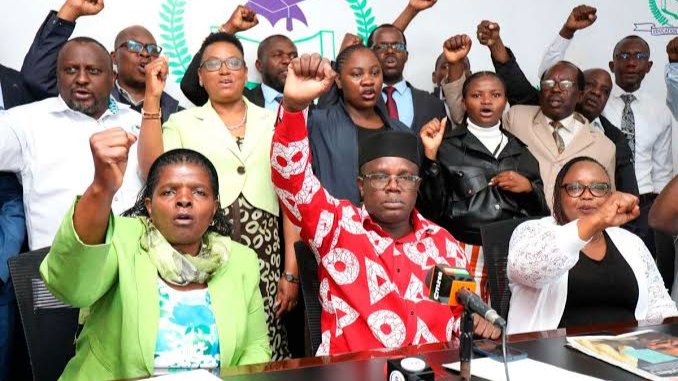
Thousands of students are expected back in lecture halls on Monday as lecturers and university staff unions reach a breakthrough agreement with the government following nearly four weeks of disrupted learning.
The nationwide university lecturers' strike in Kenya has officially come to an end after university staff unions signed a Sh20 billion agreement with the government, paving the way for the resumption of normal academic activities in public universities.
The agreement, signed on Friday, October 30, 2026, brings to an end an industrial action that began on October 2, paralysing teaching, learning and research activities across public universities.
The breakthrough followed weeks of negotiations between the government and university staff unions over the implementation of the 2025–2029 Collective Bargaining Agreement (CBA), which covers salary adjustments, allowances and other employment benefits.
The Universities Academic Staff Union (UASU), Kenya Universities Staff Union (KUSU) and KUDHEIHA were among the unions involved in the negotiations.
Government Agrees to Release Sh20 Billion
At the centre of the agreement is a government commitment of Sh20 billion towards implementing the 2025–2029 CBA.
Under the deal, university employees will benefit from an annual basic salary increase of 3.5 per cent over four years, alongside a five per cent annual increase in automatic salary increments.
The funds will be released in three instalments across three financial years:
- Sh6.7 billion in the 2026/2027 financial year.
- Sh6.7 billion in the 2027/2028 financial year.
- Sh6.6 billion in the 2028/2029 financial year.
The agreement also provides for improvements in staff allowances, including commuter, leave, passage and baggage allowances.
For employees in the lowest job category, the monthly commuter allowance is expected to increase from Sh3,500 to Sh18,000.
Why Lecturers Went on Strike
The strike began on October 2 after disagreements between university staff unions and the government over the implementation of the new collective bargaining agreement.
Lecturers had demanded better salaries, improved allowances and the fulfilment of previously negotiated employment benefits.
The unions initially sought approximately Sh98 billion to implement their demands over the four-year agreement, arguing that previous government offers were insufficient to address staff concerns.
However, following several unsuccessful negotiation attempts, both sides eventually reached a compromise on the Sh20 billion package.
The negotiations involved senior government officials, including Education Cabinet Secretary Julius Ogamba, National Treasury Cabinet Secretary John Mbadi and Interior Principal Secretary Raymond Omollo.
UASU Secretary-General Dr Constantine Wasonga said the final agreement was reached through negotiations rather than being imposed on the union.
Lecturers Protected Against Victimisation
Apart from salary improvements, the return-to-work agreement addresses concerns about possible victimisation of lecturers who participated in the industrial action.
The agreement provides for the withdrawal of disciplinary proceedings initiated against employees because of their participation in the strike.
It also protects lecturers employed on contractual terms from discrimination when their contracts are being renewed.
These provisions are intended to restore confidence between university managements and employees as academic activities resume.
Students Finally Get Relief
The end of the strike brings relief to thousands of university students whose academic programmes have been interrupted for nearly a month.
The industrial action disrupted lectures, examinations, research activities and other university programmes, leaving many students uncertain about their academic calendars and graduation timelines.
UASU has directed its members to resume teaching and other academic responsibilities on Monday, November 2, 2026.
University administrations are now expected to reorganise academic timetables, communicate revised examination dates and establish mechanisms to recover the lost learning time.
The return to normal operations will be particularly important for final-year students facing possible delays in completing their studies.
What Happens Next?
Although the agreement has ended the immediate labour dispute, its successful implementation remains a major concern.
University staff will be looking to the government to release the promised funds according to the agreed schedule and ensure that salary adjustments and outstanding arrears are addressed.
The government and university managements will also need to rebuild trust with lecturers to prevent similar disruptions in the future.
For students and parents, the immediate priority is the restoration of uninterrupted learning.
The Sh20 billion agreement therefore marks an important turning point for Kenya's public university sector. However, the real test will be whether both parties honour their commitments beyond the signing of the deal.
After weeks of uncertainty, university lecture halls are finally set to come alive again. The strike is over, but the responsibility of protecting the future of higher education now rests with the government and university leadership.




Show the impact of your work.
Impact stories, campaign videos and community engagement for NGOs and programmes.

More in Education
See all
MKU Sets December 4 For 30th Graduation Ceremony
Labour court lifts order forcing TSC to deduct KUPPET agency fees from JSS teachers in win for KNUT
KJSEA ends as over 2.5 million learners complete assessments, record 1.05 million KCSE candidates start written papers Monday
Court rejects TSC bid to enforce teachers' social media rules, says circular is too vague
HELB releases funds for three more loan batches as students wait on delayed tuition and upkeep cash
Nyatike teachers still waiting for hardship allowance years after approval, KNUT and MP Odege tell SRC to act
Global Community Remarks
0