
'Leave them and they rot from the inside': Forest Society chief defends logging in Aberdare, Ngong and Imenti as court order on Aberdare holds
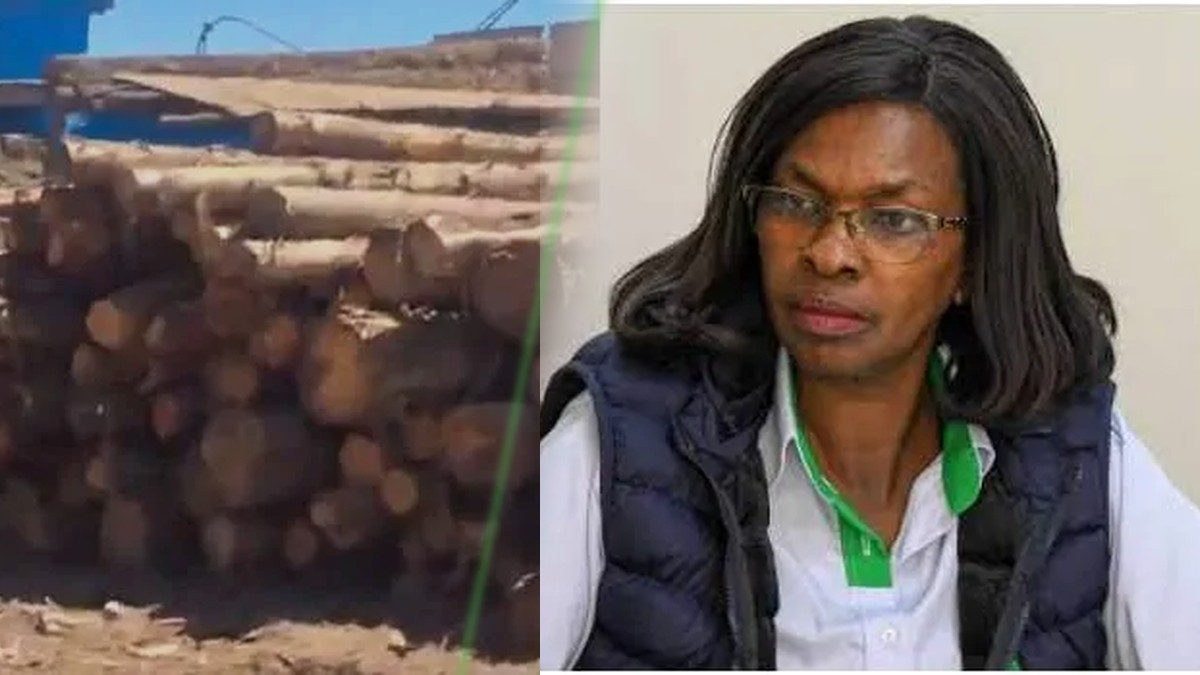
The head of Kenya's professional foresters' body has stepped into the row over logging in the Aberdare, Ngong Hills and Imenti forests, arguing that the trees being felled are commercial plantations that will rot from the inside if they are left standing any longer.
Forest Society of Kenya (FSK) president Charity Munyasya said in an interview with KBC on Tuesday that harvesting is "a planned scientific process" rather than the destruction that viral footage of log-laden trucks has led many Kenyans to believe.
The heart-rot argument
Ms Munyasya said exotic species such as eucalyptus, cypress and pine are planted in gazetted forests specifically to be cut, on a rotation of between 25 and 40 years depending on the species. Trees left beyond that cycle develop heart rot, a decay that starts at the core and spreads outwards, rendering the timber worthless and wasting the money spent growing it.
She insisted that indigenous trees are never cut. "Because 94 per cent of our government gazetted forests are indigenous forests, and these forests we don't cut. So anybody you see with an indigenous log, that's a thief, and that is why we have these rangers armed to counter these thieves," she said.
Only about six per cent of gazetted forest land is set aside for plantation forestry, she said. She also sought to separate two figures that are often confused: tree cover, which counts individual trees anywhere, stood at 12.13 per cent in 2021 and already exceeds the constitutional minimum of 10 per cent, while forest cover was lagging at 8.83 per cent.
Why the public is not convinced
The outcry has been building for two months. Videos and photographs of dozens of trucks leaving the forests with hundreds of logs, and of large cleared tracts, have circulated widely on social media.
In the Aberdare, Kipipiri MP Wanjiku Muhia and a resident, Elijah Gachuki, went to the Environment and Land Court in Ol Kalou, which on October 14 issued conservatory orders halting all felling and transport of timber from the forest, whether licensed or not. After visiting the Geta block, Justice Joseph Mugo Kamau extended the orders and directed the Nyandarua police commander and county conservator to enforce them. The case returns to court on November 11.
Sawmillers, who say KFS authorised them to harvest mature plantation blocks under work plans that require replanting within a year, argue the exercise is lawful plantation management, not deforestation.
In Ngong Hills, the Kenya Forest Service said in late October that harvesting of 56 hectares of mature plantation in the Kibiku block was competitively tendered and must take place between 6am and 6pm. It said it was still verifying a photograph of a log-laden trailer that residents claimed showed night logging, noting that the lorry had reportedly broken down, and that the picture alone did not prove trees were cut after hours.
The bigger picture
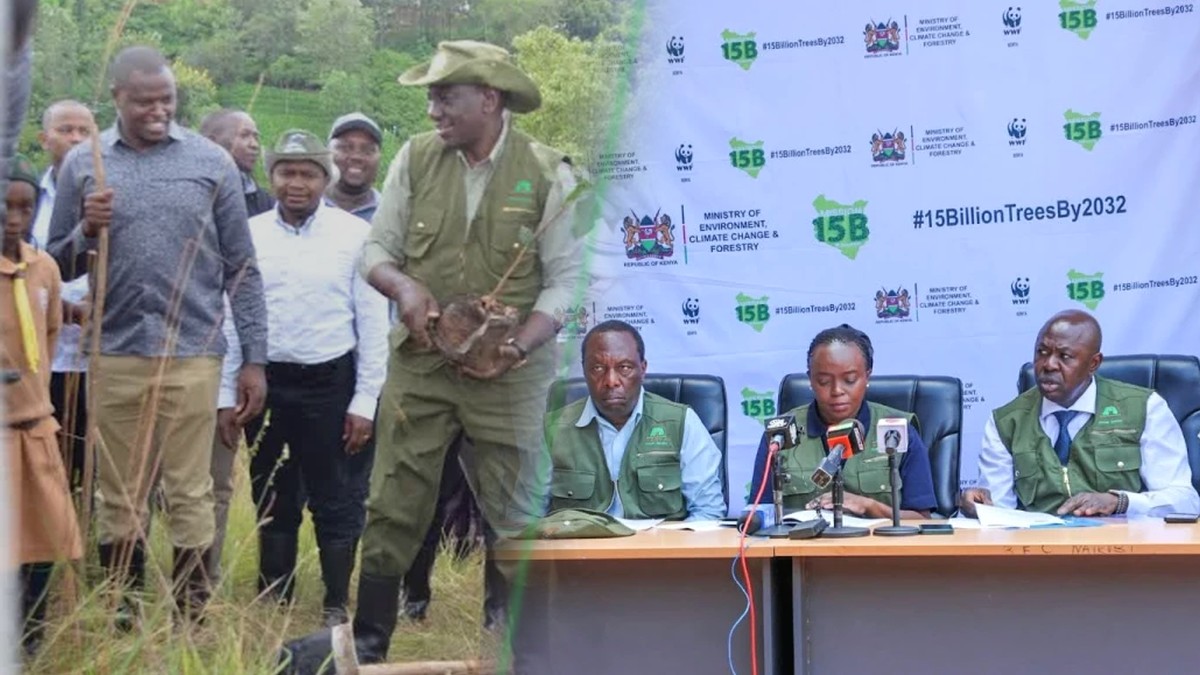
The Government is simultaneously pushing a 15 billion tree target and has told every village to plant trees monthly, which critics say sits awkwardly alongside convoys of timber leaving water towers. Conservation groups want transparency on who holds the harvesting licences, how volumes are tracked, and whether replanting actually happens, questions KFS has yet to answer in detail.
- FSK: only exotic plantation species are harvested, on a 25-40 year cycle
- 94 per cent of gazetted forests indigenous and protected; 6 per cent plantation
- Aberdare: court orders halting logging extended; hearing November 11
- Ngong Hills: KFS says 56-hectare Kibiku harvest tendered, night-logging claim under probe
Photos: Kenyans.co.ke screengrabs; KBC Digital. Thumbnail design: HAMASTA MEDIA.


Grow an audience that listens.
Social media management, digital campaigns and online storytelling that converts.



More in Environment
See all
Kenya signs China solar deal to power off-grid schools, clinics and water points in Tana River, Kilifi and Maasai Mara
Do camels warm the planet less than cows? Kenya runs Africa's first trial to measure camel methane

'Silenced with trumped-up charges': Coast green activists want convictions of two Kilifi defenders reviewed
Every village told to grow 1,000 trees a month as State turns to elders to hit one billion trees a year

Hot days, wet evenings: Met says over 40 counties will get above-average rain in November, but Nairobi and the north will also be warmer than usual
Global Community Remarks
0