
A boy who lost his hand to a chaff-cutter becomes the world's youngest: KNH performs rare nerve surgeries that could let two amputees feel again

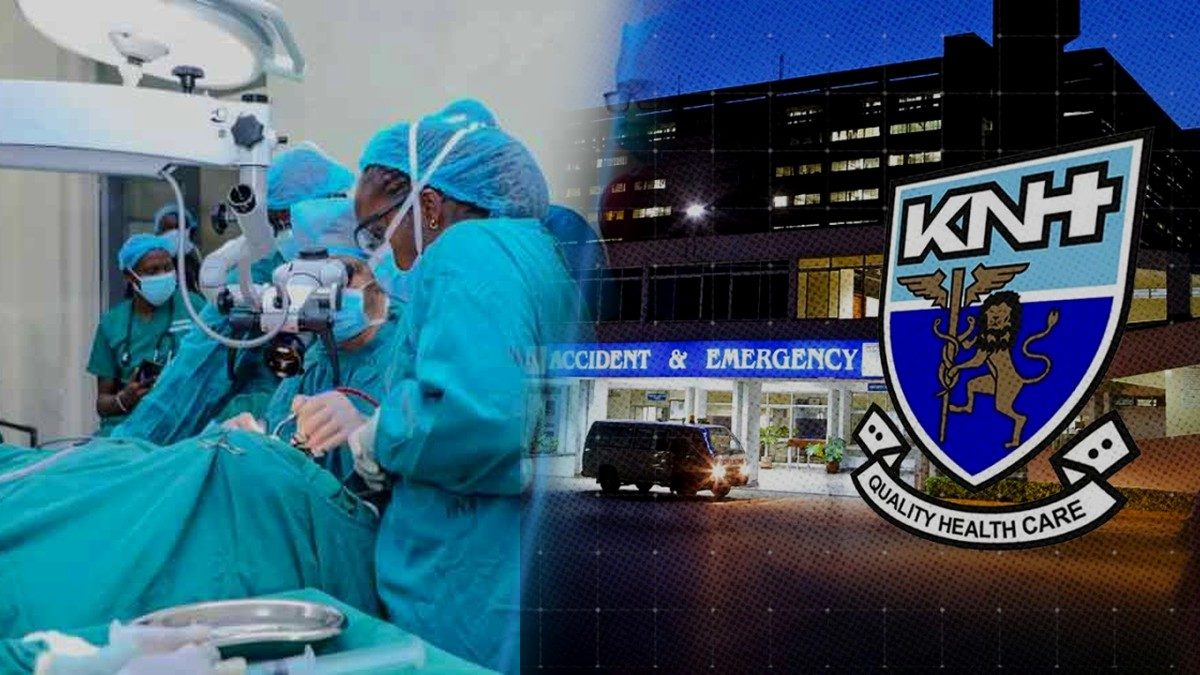
Four-year-old Jeremy was playing with another child in Kirinyaga when a chaff-cutter took his left hand. Doctors could not save it. Now, Kenyatta National Hospital (KNH) says he has become the youngest known person in the world to undergo a surgery that could one day let him feel through a prosthetic hand.
KNH announced on Tuesday that its teams carried out two pioneering nerve reconstruction surgeries on October 29 and 30, using a technique called Targeted Sensory Reinnervation (TSR). The operations were reported by Citizen Digital, KBC and The Standard.
What the surgery does
TSR redirects sensory nerves so that an amputee has the potential to perceive sensations such as pressure, vibration, heat and cold through a properly integrated prosthetic limb. It may also help with complications such as neuromas, the painful nerve growths that form after amputation, and phantom limb sensations.
- Jeremy's operation on October 29 took five and a half hours, after an earlier attempt to reattach his hand failed.
- The second patient, Charles Mogire, a 43-year-old painter from Ngong, underwent a five-hour procedure on October 30.
Mogire lost his left arm at the shoulder and his dominant right arm above the elbow in a severe electrical accident in November 2025. He had earlier received emergency treatment and skin grafting at KNH. According to the hospital, his was only the third transhumeral TSR, the variant for above-elbow amputations, done anywhere in the world, and it took less time than the first such procedure globally, which ran for just over seven hours.
Both surgeries were performed by Italian plastic and reconstructive surgeon Prof Alexander Gardetto, working with KNH specialists including consultant plastic surgeon Dr Christine Nyabuto, under an initiative now in its second year at the hospital that focuses on mentorship and knowledge transfer.
Paid for by SHA
KBC reported that both procedures were fully covered by the Social Health Authority, meaning the families paid nothing out of pocket. Both patients have been discharged and are recovering at home, with continued follow-up and rehabilitation.
KNH Head of Specialised Surgery Dr Benjamin Wabwire said the procedures marked a major advance in microsurgery and could widen treatment options for people living with limb loss.
Chief executive Dr Richard Lesiyampe said the operations show that complex, highly specialised treatment can be delivered in Kenya. "Through investment in specialist skills, infrastructure, technology, research and strategic partnerships, KNH continues to expand access to innovative healthcare while restoring hope, dignity and quality of life," he said.
'A turning point for our family'
For the families, the stakes are personal. Jeremy's mother, Mercy Muthoni, thanked the hospital for the care given to her son. Mogire's wife, Beatrice Moraa, described the operation as a turning point for the family.
Mogire himself said he hopes that, with the right prosthetic support, he will regain sensation, become more independent and return to painting.
KNH performed its first TSR in 2025 on a 22-year-old amputee. The hospital's claims about the results are its own, and the full benefit for both patients will depend on rehabilitation and access to suitable prosthetic limbs.
Photos: The Standard / KNH (surgeons during the nerve reconstruction procedure); Citizen Digital (Kenyatta National Hospital). Thumbnail design: HAMASTA MEDIA.




Show the impact of your work.
Impact stories, campaign videos and community engagement for NGOs and programmes.

More in Health
See all
Aga Khan Hospital reattaches severed arm in East Africa's first full-arm replantation
Baby born at 675 grams in Kijabe goes home after months in intensive care
Kenya traces all 135 Ebola contacts as 42-day countdown to outbreak's end begins
WHO warns testing and funding gaps are weakening global fight against drug resistance
US loses measles elimination status after 26 years as cases hit record high
Kenya orders 21-day quarantine for all citizens returning from DR Congo over Ebola
Global Community Remarks
0