
'We'll get home one day': An old copper wire upgrade grounds every US departure for four hours, the longest halt since 9/11

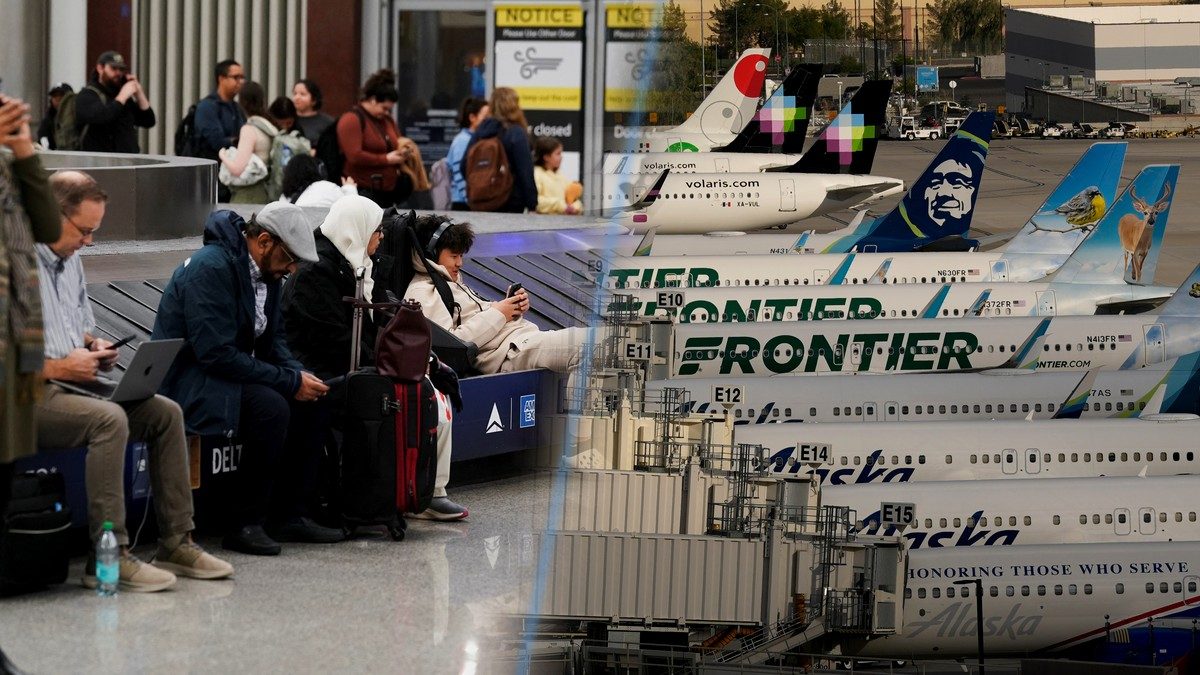
Passengers sat trapped in aircraft on the tarmac, unable to take off and unable to return to the gate, as one of the world's busiest aviation systems simply stopped. For more than four hours on Friday, not a single flight was cleared to depart from the continental United States, the longest such shutdown since the days after the September 11, 2001 attacks.
The Federal Aviation Administration (FAA) ordered the nationwide ground stop at 3.54pm Eastern Time, just before midnight in Kenya, citing "extraordinary circumstances and reasons for safety". Transportation Secretary Sean Duffy said the airspace reopened at 8.15pm, but warned travellers that recovery would be slow.
What went wrong
Officials traced the failure to the country's ageing air traffic control network. Duffy told a news conference that a contractor, L3Harris, was carrying out maintenance to move the system from old copper wire to fibre when a router being worked on began flooding other air traffic control systems with data, causing intermittent communication and radar problems.
"It was such an old wire that it was being discontinued," he said, describing the US as having "an incredibly old telecommunications system". The government is now trying to establish whether the fault lay with "incompetence" by the contractor or with faulty equipment.
Homeland Security Secretary Markwayne Mullin said there was no evidence of a cyber-attack and that the public was never in danger. FAA chief Bryan Bedford added: "We see zero evidence of anything nefarious, and zero evidence of anything AI related."
The numbers behind the chaos
- More than 4,700 flights were cancelled and about 10,000 delayed on Friday, according to tracker FlightRadar24
- Roughly 1.5 million passengers were booked on some 11,000 flights still due to depart when the order came, aviation data firm Cirium said
- At least 827 flights were diverted, 670 of them back to the airport they had left
- More than 3,500 further cancellations followed on Saturday, FlightAware data showed
Aircraft already in the air were allowed to land, and some international departures were cleared case by case. The effects spread abroad, with US-bound flights held in Europe and at Sydney in Australia.
At Los Angeles International Airport, traveller Nicholas Erdodi, who had flown in from New Zealand, told Al Jazeera the worst part was the silence. "Lack of information is what bothers me," he said, after being ordered off his plane and left to find a hotel.
'What's to say it's not going to happen tomorrow?'
The shutdown has reopened a long-running argument over funding. A Government Accountability Office report published in September had warned about copper cabling dating back to the 1960s and about upgrades being rushed and poorly scheduled. Duffy said the system needs an overhaul he put at about $50 billion, and both he and Mullin cautioned that a repeat is possible unless Congress approves money. President Trump has requested $30.1 billion for the work.
Former Transportation Security Administration chief John Pistole told the BBC that restarting within about four and a half hours showed resilience, "but what's to say it's not going to happen tomorrow?" He noted the timing, shortly before the busy Thanksgiving holiday.
What travellers should know
Analysts expect airlines to need several days to put crews and aircraft back in position. Anyone flying to, from or through the United States in the coming days, including Kenyans connecting through American hubs, would be wise to check with their airline before leaving for the airport. "Our top priority right now is making sure travelers get home safely," Duffy said, insisting "it is safe to fly".
Photos: Reuters and AP (John Locher) via Al Jazeera. Thumbnail design: HAMASTA MEDIA.



Know what people say about you.
Media monitoring, audience insights and strategic communication for your brand.


More in International
See all
Canada and China agree new tariff cuts as both look to reduce reliance on US
Chivayo helicopter crash: Report says aircraft flew into fog, no mechanical fault found

Mongolia's President Khurelsukh to resign over railway corruption claims
Botswana's Boko and Ivory Coast's Ouattara sign mining, energy and trade deals
Ukraine says Russia is targeting rescuers after 'double-tap' strike killed 72

Muhoozi back on X, warns media of 10-year jail terms over criticism of Museveni
Global Community Remarks
0