
Five EU nations set to unveil Rwanda 'return hub' for rejected asylum seekers
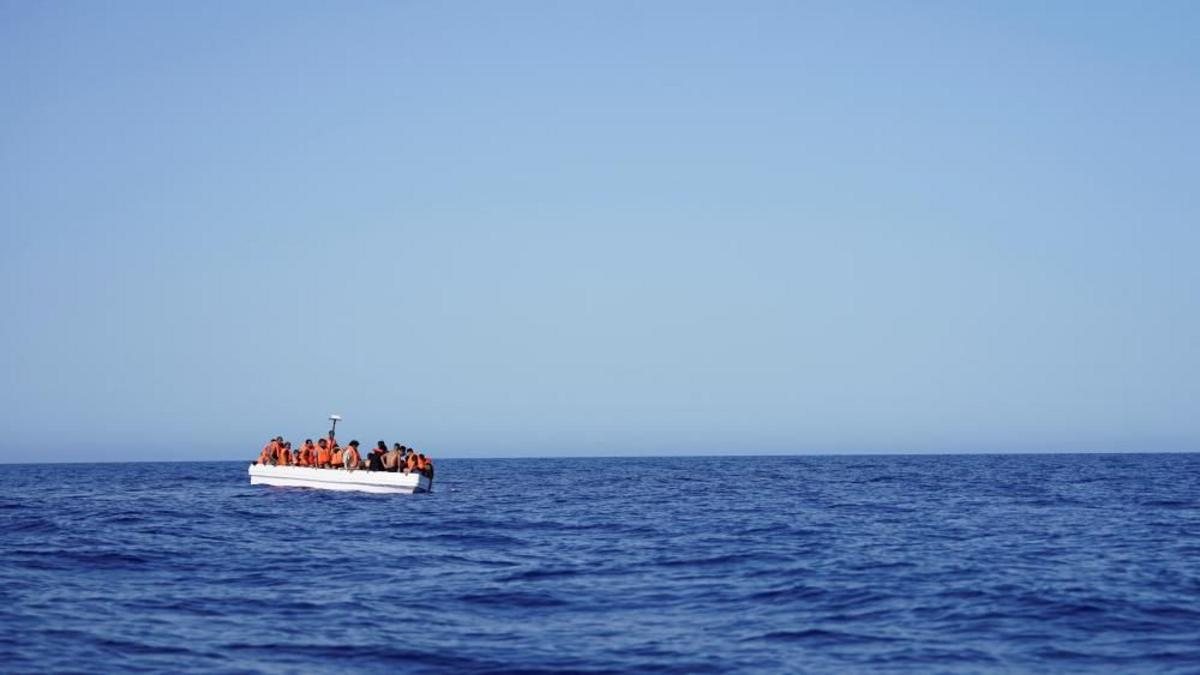
Five European Union countries are expected to announce plans for a deportation centre in Rwanda for migrants whose asylum claims have been rejected, according to BBC News Africa, citing diplomatic sources.
Germany, Denmark, Austria, Greece and the Netherlands are behind the proposal. It forms part of a wider European drive to increase deportations and reduce irregular migration into the bloc.
Details of the arrangement are expected to be made public on Monday in Vienna.
A small pilot to begin with
Diplomatic sources told the AFP news agency that the facility in Rwanda would first operate as a pilot project with capacity for about 100 people. Each of the five participating countries could send roughly 20 migrants.
The governments involved are reported to be hoping the centre will be operational in 2027. The United Nations' International Organisation for Migration (IOM) may take on a supporting role.
An IOM spokesperson said the agency had long experience helping migrants in transit, including in difficult settings, and confirmed it was holding talks with some EU states on plans for return hubs or similar arrangements.
The five countries first said in September that they were working towards an agreement with a country outside the EU to host such "return hubs". Rwanda had disclosed in August that it was in preliminary talks with several European states.
Different from the UK scheme
The proposed hub is understood to apply only to people who have exhausted all legal options to stay in the EU. This sets it apart from Britain's abandoned plan, which would have sent asylum seekers to Rwanda for their claims to be processed there.
The UK scheme never got off the ground because of legal challenges and was eventually dropped by the incoming Labour government in 2024.
The EU plan follows a recent reform within the bloc that opened the door to setting up return hubs beyond its borders. The five governments maintain that sending migrants abroad complies with EU and international law.
Rights groups raise alarm
Human rights organisations, however, warn the arrangement could breach migrants' rights.
Clementine de Montjoye, senior Africa researcher at Human Rights Watch, said selecting Rwanda was worrying, pointing to what she described as a "well-established record of repression of dissent, arbitrary detention, ill-treatment in detention". She also cited Kigali's backing of armed rebels in neighbouring Democratic Republic of Congo.
She argued that paying Rwanda to host deportees would harm those sent there while giving financial support and political leverage to a government she accused of serious abuses at home and abroad.
The independent EU Agency for Fundamental Rights said any country hosting a return hub must respect fundamental rights, including the principle that people should not be sent somewhere they face a serious risk of persecution. It added that unaccompanied children should not be sent to such centres.
Political pressure in Europe
With elections approaching in several EU member states, governments have been under pressure to demonstrate that they can control migration. Security worries, weak economies and frustration with ruling parties have all shaped public attitudes on the issue.
Figures from the European Border and Coast Guard Agency show almost 110,000 irregular crossings into the EU in the first 10 months of 2026, a fall of 29% compared with the previous year.
In October alone, about 18,100 crossings were recorded. That was around 6% lower than October 2025 but 22% higher than September, which the agency attributed largely to a sharp increase in arrivals via the Western African route to the Canary Islands.
This story was prepared by the Hamasta Newsdesk with AI assistance, based on reporting by BBC News Africa. Read the original report. Photo: BBC News Africa.


Grow an audience that listens.
Social media management, digital campaigns and online storytelling that converts.



More in International
See all
Canada and China agree new tariff cuts as both look to reduce reliance on US
Chivayo helicopter crash: Report says aircraft flew into fog, no mechanical fault found
Mongolia's President Khurelsukh to resign over railway corruption claims
Botswana's Boko and Ivory Coast's Ouattara sign mining, energy and trade deals
Ukraine says Russia is targeting rescuers after 'double-tap' strike killed 72
Global Community Remarks
0