
Coalition of the Willing meets in Berlin as Europe seeks seat at Ukraine peace talks
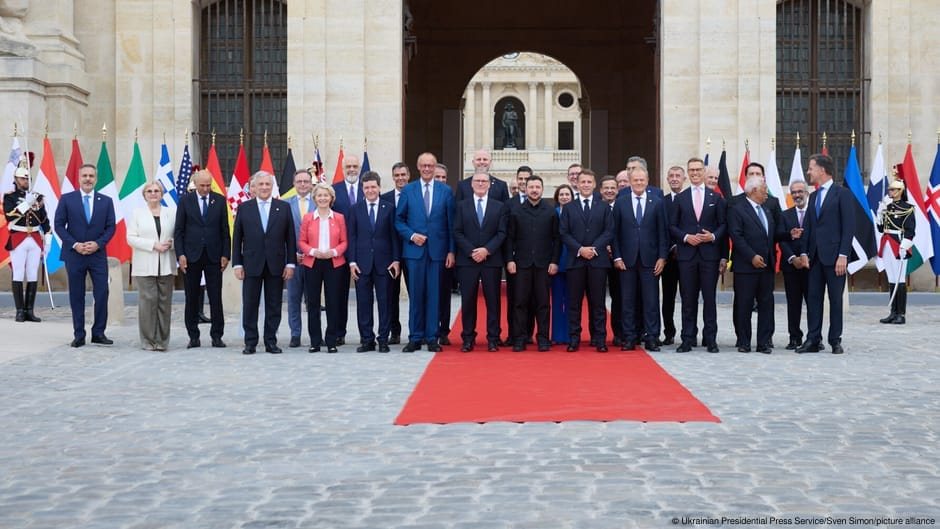
Around 20 heads of state and government, most of them European, are expected in Berlin on Thursday, November 19, for a meeting of the so-called "Coalition of the Willing" backing Ukraine, according to DW News.
The talks will focus on the future of Ukraine, which has been fighting a Russian invasion since February 2022 and is heading into another difficult winter. A central question is whether Europe can secure a meaningful role in any future negotiations to end the war.
Heavy security has been announced for Berlin's government district. It is not yet clear whether Ukrainian President Volodymyr Zelenskyy will attend, but several media outlets report that the chief US negotiators, Steve Witkoff and Jared Kushner, are expected to be present, DW News reported.
A coalition focused on the day after
The coalition brings together 36 countries and is led by Germany, France and the United Kingdom. It first met in London in March 2025.
Unlike other international forums, the group looks beyond immediate military and financial aid. Its members have said they are prepared, in principle, to help monitor a possible ceasefire inside Ukraine and to contribute to the security guarantees the country would need if fighting stopped.
However, Stefan Meister of the German Council on Foreign Relations (DGAP) told DW News he was not especially optimistic. He said Europe had yet to table a proposal setting out what guarantees it would offer, how many troops it would deploy, how it would protect a ceasefire or where it would accept compromises.
Who speaks for Europe?
The meeting follows talks in Abu Dhabi, United Arab Emirates, where Russia, Ukraine and the United States agreed only on a prisoner exchange. Further talks are planned, and DW News notes that Europe's chances of gaining a role in decisions on war and peace appear better than they have for a long time.
Both US and Russian officials have repeatedly argued that Europe does not speak with one voice, prompting debate among European leaders over who should represent the continent.
After an EU summit in Dublin on Friday, German Chancellor Friedrich Merz said concrete peace talks involving Europe were expected in the coming weeks and that Germany would have a seat at the table. It was later clarified in Berlin that Europe would be represented by Germany, France and the UK, joined by Poland and Italy, along with EU officials including European Council President António Costa.
Speaking in Abu Dhabi last week, Mr Kushner, who is US President Donald Trump's son-in-law, suggested that Europe naming a single spokesperson would be a bigger achievement than getting Russia to include it in talks.
German Deputy Government Spokesperson Sebastian Hille played down talk of Mr Merz becoming chief negotiator. "This is not about discussing individuals," he told reporters, adding that the priority was for Russian President Vladimir Putin to come to the negotiating table. He said Europe's strength lay in the unity of many countries and that peace could only be reached step by step.
Mr Meister argued that Europe's positioning was driven more by domestic politics than by the negotiations, pointing to elections in France and Poland next year and uncertainty over whether French support for Ukraine would continue in its current form.
Support waning in Germany
European backers of Kyiv are also facing shifting public opinion. According to an ARD DeutschlandTrend survey carried out in September 2026, 52% of eligible German voters still support weapons deliveries to Ukraine, while 42% say support has gone too far, the highest level of opposition recorded since the war began.
A separate study for broadcaster WDR in November 2026 found that Ukraine has become a more polarising issue in Germany than immigration. It showed 54% favour continued support for Kyiv, while just under 29% would prefer closer ties with Russia.
This story was prepared by the Hamasta Newsdesk with AI assistance, based on reporting by DW News. Read the original report. Photo: DW News.



Know what people say about you.
Media monitoring, audience insights and strategic communication for your brand.


More in International
See all
IAEA says North Korea has finished new extension at Yongbyon uranium enrichment plant
Hakeem Jeffries becomes first Black nominee for US House speaker
World Court set to rule on The Gambia's Rohingya genocide case against Myanmar
Senegal's ruling party Pastef expels President Faye and 31 others
Five EU states plan Rwanda deportation hub as critics warn of rights 'black hole'
Global Community Remarks
0