
France's Édouard Philippe pledges retirement at 65 and spending cuts as poll ratings slide
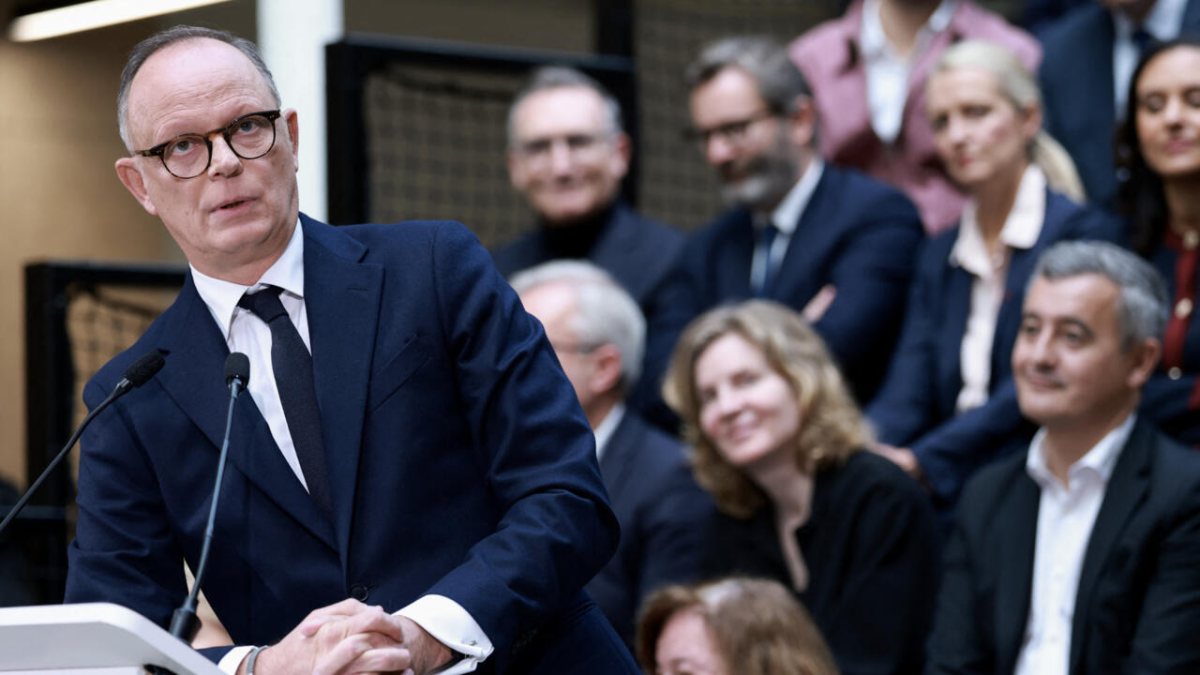
Former French prime minister Édouard Philippe has promised to raise the country's retirement age to 65, cut public spending and abolish the statutory 35-hour working week. He set out the austerity plan on Wednesday as his presidential campaign struggles in the polls, according to France 24.
Philippe, who served as prime minister under President Emmanuel Macron, told a press conference that France was on the brink of a spiralling financial crisis. He argued that tough measures could no longer be put off if the country was to avoid economic catastrophe.
"We're at risk of seeing our destiny escape us," Philippe said. He added that France risked humiliation at the hands of its creditors.
Campaign under pressure
Philippe was once seen as an early frontrunner for next spring's election, which is due to take place in April and May. Opinion polls now suggest he could fail to reach the second-round runoff.
For the past few months, far-right leader Marine Le Pen and far-left figure Jean-Luc Mélenchon have led the polls. That has increased pressure on Philippe to revive what France 24 described as a lacklustre campaign.
Warning of a southern European-style crisis
Philippe acknowledged that many French people believe he is exaggerating the danger. He said he hoped he was wrong, but maintained that France was close to the position Italy, Greece and Portugal found themselves in during the eurozone debt crisis of 2010 to 2012. In that period, several southern European countries were forced by financial markets to adopt harsh austerity programmes.
France has so far avoided cuts on that scale. Pension reforms in particular have repeatedly been diluted or postponed.
According to European Commission figures cited by France 24, French public debt stood at 119% of gross domestic product at mid-year. That is the third-highest level in the eurozone, behind Greece and Italy. The budget deficit is expected to reach 5.5% of GDP this year, the highest among the 21 eurozone members. The deficit has driven a sharp rise in France's borrowing costs.
The key proposals
Philippe's plan aims to bring the deficit below the European Union's 3% limit by the end of the next five-year presidential term. Its main measures include:
- Raising the retirement age to 65 from the current 62.9 years
- Scrapping the statutory 35-hour working week
- Deep reductions in public spending
France has one of the lowest retirement ages among developed economies. A 2023 reform was meant to raise the age gradually from 62 to 64, but it was suspended last year. The minimum age for a full pension was left at 62.9.
Rivals take the opposite view
Philippe's pension stance is sharply at odds with those of the two poll leaders.
On Tuesday, Le Pen said that if she won in May, she would let people who started work young retire between the ages of 60 and 62. This would apply after 40 to 42 years of contributions, depending on when they joined the workforce.
Mélenchon has proposed cutting the retirement age to 60.
The contrast sets up a clear choice for French voters between fiscal tightening and more generous pension provision. It comes as the country grapples with rising debt and growing scrutiny from financial markets.
This story was prepared by the Hamasta Newsdesk with AI assistance, based on reporting by France 24. Read the original report. Photo: France 24.


Take your event live to thousands.
Multi-camera live streams, panel discussions and digital broadcasts with professional crews.




More in International
See all
Malta Bars Nationals of 12 Countries, Including 3 African States, From Permanent Residency

World Bank says Lebanon's reconstruction lagging as Israeli occupation persists

Israeli court extends detention of Gaza hospital director Abu Safia without charge

US sounds out Ukraine on ceding Donetsk for NATO-style security guarantees

Sweden Bars Berry Pickers and Personal Assistants From Work Permits

Global Community Remarks
0