
Feed costs, fodder gaps and weak markets holding back Kenya's dairy sector, report says
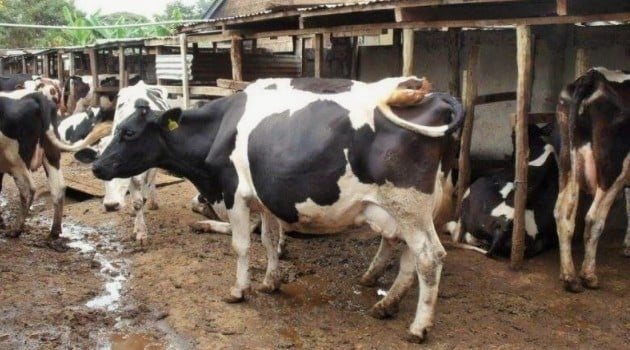
Expensive animal feed, recurring fodder shortages and poorly functioning markets are preventing Kenya's dairy farmers from raising milk output and earning more, according to a new assessment by Heifer International Kenya reported by Capital FM Business.
The study, titled Unlocking Kenya's Dairy Potential Through Better Feed and Fodder Systems, points to long-standing weaknesses in feed production, quality checks, animal health services and milk marketing as structural barriers to growth in the sector.
It finds that farmers lean heavily on costly commercial concentrates when the weather turns dry, while poor fodder conservation and uneven feed quality eat into both yields and profits.
County-level picture
The assessment covered dairy systems in 11 counties, with closer analysis of Nyandarua, Embu and Elgeyo Marakwet.
In Nyandarua, the report says, climbing feed prices, limited storage and little mechanisation have eroded the advantage of good farming conditions. A sample of 18 farmers there found that 66 percent had received no veterinary or extension visit in the previous year.
In Embu, farms of between 0.5 and 0.7 hectares are too small for most farmers to grow enough fodder year-round, and stakeholders raised concerns over the nutritional value and safety of feeds sold commercially.
Elgeyo Marakwet contends with seasonal fodder shortfalls, thin feed markets and limited access to dairy services. Average output there stands at roughly 1.7 litres per cow a day, the report notes.
The authors argue that better cattle breeds will not on their own lift yields unless animals are properly fed, receive preventive care and farmers get consistent advice.
Payment delays push farmers to informal buyers
Although about 79 percent of farmers reportedly had access to working milk coolers before sale, late payments by cooperatives and processors continue to drive some producers to informal traders who pay cash on the spot.
Cooperative payments in Nyandarua can take 30 to 60 days, while consultations in Embu found informal buyers offering up to Sh50 a litre at the farm gate.
The report warns that adding cooling capacity will not necessarily raise deliveries to cooperatives unless farmers receive competitive prices, dependable payments and rewards for quality milk. It also flags limited access to affordable credit as a constraint on investment in fodder production, machinery, transport, cooling and processing, especially for women, young people and new agribusinesses.
Milk shortage backdrop
The findings come as a milk shortage disrupts supply across the country, with supermarkets in Nairobi and other towns reporting low stocks of popular brands. The shortfall has largely been blamed on prolonged dry weather that has reduced pasture and fodder, raising feed spending while yields fall.
Kenya Dairy Board data cited by Capital FM Business shows formal deliveries to processors fell from 84.4 million litres in June to 81.3 million litres in July, and further to 75 million litres in August.
Recommendations
Heifer International Kenya recommends:
- Building commercially sustainable fodder enterprises
- Strengthening feed-quality assurance
- Widening access to mechanised harvesting and conservation services
- Integrating animal health, breeding, feeding and extension services
- Improving cooperative governance and offering more responsive financing
"Resilience needs to be integrated into viable dairy business models, rather than treated only as a training theme," the report states.
The government has listed commercial feed production, fodder conservation and mechanised production as priorities under the National Agri-food Systems Investment Plan, with indicative allocations of Sh15 billion for commercial feed enterprises and aquaculture and Sh10 billion for irrigated and mechanised feed and fodder production and reserves.
However, the report cautions that spending should reflect differences between counties in dairy systems, market maturity and production conditions. It urges priority for commercially viable interventions over the next one to two years, followed by scaling up quality seed systems, private-sector veterinary networks, processing capacity and climate-resilient infrastructure in the medium term.
This story was prepared by the Hamasta Newsdesk with AI assistance, based on reporting by Capital FM Business. Read the original report. Photo: Capital FM Business.




Show the impact of your work.
Impact stories, campaign videos and community engagement for NGOs and programmes.

More in Business
See all
KAA Proposes Higher Parking Fees and New Ride-Hailing Charges at Kenyan Airports

Africa's instant payments hit 71.4bn transactions, but trust gaps slow uptake
South C residents seek probe into 15-storey block next to collapsed building
Egypt nears $2.3bn IMF payout after staff-level deal on final loan review
Ship agents urge faster upgrades at Mombasa and Lamu ports to curb congestion

Global Community Remarks
0