
Ukraine knocks out Kerch Bridge road span as Medvedev says 'no one needs Europe'
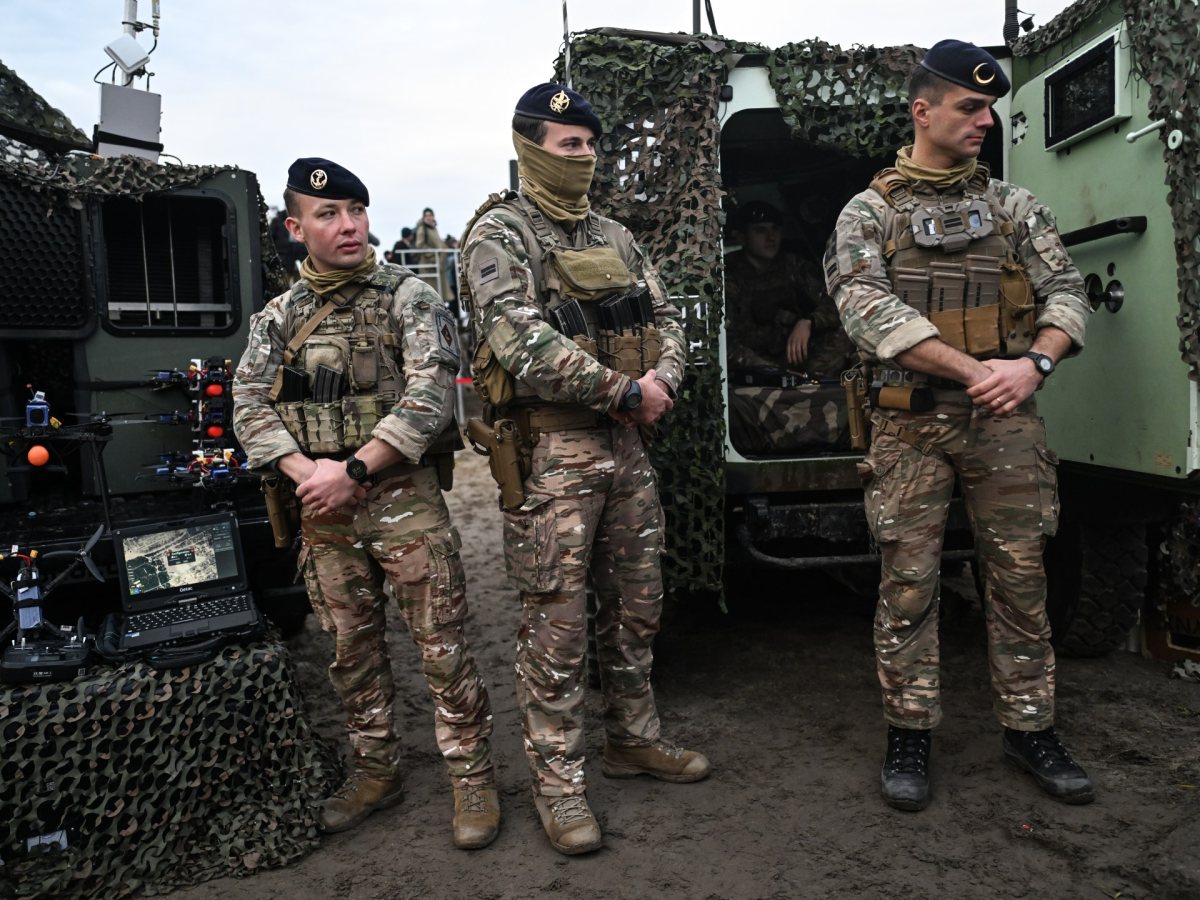
Ukraine says it has brought down the road section of the Kerch Bridge and may have disabled its railway span after three days of drone and missile strikes. The operation cut a vital Russian supply line into occupied Crimea, according to Al Jazeera.
It was Ukraine's fourth, and most complex, attack on the bridge linking Russia to the Crimean peninsula. Ukraine's General Staff said the short supply route from Russian territory had been destroyed. The Security Service of Ukraine (SBU), which took part, described the strike as another blow to Russian prestige.
How the operation unfolded
According to Al Jazeera, Ukraine's military said it had spent a month systematically destroying Russian air defence systems, radars and electronic warfare equipment along the approach to the target.
On November 16, Ukrainian drones damaged the bridge's road surface and weakened its steel arched span, which lets ships pass between the Sea of Azov and the Black Sea. The next day, the SBU said its Palyanytsia kamikaze drones caused the roadway section to collapse. President Volodymyr Zelenskyy said Neptune and Flamingo missiles, along with Ruta drones, hit the separate railway span.
Russia's Ministry of Defence said it intercepted 4,305 Ukrainian drones over that 48-hour period, against a daily average of 882 the week before.
On November 18 and 19, Ukraine again fired Neptune missiles at the railway span and said rail service had been suspended. It remained unclear whether the rail bridge had been permanently put out of use.
Rival accounts
Russian President Vladimir Putin dismissed the attack as a strike on a purely civilian facility, insisting no oil or petroleum products had been moved across the bridge. Ukraine's General Staff countered that the crossing carried fuel, ammunition, equipment and personnel, while the Defence Ministry called it a war machine.
The bridge attack formed part of a wider campaign against oil facilities and supply routes in Russia's Rostov and Krasnodar Krai regions. On the same day as the main strike, Ukraine hit the M-14 Rostov-Crimea highway and refineries and depots in Azov, Ilsky and Afipsky. Kyiv has also struck at least 300 Russian fuel and oil vessels in the Black Sea and Sea of Azov between July and September, Al Jazeera reported.
Southern Ukraine is where Russia's offensive is now most active, with the heaviest assaults reported near Dobropillya and Huliaipole.
Going it alone on technology
Defence Minister Yevhen Khmara said the strike relied entirely on Ukrainian weapons and solutions. That meant Ukraine did not use the US-controlled Starlink and Starshield satellite systems, which Zelenskyy said had again been compromised from November 13. Instead, Ukraine built a network of drones acting as signal repeaters.
Kyiv also hit refineries as far away as Volgograd, Samara, Salavat and Tatarstan. US negotiators Jared Kushner and Steve Witkoff have reportedly threatened to cut off intelligence sharing if Ukraine keeps targeting Russian refineries.
Shenzhen summit and Europe's response
On November 19, Putin and US President Donald Trump met as guests of Chinese leader Xi Jinping in Shenzhen, the first time all three had met together. Dmitry Medvedev, deputy head of Russia's Security Council, hailed the trio as shaping a new security order, writing: "Today … no-one needs Europe."
Putin said he and Trump remained aligned on the proposals discussed in Alaska in August 2025, which involved Ukraine ceding the part of Donbas Russia has not captured and staying out of NATO.
Europe, however, continued its support. Over the past week the EU released 1.7 billion euros from its Ukraine Support Loan and 8 billion euros from the Ukraine Facility. It also agreed to raise 45 billion euros to cover most of Ukraine's projected 70-billion-euro shortfall next year, including 25 billion euros for military aid.
Divisions remain. EU states decided that representatives of the bloc's five largest economies, rather than foreign policy chief Kaja Kallas, should represent Europe in talks with Russia and Ukraine. Kallas argued she holds that mandate and warned against copying the American approach of sending envoys without institutional roles.
This story was prepared by the Hamasta Newsdesk with AI assistance, based on reporting by Al Jazeera. Read the original report. Photo: Al Jazeera.


Grow an audience that listens.
Social media management, digital campaigns and online storytelling that converts.



More in International
See all.jpeg)
Italy hit by nationwide strike as workers and students protest living costs

Indian national jailed for over 19 years in US plot to kill Sikh separatist leader
African negotiators at COP31 demand concrete action on climate justice
Qatar pledges $16.5bn in new German investment as emir visits Berlin
US Senate passes bipartisan bill to fast-track energy project approvals
Global Community Remarks
0