
Trump threatens to ban US firms from building AI data centres abroad
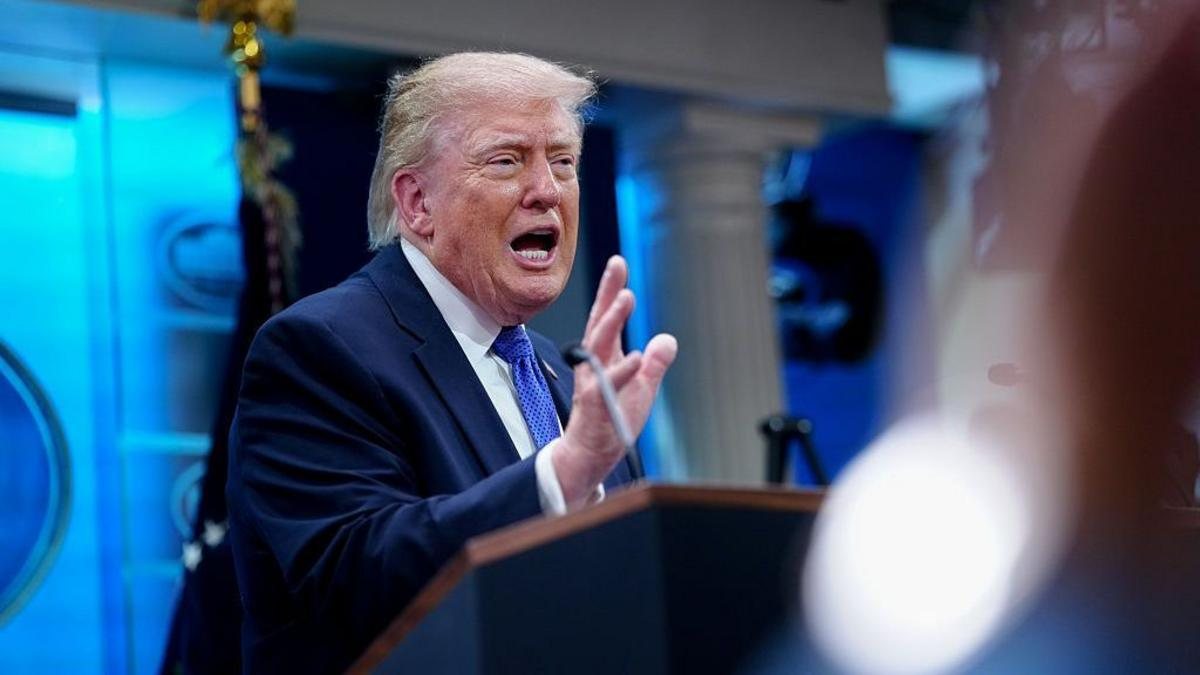
US President Donald Trump has said he intends to stop American companies from building artificial intelligence (AI) data centres outside the United States, warning that firms which do so could face a "tremendous tax", according to BBC News World.
Speaking to reporters at a press briefing after returning from a trip to Asia, Mr Trump offered little detail on how the proposed measure would work. He acknowledged that members of his own cabinet were learning of the idea for the first time as he spoke.
It is not clear how such a ban would be enforced if it were introduced.
China at the centre of the argument
Mr Trump framed the proposal as part of a contest with China over AI. He said the US was ahead in building data centres and that he would not let Beijing overtake Washington in the technology, which he refers to as "super intelligence".
He argued that data centres built abroad would end up in Chinese hands. "We're going to keep it all in this country," he said.
The president also appeared to signal that the announcement was unplanned, telling reporters he had not yet raised the matter with his staff but was informing them now because they were present.
Overseas projects already under way
Major technology companies, among them Meta and Google, have already signed agreements to build data centres outside the US. These firms, often described as AI hyperscalers because of the scale of their spending on AI, have been looking beyond American borders for sites.
In September, Google announced a €13bn ($15bn) investment in AI infrastructure in Finland, including money for three data centres. Construction on two of those centres was halted last month amid concerns over the clearing of more than 300 hectares of forest, BBC News World reported.
Mr Trump singled out the Finnish project, saying his administration was "not allowing that to happen".
Canada has also positioned itself as an alternative destination for such facilities, having so far faced less local opposition to projects.
A political flashpoint at home
Data centres became a major issue in the US midterm elections held on 3 November. Many Democratic candidates campaigned on promises of stricter rules for their construction and went on to win.
Many of the facilities are located in rural areas, where residents have raised concerns about noise and the large amounts of energy they consume.
Mr Trump urged communities not to reject the projects but to extract benefits from them instead, saying they should make the companies pay. He described data centres as "tremendous assets" and said many places were keen to host them.
Why data centres matter
Data centres are central to the current AI boom. The large, warehouse-like buildings house the advanced chips and servers needed to run AI tools such as ChatGPT and Claude.
According to the Pew Research Center, there were roughly 3,000 data centres across the US as of April, with about 1,500 more at various stages of approval or construction.
Any restriction on where US firms can build would have implications for countries seeking to attract investment in digital infrastructure, though no formal policy has yet been set out.
This story was prepared by the Hamasta Newsdesk with AI assistance, based on reporting by BBC News World. Read the original report. Photo: BBC News World.

Tell your story on screen.
Commercials, documentaries, interviews and social video, from script to final cut.





More in International
See all.jpeg)
Russian drone and missile barrage kills at least eight in Ukraine, hits Kyiv bridges
Belgrade mayor Aleksandar Sapic charged with assaulting opposition councillor

Taliban accuse Pakistan of backing armed groups opposed to their rule
Israeli-backed Palestinian militias accused of role in central Gaza operation

Ukraine knocks out Kerch Bridge road span as Medvedev says 'no one needs Europe'
Global Community Remarks
0