
Taliban accuse Pakistan of backing armed groups opposed to their rule
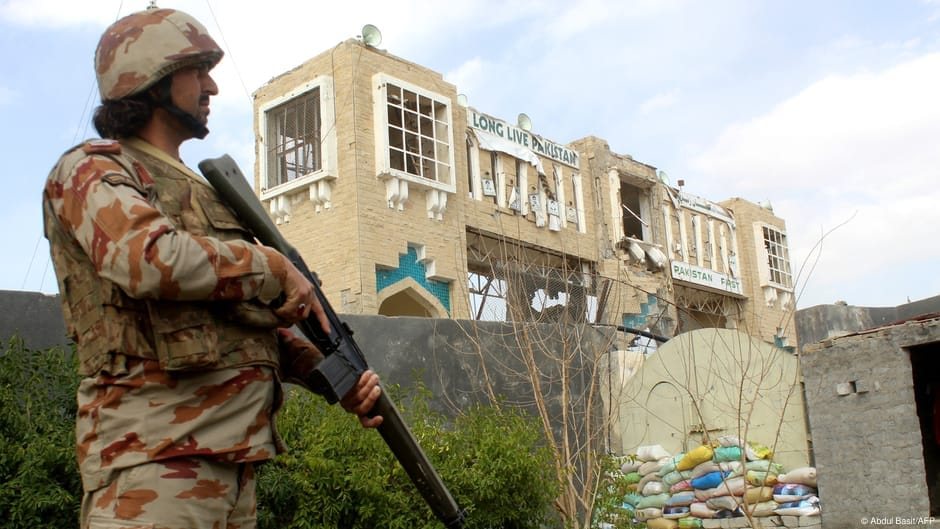
Afghanistan's Taliban government has accused neighbouring Pakistan of supporting and harbouring armed groups that oppose its rule, an allegation Islamabad has firmly denied, according to DW News.
The charge, made after months of clashes between Taliban and Pakistani forces along their shared frontier, threatens to widen an already deep divide between the two countries.
Taliban Foreign Minister Amir Khan Muttaqi recently claimed Pakistan had begun what he described as a "project to destabilize Afghanistan". He alleged that thousands of armed men had massed along the Durand Line, the disputed boundary between the two states.
Attacks claimed by resistance groups
DW News reported that an anti-Taliban outfit, the Afghanistan Freedom Front (AFF), reportedly fought Taliban forces in July in Zebak district of Badakhshan, a province in the north-east. The group said it also staged attacks in Nooristan and Kunar provinces in October.
A second group, the United Front of Afghanistan, said it had attacked Taliban positions in Kandahar province, which borders Pakistan.
Speaking to DW's Pashto-Dari service in September, chief Taliban spokesperson Zabihullah Mujahid alleged that fighters behind the Badakhshan violence had entered from Chitral in Pakistan and later retreated there, claiming Pakistani military personnel accompanied them.
Pakistan's Ministry of Information quickly rejected the claims as propaganda. The resistance groups themselves insist they receive no outside backing and describe their struggle as homegrown.
Analysts divided
More than five years after returning to power in Kabul, the Taliban have tightened their grip on the country and largely crushed both armed opposition and political dissent.
Shinkai Karokhail, a former Afghan legislator, told DW News it would be logistically impossible for anti-Taliban fighters to cross from Pakistan without Islamabad's help.
Former Pakistani senator and analyst Afrasiab Khattak also said the support was genuine, telling DW that Taliban opponents hold meetings in Islamabad as part of Pakistan's Afghan policy.
Qandil Abbas, an associate professor at Quaid-i-Azam University in Islamabad, disagreed, saying Pakistan might offer political but not military assistance.
Ali Ahmad Jalali, a professor at the National Defense University in Washington and Afghanistan's interior minister from 2003 to 2005, said Islamabad could be using such groups as leverage, given its history of backing Afghan factions. The Taliban themselves enjoyed close ties with Pakistan during their first period in power in the 1990s, though Islamabad has always denied claims by some US officials that it continued supporting them after the 2001 attacks.
Pakistan's security demands
Pakistan has repeatedly pressed the Taliban to act against the Tehreek-e-Taliban Pakistan (TTP), which has attacked Pakistani civilians and soldiers, and the Baloch Liberation Army, a banned separatist group active in Balochistan. Islamabad accuses both of operating from Afghan soil with Taliban backing.
Speaking at the Economic Cooperation Organization summit in Islamabad this week, Foreign Minister Ishaq Dar said Afghan authorities must address neighbours' legitimate security concerns, especially terrorism. Pakistan said Afghanistan was not invited to the meeting because it does not recognise the Taliban government.
Jalali argued Pakistan was asking for something the Taliban may be unwilling or unable to deliver, noting the TTP's long-standing ideological and personal links with the Afghan Taliban. He said he did not believe Pakistan sought to topple the Taliban, but rather to pressure them into cooperating against the TTP.
Experts also cited the Taliban's efforts to build ties with India, Pakistan's regional rival, as a worry for Islamabad. Afghan researcher Malek Sitez said, however, that Pakistan no longer wields the influence over Afghanistan it once did.
Political analyst Aziz Barez cautioned that anti-Taliban groups could not fully trust Islamabad, as any support could prove temporary.
"It is possible that Pakistan and the Taliban will resolve their differences tomorrow and become close allies again," he told DW.
This story was prepared by the Hamasta Newsdesk with AI assistance, based on reporting by DW News. Read the original report. Photo: DW News.


Grow an audience that listens.
Social media management, digital campaigns and online storytelling that converts.



More in International
See all.jpeg)
Russian drone and missile barrage kills at least eight in Ukraine, hits Kyiv bridges
Belgrade mayor Aleksandar Sapic charged with assaulting opposition councillor
Israeli-backed Palestinian militias accused of role in central Gaza operation
Trump threatens to ban US firms from building AI data centres abroad
Ukraine knocks out Kerch Bridge road span as Medvedev says 'no one needs Europe'
Global Community Remarks
0