
Anthropic mathematician claims AI-assisted proof of the Riemann hypothesis
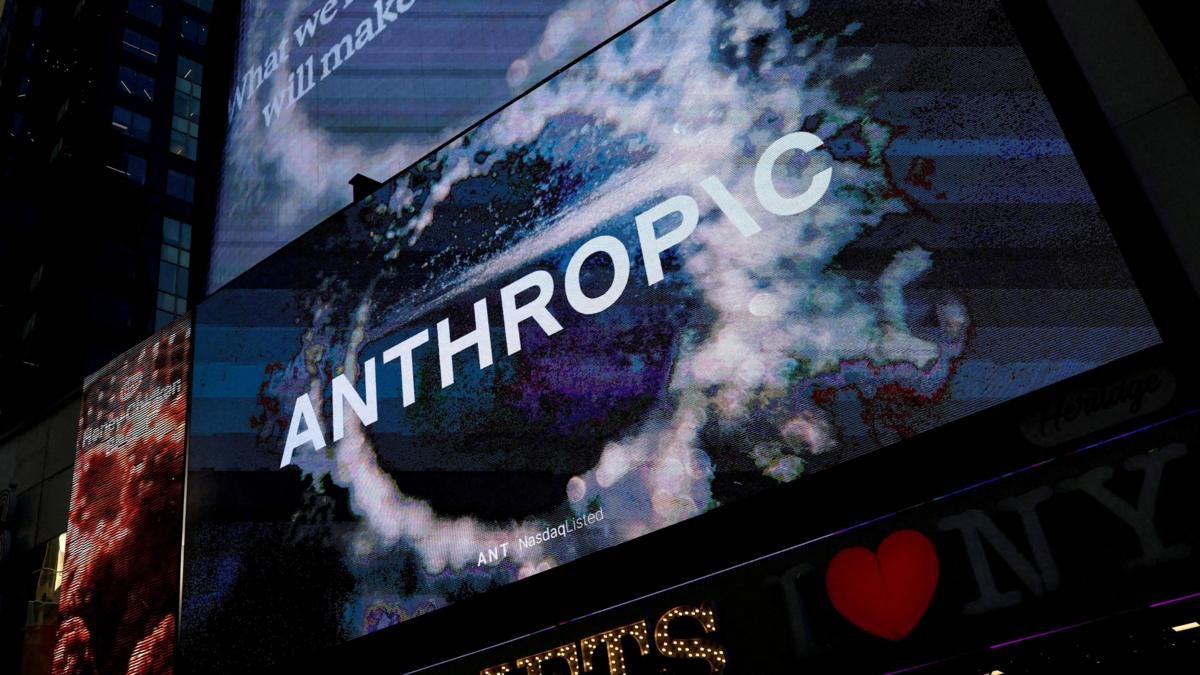
A mathematician employed by artificial intelligence company Anthropic has claimed that he used the firm's Claude chatbot to prove the Riemann hypothesis, a problem widely regarded as the most famous unsolved question in mathematics.
Levent Alpöge made the announcement on Friday, a day after Anthropic debuted on the US stock market, according to BBC Technology. He said the proof was produced over roughly six weeks using a version of Claude that is not available to the public.
If it withstands scrutiny, the result would rank among the most significant mathematical proofs ever achieved. However, leading experts have cautioned that confirming whether it is correct will take some time.
A problem nearly 170 years old
The hypothesis, named after the mathematician Bernhard Riemann, has stood for close to 170 years. It concerns prime numbers and proposes that they follow a determined order along the number line.
Because prime numbers underpin much of higher mathematics, progress on questions involving them tends to have wide-reaching consequences. The problem's notoriety stems largely from its complexity.
Alpöge's full proof has been written in Lean, a computer language designed to check mathematical proofs, and runs to more than 250,000 lines, BBC Technology reported.
Questions over timing
The announcement's proximity to Anthropic's stock market listing has drawn attention. Alpöge said he contacted Anthropic chief executive Dario Amodei on Sunday to ask how he could make the discovery public.
He acknowledged the awkward timing, saying he would have completed the work earlier had he been able to. "There is an obvious cynical view, to do with the timing, but it is false," he said, adding that he alone was responsible for deciding not to wait any longer.
Experts urge patience
Terence Tao, one of the world's most prominent mathematicians, said on Friday that verifying the proof remained some distance away. He noted, however, that the existence of a human author who could be consulted would help the process of digesting the work.
That marks a difference from several high-profile AI-driven maths claims made earlier this year, in which no human author was clearly involved.
A wave of AI maths claims
The announcement follows a string of claims by AI companies to have cracked difficult mathematical problems that have resisted scholars for decades.
In September, OpenAI said its staff, using a non-public version of its tools, had solved part of a notoriously difficult problem related to the Navier-Stokes equations, which describe how fluids move, in just 88 hours. More than 10,000 AI agents were deployed on the task as a training exercise. That proof has yet to be confirmed.
A month later, OpenAI released what it described as solutions, proofs or major progress on 372 further outstanding problems. Experts are expected to need months, if not longer, to assess those claims.
Anthropic has also previously claimed progress in mathematics and physics.
Backlash from scholars
The surge in such announcements has provoked criticism within academic circles. A group of mathematics scholars said in a joint letter that AI companies trumpeting major solutions to showcase their commercial products was harmful to the discipline.
The scholars described the trend as part of a broader threat to intellectual work, warning of a mismatch between what AI is being used to achieve and its original purpose.
For now, the mathematical community will be watching closely as specialists begin the lengthy task of checking whether Alpöge and Claude have truly solved one of science's greatest puzzles.
This story was prepared by the Hamasta Newsdesk with AI assistance, based on reporting by BBC Technology. Read the original report. Photo: BBC Technology.




Show the impact of your work.
Impact stories, campaign videos and community engagement for NGOs and programmes.

More in Technology
See all
Gates Foundation's Basinga urges Africa to put practical needs ahead of AI hype
Kenyan edtech startup Dira wins US$10,000 at African Agentic AI Design Challenge
Eight Kenyan university students head to China for Huawei technology training

Meta reconsiders 2030 net-zero deadline as AI data centres push emissions up 45%

UK secures tens of thousands of fridges from hackers in secret cyber operation
Global Community Remarks
0