
Flagship Biography: William Samoei Arap Ruto
1. Introduction
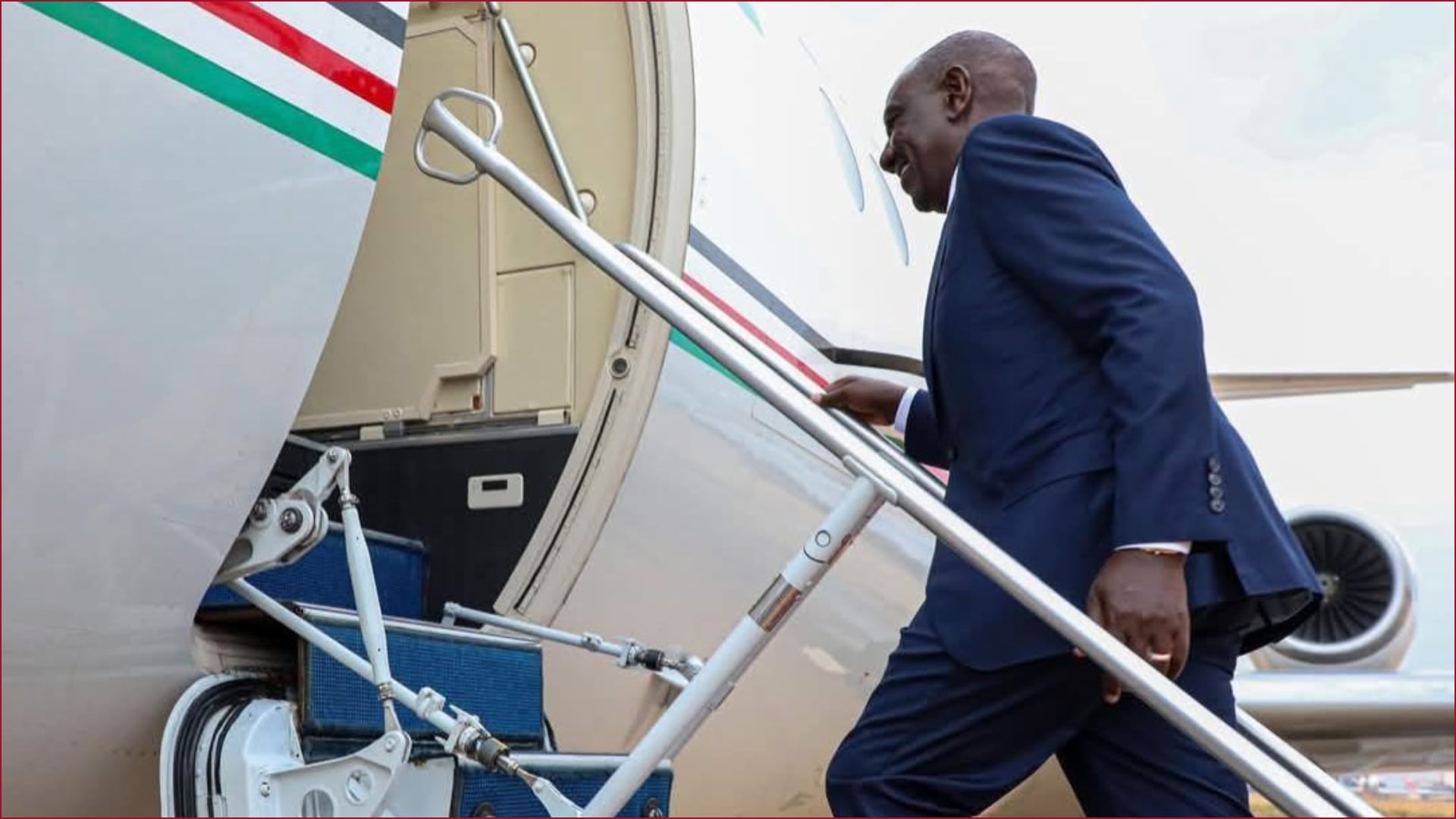
William Samoei Arap Ruto is one of the most polarizing, resilient, and strategically astute figures in modern African politics. Rising from absolute obscurity in the rural heartlands of the Rift Valley, Ruto ascended to the pinnacle of Kenyan statecraft, assuming office as the fifth President of the Republic of Kenya on September 13, 2022.
Dubbed the "Hustler-in-Chief," his political career is defined by an uncanny ability to reinvent himself: progressing from an energetic youth mobilizer under the autocratic KANU regime to a masterful legislative strategist, an embattled International Criminal Court (ICC) defendant, a powerful Deputy President, and eventually, the architect of a historic populist campaign that upended Kenya’s dynastic political order. Operating at the highest levels of global diplomacy while executing a sweeping domestic agenda, Ruto remains a deeply consequential leader whose legacy is actively being written.
2. Early Life and Family Background
William Ruto was born on December 21, 1966, in Sambut Village, Kamagut, located in Uasin Gishu County within the former Rift Valley Province. He was born into a modest, deeply religious Kalenjin family of the Nandi sub-tribe.
His parents, Daniel Cheruiyot and Sarah Cheruiyot, were peasant farmers who struggled to meet the basic needs of a large household. Growing up in a rural agrarian economy, Ruto’s early years were characterized by the typical hardships of rural Kenya in the late 1960s and 1970s, which later served as the foundation for his populist "Hustler" political narrative.
3. Childhood
Ruto’s childhood was far removed from the privileges enjoyed by Kenya’s traditional ruling elites. Like many village boys of his generation, he walked barefoot to school, tended to his family's livestock, and engaged in petty trade to support his household.
Most notably, he sold indigenous chickens to motorists along the busy Eldoret–Malaba highway. This specific childhood hustle became a core element of his identity, a badge of honor he leaned on heavily during his later political career to contrast himself against opponents born into political aristocracy.
4. Education
Ruto began his formal education at Kerotet Primary School before proceeding to Wareng Secondary School for his Ordinary Level (O-Level) studies. His exceptional academic performance earned him a slot at the prestigious Kapsabet High School in Nandi County for his Advanced Level (A-Level) education.
In 1987, he was admitted to the University of Nairobi to pursue a Bachelor of Science degree in Botany and Zoology, graduating in 1990. Driven by an enduring interest in environmental science, Ruto later returned to his alma mater, obtaining a Master of Science in Plant Ecology in 2011. He capped his academic pursuits in December 2018 when he was awarded a Doctor of Philosophy (PhD) in Plant Ecology from the University of Nairobi, defending a thesis centered on human impacts on wetlands in Kenya.
5. Religious Life
Religion has consistently been a defining element of Ruto’s public identity and private life. During his undergraduate years at the University of Nairobi, he was an active member and student leader of the Christian Union (CU), where he honed his public speaking and organizing skills.
As a devout evangelical Christian, Ruto frequently references biblical scriptures during political rallies and policy speeches. He is a prominent benefactor of the church, donating millions of shillings to infrastructure projects, a practice that has earned him fierce loyalty among religious conservative bases but drawn sharp criticism from secular opponents regarding the source of his funds.
6. Entry into Politics
Ruto’s formal entry into national politics occurred during the high-stakes transition to multi-party democracy in the early 1990s. While working briefly as a schoolteacher and choirmaster, his oratorical skills and organizing ability caught the attention of senior political operatives within the ruling Kenya African National Union (KANU).
His political career was fully launched through his involvement with YK'92 (Youth for KANU '92), a well-funded, highly aggressive youth lobby group formed to secure President Daniel arap Moi’s re-election in the tumultuous 1992 general elections. Working alongside figures like Cyrus Jirongo, Ruto quickly distinguished himself as an effective ground mobilizer.
7. Rise Through KANU
Following the success of YK'92, Ruto rapidly climbed the ranks of the ruling party. He embedded himself within the inner circle of President Moi, who mentored the young politician in the ruthless art of Kenyan realpolitik.
Ruto proved to be an indispensable asset to Moi, helping navigate regional balance, suppress dissent, and eventually managing the transition as older KANU stalwarts began defecting to the opposition. By the late 1990s, he had transformed from a mere youth operative into a critical cornerstone of KANU's machinery.
8. Member of Parliament (1997–2013)
In the 1997 general election, Ruto pulled off a stunning political upset by defeating the heavily favored incumbent and Moi confidant, Reuben Chesire, to capture the Eldoret North parliamentary seat.
Representing Eldoret North for over a decade and a half, Ruto built an impenetrable regional base. As a lawmaker, he earned a reputation as an eloquent debater and a cunning legislative tactician, solidifying his role as a key voice for the Rift Valley electorate.
9. Cabinet Positions
Ruto’s executive governance experience was forged across three distinct cabinet portfolios under two presidents:
- Minister for Home Affairs (2002): Appointed by President Moi in the twilight of the KANU administration.
- **Minister for Agriculture (2008–2010): Appointed by President Mwai Kibaki in the Grand Coalition Government. His tenure was widely praised for restructuring national grain reserves and implementing fertilizer subsidies that benefited smallholder farmers.
- Minister for Higher Education (2010): A brief, highly contentious tenure before he was relieved of his duties amid shifting political coalitions and corruption allegations, of which he was later acquitted.
10. ICC Proceedings
Following the catastrophic 2007–2008 post-election violence in Kenya, Ruto was named by the International Criminal Court (ICC) prosecutor as one of six individuals bearing the greatest responsibility for crimes against humanity. He was accused of orchestrating violence against supporters of the Party of National Unity (PNU) in the Rift Valley.
Ruto strenuously denied the charges. In a brilliant geopolitical move, he allied with his co-accused, Uhuru Kenyatta, turning their shared legal tribulation into a unifying political platform for the 2013 election. In April 2016, the ICC terminated the case against Ruto due to a lack of sufficient evidence, citing systemic witness interference and political politicization of the judicial process.
11. Deputy Presidency (2013–2022)
As the running mate to Uhuru Kenyatta, Ruto became the first Deputy President of Kenya under the 2010 Constitution following their victory in 2013. During their first term, "UhuruRuto" presented a monolithic front, overseeing massive infrastructure rollouts, including the Standard Gauge Railway (SGR).
However, following their re-election in 2017, the relationship fractured irreparably. The turning point was the March 2018 "Handshake"—a political truce between President Kenyatta and their arch-rival, Raila Odinga. Systematically sidelined from government operations and replaced by structural workarounds, Ruto effectively ran an "opposition-from-within" campaign, utilizing his official residence in Karen to build a formidable political apparatus.
12. The Bottom-Up Economic Transformation Agenda
To challenge the Kenyatta-Odinga establishment, Ruto formulated the Bottom-Up Economic Transformation Agenda (BETA). Developed alongside a team of heterodox economists led by Dr. David Ndii, the model explicitly rejected "trickle-down" economics.
BETA promised to deliberately channel capital and state resources to the very bottom of the economic pyramid—targeting small-scale traders (<i>mama mbogas</i>), bodaboda operators, and peasant farmers. It fundamentally shifted Kenya’s political discourse from tribal arithmetic to economic class dynamics.
13. 2022 Presidential Campaign
The 2022 presidential campaign was one of the most fiercely contested in East African history. Running under the United Democratic Alliance (UDA) and leading the Kenya Kwanza coalition, Ruto faced the full might of the state apparatus, which backed Raila Odinga.
Ruto framed the election as a contest between "Hustlers" (the struggling masses) and "Dynasties" (the Kenyatta and Odinga political families). On August 15, 2022, the Independent Electoral and Boundaries Commission (IEBC) declared Ruto the winner with 50.49% of the vote. The Supreme Court of Kenya unanimously upheld the victory following a legal challenge.
14. Presidency (2022–Present)
Ruto's presidency has been a complex mix of sweeping structural reforms, high-stakes fiscal management, and severe domestic challenges.
Economic Policies & Structural Re-engineering
Inheriting a deeply indebted economy, his administration aggressively pursued fiscal consolidation, introducing contentious revenue-raising measures. Key pillars of his administration include:
- The Hustler Fund: A state-backed digital micro-credit scheme providing low-interest loans to millions of unbanked citizens.
- Affordable Housing Programme: A mandatory levy-funded initiative aimed at building urban housing units while creating construction jobs.
- Healthcare Reform: Transitioning the National Hospital Insurance Fund (NHIF) into the Social Health Authority (SHA) to achieve Universal Health Coverage.
Fiscal Headwinds and the 2024 Protests
The administration’s aggressive tax policies culminated in historic civil unrest. In June 2024, massive youth-led, non-partisan anti-tax protests broke out across the country, storming Parliament and forcing President Ruto to decline signing the controversial Finance Bill 2024. In response, Ruto dismissed his entire cabinet and formed a broad-based government, bringing members of the opposition Orange Democratic Movement (ODM) into the executive.
Following this realignment, John Mbadi took over the National Treasury, steering a game plan focused on reducing external borrowing and avoiding new tax hikes. In a decisive assertion of political dominance, Ruto's parliamentary coalition oversaw the impeachment of Deputy President Rigathi Gachagua, replacing him with Kithure Kindiki. By June 2026, Ruto signed a radically restructured Finance Bill 2026 into law, successfully funding a Sh4.8 trillion budget through enhanced compliance rather than new levies, proving his continued control over Kenya's fiscal direction.
Continental and International Footprint
On the global stage, Ruto has positioned himself as a leading voice for the Global South. He chaired the inaugural Africa Climate Summit in 2023, championing the Nairobi Declaration for global carbon taxation. Under his leadership, Kenya became the first sub-Saharan African nation to be designated as a Major Non-NATO Ally by the United States. Furthermore, his administration has driven massive industrial infrastructure plans, including the landmark National Infrastructure Fund established in March 2026, followed by the Sovereign Wealth Fund Bill signed into law in July 2026 to systematically preserve resource revenues for future generations.
15. Business Interests and Investments
William Ruto is widely acknowledged as one of the wealthiest individuals in Kenya. He has consistently defended his wealth as the product of hard work and savvy investments, starting from his days as a village chicken vendor.
Key Declared and Documented Holdings
- Poultry and Commercial Farming: He owns a multi-million-shilling commercial poultry farm, Yugo Farm, in Sugoi, which reportedly produces thousands of eggs daily and utilizes advanced agricultural technology.
- Hotel and Hospitality: Ruto holds a majority stake in the Weston Hotel, a luxury property located in Nairobi. The hotel has been the subject of prolonged legal scrutiny regarding the acquisition of its land parcel, which Kenya's Civil Aviation Authority claimed was public property. The courts eventually ruled that Ruto's company acquired the land in good faith and ordered compensation rather than demolition.
- Real Estate and Properties: He has extensive investments in residential and commercial real estate across Nairobi, Uasin Gishu, and the Coast, including residential apartments and multi-million dollar private residences.
- Amaco Insurance: Ruto held substantial founding shares in African Merchant Assurance Company (Amaco), a major player in Kenya's insurance sector, though his direct involvement has scaled down over time.
16. Philanthropy and Community Development
Throughout his public life, Ruto has maintained a massive philanthropic footprint. He frequently operates as a high-volume donor to educational institutions, youth self-help groups, and community infrastructure projects.
His most visible philanthropy involves massive financial contributions to churches across all denominations. While supporters view this as a genuine expression of his Christian faith and community solidarity, critics have often argued that his targeted philanthropy is used as a highly effective tool for long-term political patronage.
17. Family and Personal Life
William Ruto married his teenage sweetheart, Rachel Chebet, in 1991. Rachel Ruto is an educator and a prominent advocate for women’s economic empowerment through her flagship initiative, Joyful Women Organization (JOYWO), which promotes table banking among rural women.
Together, they have seven children. His eldest son, Nick Ruto, is a lawyer who was admitted to the bar in 2019, while his daughter, June Ruto, serves as a Kenyan diplomat. The family maintains their primary private residence in Sugoi, Uasin Gishu County, alongside official state residencies in Nairobi and Mombasa.
18. Leadership Style and Political Philosophy
Ruto's leadership style is characterized by an intense work ethic, micromanagement, and powerful populist rhetoric. Unlike traditional Kenyan politicians who rely on ethnic endorsements, Ruto relies on rigorous data, digital mobilizing strategies, and direct emotional appeals to the economic grievances of ordinary citizens.
He is a masterful political strategist who prioritizes ground network structures and long-term planning. His political philosophy balances a staunch commitment to neo-liberal economic partnerships globally with an intensely populist, welfare-state agenda domestically.
19. Achievements and Milestones
- Constitutional Victory: Ascending to the Presidency on his first attempt without the backing of an incumbent president.
- Hustler Fund Enactment: Launching a massive digital financial inclusion platform that has disbursed billions of shillings to small-scale traders.
- Global Climate Leadership: Successfully organizing the 2023 Africa Climate Summit and shaping continental climate policy.
- Major Non-NATO Ally Status: Securing a historic security and diplomatic partnership with the United States.
- Sovereign Wealth Fund Enactment: Signing into law the historic 2026 permanent legal framework ensuring natural resource revenue is prudently preserved across generations.
20. Major Challenges and Controversies
Ruto's career has been dogged by intense, high-profile controversies:
- Land Accusations: He has faced multiple legal battles over land ownership, including the Muteshi land case (where a court ordered him to return land to a post-election violence victim) and the Weston Hotel land dispute.
- The 2009 Maize Scandal: During his tenure as Minister for Agriculture, he faced a parliamentary censure motion over the alleged mismanagement of subsidized maize reserves, though he successfully survived the political onslaught.
- Human Rights Violations: The legacy of his ICC indictment remains a historical point of debate among human rights watchdogs regarding accountability for the 2007 violence.
- Excessive Force Claims: His administration faced severe local and international condemnation over the heavy-handed police response to the 2024 Finance Bill demonstrations.
21. Awards and Honours
- Chief of the Order of the Golden Heart (CGH): The highest civilian honor in the Republic of Kenya, assumed upon taking office as President.
- Global Environmental Accolades: Recognized by various pan-African bodies for his aggressive policy frameworks on renewable energy and climate financing.
22. Legacy and Historical Significance
William Ruto’s place in history is secure as the leader who shattered the multi-generational dynastic grip on Kenyan politics. By organizing a successful national political movement based on class and economic interest rather than purely tribal lines, he fundamentally altered the mechanics of democratic competition in East African history. His ultimate legacy will depend heavily on his ability to stabilize Kenya’s macro-economy, manage political dissent, and successfully execute his ambitious developmental commitments.
23. Timeline of Major Events
- December 21, 1966: Born in Kamagut, Uasin Gishu County.
- 1992: Emerges on the national scene as a leading official of YK'92.
- 1997: Elected Member of Parliament for Eldoret North.
- 2008: Appointed Minister for Agriculture in the Grand Coalition Government.
- 2010: Indicted by the International Criminal Court (ICC).
- April 2013: Sworn in as the first elected Deputy President of Kenya under the 2010 Constitution.
- April 2016: ICC terminates crimes against humanity charges against him.
- December 2018: Graduates with a PhD in Plant Ecology from the University of Nairobi.
- August 2022: Wins the Kenyan Presidential Election.
- September 13, 2022: Inaugurated as the 5th President of Kenya.
- June 2024: Withdraws the Finance Bill 2024 following historic nationwide youth-led protests.
- June 2026: Signs a restructured Finance Bill 2026 into law to fund a Sh4.8 trillion budget without adding new tax burdens.
- July 2026: Assents to the Sovereign Wealth Fund Bill to safeguard natural resource revenues.
24. Frequently Asked Questions
How did William Ruto make his money?
Ruto's wealth comes from substantial investments in commercial poultry farming, large-scale agriculture, real estate development, and majority stakes in the hospitality sector (such as the Weston Hotel).
What is the "Hustler Nation" narrative?
It is a populist political movement created by Ruto that frames Kenyan society as a divide between "hustlers" (hardworking, low-income citizens) and "dynasties" (entrenched political families who have held power since independence).
Why was William Ruto at the ICC?
He was accused by the ICC prosecutor of organizing and financing ethnic violence in the Rift Valley during the 2007–2008 post-election crisis. The case was terminated in 2016 due to a lack of sufficient evidence.
25. Conclusion
William Samoei Arap Ruto remains a singular, towering figure in modern African governance. Defying steep political odds and leveraging a brilliant populist framework, he redefined how political power is contested and won in Kenya. As he navigates the complex challenges of economic restructuring, generational political shifts, and continental leadership, his presidency stands as a defining chapter in the democratic evolution of the East African region.
26. Disclaimer
Editorial Disclaimer: This article is published for informational purposes. Any opinions or views expressed are those of the individuals or sources cited and do not necessarily reflect the editorial position of HAMASTA MEDIA.

Tell your story on screen.
Commercials, documentaries, interviews and social video, from script to final cut.





More in Lifestyle
See all
First Lady Rachel Ruto hands over homes to Chesongoch landslide survivors
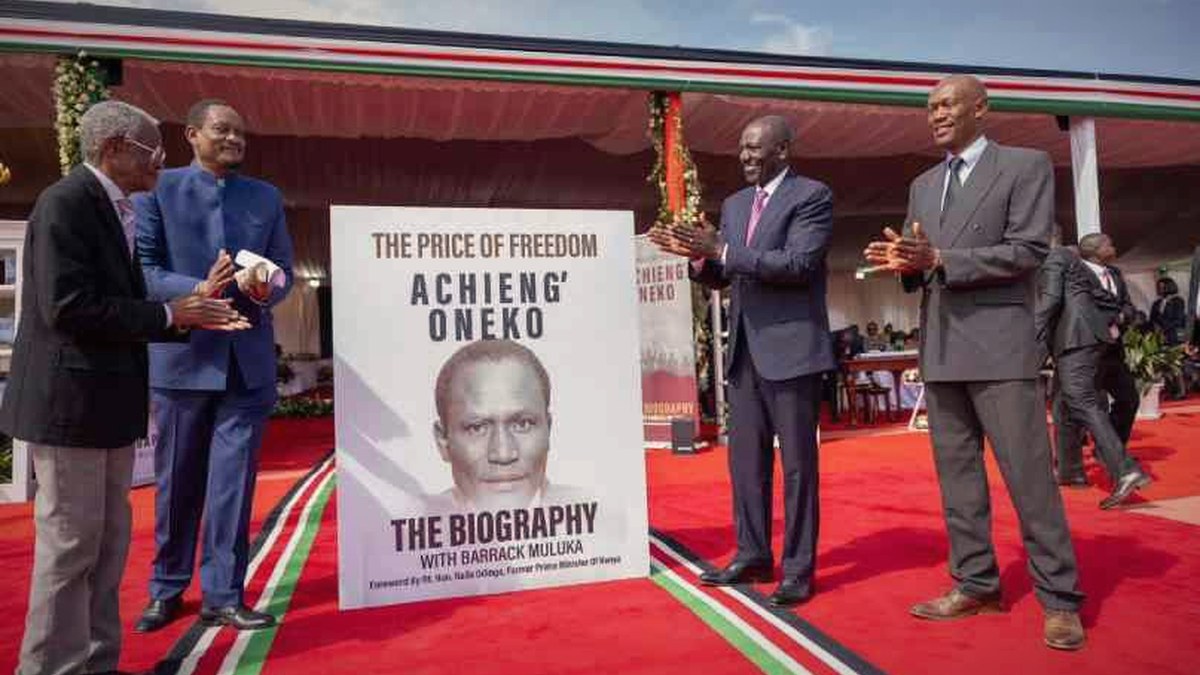
Ruto launches Achieng' Oneko biography 'The Price of Freedom' at Mashujaa Day
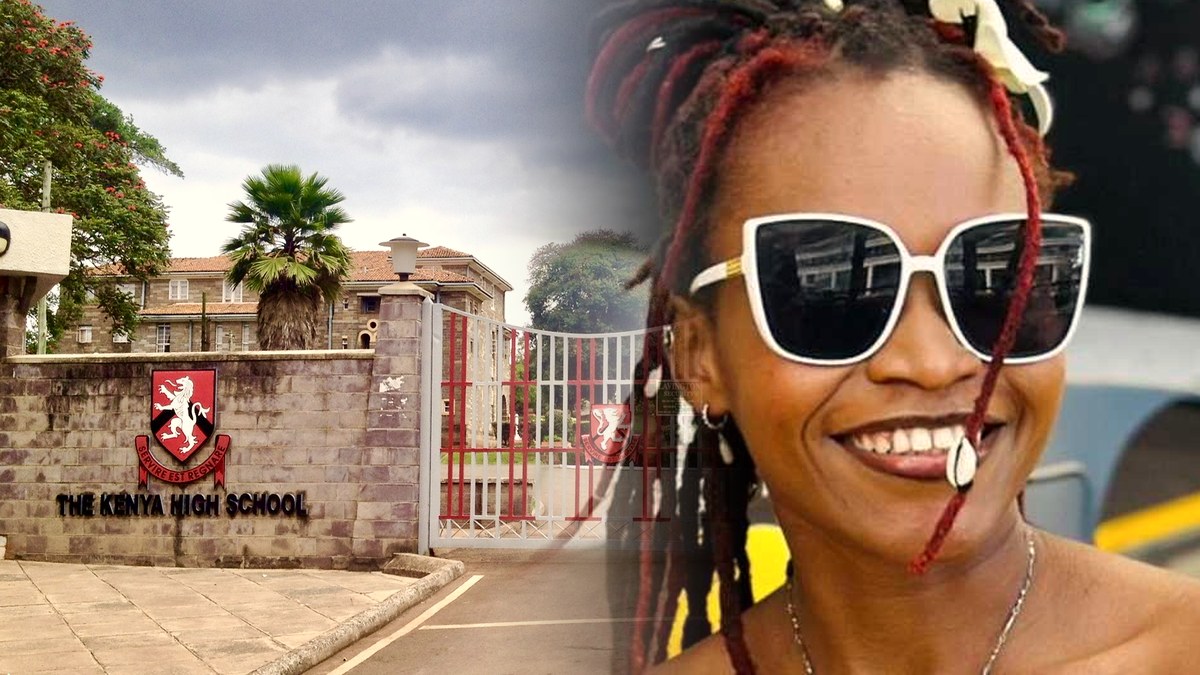
Pool, gym and 'supermarket' canteen: Influencer's Kenya High School tour sparks online buzz

KikoRomeo takes Kenya to Moscow Fashion Week with its 'Ewala' collection
'I'm protecting my peace': self-care or an excuse? Inside Gen Z's favourite phrase

Global Community Remarks
0