
Nepal's rapper-turned-PM Balendra Shah secures $1.63bn flood aid on India visit
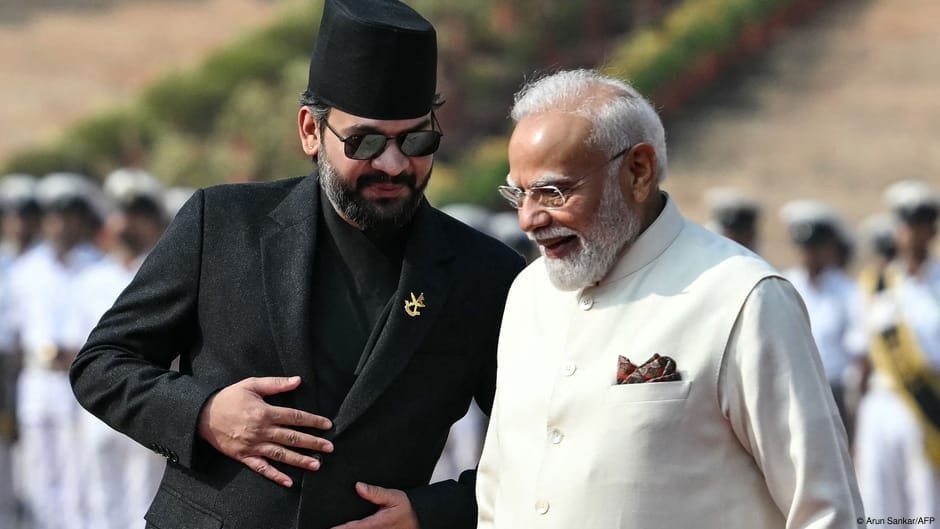
India has pledged about $1.63 billion to help Nepal rebuild after devastating floods, following talks in New Delhi between Indian Prime Minister Narendra Modi and Nepal's new leader, Balendra Shah, according to DW News.
The package, announced at a joint press briefing on Monday, includes roughly $380 million in grants. The remainder will be extended as a concessional loan to fund reconstruction in flood-hit areas and upgrades to other infrastructure projects.
The trip to India was the first bilateral foreign visit by Shah, a 36-year-old former rapper who won a strong electoral mandate and now heads a new political force in Kathmandu.
Floods shape the agenda
Securing Indian money for recovery was Kathmandu's top priority. The floods that struck Nepal in August killed more than 1,450 people, while 5,745 others remain missing or unaccounted for, DW News reported.
Roads, bridges, hydropower projects and entire settlements were washed away. The cost of reconstruction has been estimated at about $4.8 billion, meaning India's pledge covers roughly a third of the bill.
Beyond the aid, the two governments agreed to expand cooperation in trade, investment, connectivity and people-to-people links, and unveiled a new long-term vision intended to deepen economic integration.
Commitments were also made on education and innovation partnerships, energy and infrastructure, and improved market access. Landlocked Nepal is expected to gain additional air and port access through Indian territory.
A break from the old order
For years, Nepal's dealings with India were managed by a familiar set of leaders from the country's three traditional major parties, who rotated through the premiership in shifting coalition governments. Shah's arrival marks a departure from that pattern.
India is Nepal's largest trading partner and shares an open border with it, along with deep cultural and historical ties. Yet the relationship has been strained at times by political mistrust, differing strategic interests and a desire in Nepal to be treated as an equal by its far larger neighbour.
Constantino Xavier, a senior fellow at the Center for Social and Economic Progress in New Delhi, urged caution about expecting too much from one visit. He told DW News: "We need a big, long-term ambition coupled with small, short-term steps." He argued that economic cooperation should stay at the heart of relations because it directly supports development in both countries.
Border row left untouched
Notably absent from the talks were the competing claims both countries hold over Kalapani, Lipulekh and Limpiyadhura, a strategic Himalayan area in north-western Nepal.
As mayor of Kathmandu, Shah had spoken out on the border disputes with India, a stance that strengthened his nationalist credentials. On this visit, however, he steered clear of the issue.
Former Nepalese foreign minister Bimala Rai Paudyal told DW News that Shah sidestepped difficult questions to keep attention on his economic agenda. She said the trip could have been a useful starting point for resolving the border disagreements, but accused the new government of lacking the interest or courage to tackle them.
Ashok Swain, who heads the Department of Peace and Conflict Research at Sweden's Uppsala University, said success should be judged by whether the two neighbours can build a predictable, mutually beneficial relationship.
He told DW News that Nepal's territorial claims, concerns over the 1950 Treaty of Peace and Friendship, and its economic and transit reliance on India all need attention. Swain added that Shah has a chance to turn Nepal's position between India and China into an economic and diplomatic advantage, rather than being pushed to pick a side.
Implementation the real test
Analysts say the real measure of the visit will not be the number of agreements signed but how they are carried out, and whether both governments are prepared to confront the disputes that have long weighed on ties.
For Shah, the challenge is to convert his domestic popularity and goodwill in New Delhi into jobs, investment and better governance that Nepalese voters are demanding, while tackling a large trade imbalance with India.
This story was prepared by the Hamasta Newsdesk with AI assistance, based on reporting by DW News. Read the original report. Photo: DW News.

Tell your story on screen.
Commercials, documentaries, interviews and social video, from script to final cut.





More in International
See all
Bangladesh garment workers reject employers' pay offer as wage protests continue
UAE bans jeans and sportswear for government workers in new dress code
UAE Bars Hotel Staff From Working in Health Clubs Meant for the Opposite Gender
UAE Warns Kenyans and Other Foreigners Against Six Public Behaviours
Russia warns Estonia of 'open war' over border closure and drone claims
Global Community Remarks
0