
Borno school enrolment nearly doubles, but 800,000 children still out of class
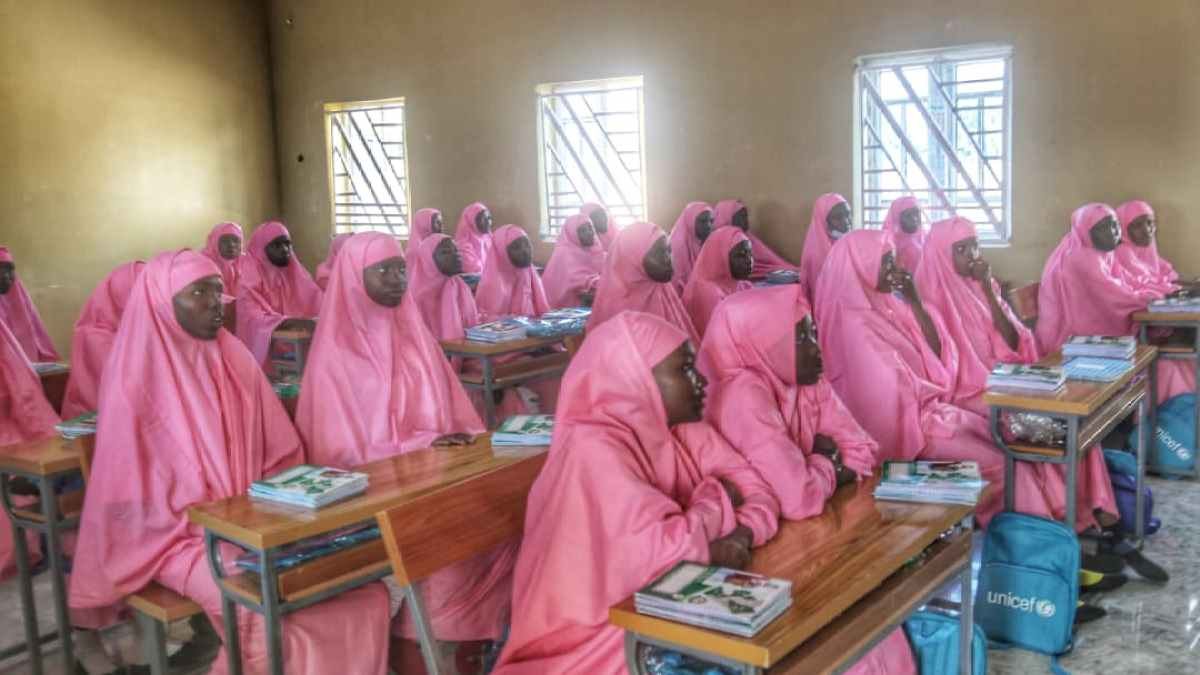
School enrolment in Nigeria's Borno State has almost doubled since 2017, according to the state government, but officials concede that close to 800,000 children in the conflict-scarred northeastern region are still not in school.
Public and private schools in the state registered 1,418,279 learners in 2025, compared with 766,551 in the 2017-2018 academic session, Al Jazeera reported, citing state government figures.
The rise comes after more than a decade of violence linked to Boko Haram, which began its armed campaign in the region in 2009. Attacks and displacement forced schools to shut, with teachers and pupils fleeing communities where learning became impossible.
Rebuilding classrooms
The Borno government has made reconstruction of schools a priority, putting up new facilities and repairing classrooms damaged by both conflict and flooding.
Speaking at the commissioning of education projects in Maiduguri in March, Governor Babagana Umara Zulum said his administration had built 104 new schools and rehabilitated 2,931 classrooms and related facilities.
According to the governor, the number of out-of-school children has dropped from roughly 2.2 million at the peak of the crisis to below 800,000.
Lawan Abba Wakilbe, the state's Commissioner for Education, Science, Technology and Innovation, said the figures showed parents were regaining faith in schools. "This is not just a number," he said, describing it as evidence that communities once again trust schools with their children's future.
Voices from the classroom
Maryam Umar, a teacher at the Higher Islamic College in Baga, Kukawa Local Government Area, saw her school close during the years of violence. She told Al Jazeera that efforts to reopen schools and supply learning materials were helping to revive education in devastated communities.
In Maiduguri, 12-year-old Fatima Mahmud Umar, a student at Junior Secondary School One, told Al Jazeera she was grateful to her parents for backing her education and hoped to become a good ambassador for her community. She also welcomed government investment in both Islamic and Western education.
Rural gaps persist
Not every community has felt the change. At a town hall meeting in Gubio Local Government Area, 49-year-old resident Bukar Abdullahi praised the state's spending on education but called for more children to be enrolled, pointing to the particular difficulties rural communities face.
Distance from working schools, financial strain and safety concerns continue to shape whether families send children to class, Al Jazeera reported. Children who lost months or years of learning may also struggle to catch up, while teachers must handle pupils at very different levels.
Islamic education drive
Alongside conventional schools, the state is expanding Arabic and Islamic institutions through the Borno State Arabic and Sangaya Education Board, which aims to bring traditional Islamic learning into a system offering recognised qualifications.
Zulum said the Higher Islamic Colleges follow a curriculum approved by the National Board for Arabic and Islamic Studies, describing the initiative as part of an inclusive system combining spiritual, academic and vocational development.
Questions over the data
The official figures leave several questions unanswered. They say little about regular attendance, teaching quality, the supply of qualified teachers and materials, or how progress is spread between towns and rural areas.
Other government statistics also complicate comparisons. The state's annual school census, released in September, counted 1,801,295 learners across the wider education sector, while enrolment in public primary and secondary schools stood at about 1.3 million in the 2025-2026 session. Because these figures cover different categories, they cannot be directly compared to measure growth precisely.
Without consistent details on the age groups and methods used, the reported fall in out-of-school children from 2.2 million to under 800,000 cannot be independently verified from the data provided, Al Jazeera noted.
For the hundreds of thousands of children still outside classrooms, Borno's educational recovery remains incomplete.
This story was prepared by the Hamasta Newsdesk with AI assistance, based on reporting by Al Jazeera. Read the original report. Photo: Al Jazeera.



Grow an audience that listens.
Social media management, digital campaigns and online storytelling that converts.



More in International
See all
Bandits, early marriage and poverty keep millions of Nigerian children out of school
Record 589 million children living in conflict zones, Save the Children says
Sudan's war shuts doors on education for children with disabilities
Save the Children says Gaza's children face dangers unmatched anywhere in the world
.jpeg)
UNICEF Urges Kenya to Shield Children's Budgets as Foreign Aid Shrinks
Global Community Remarks
0