
WFP warns wars at three sea chokepoints put food aid for 7.3 million at risk
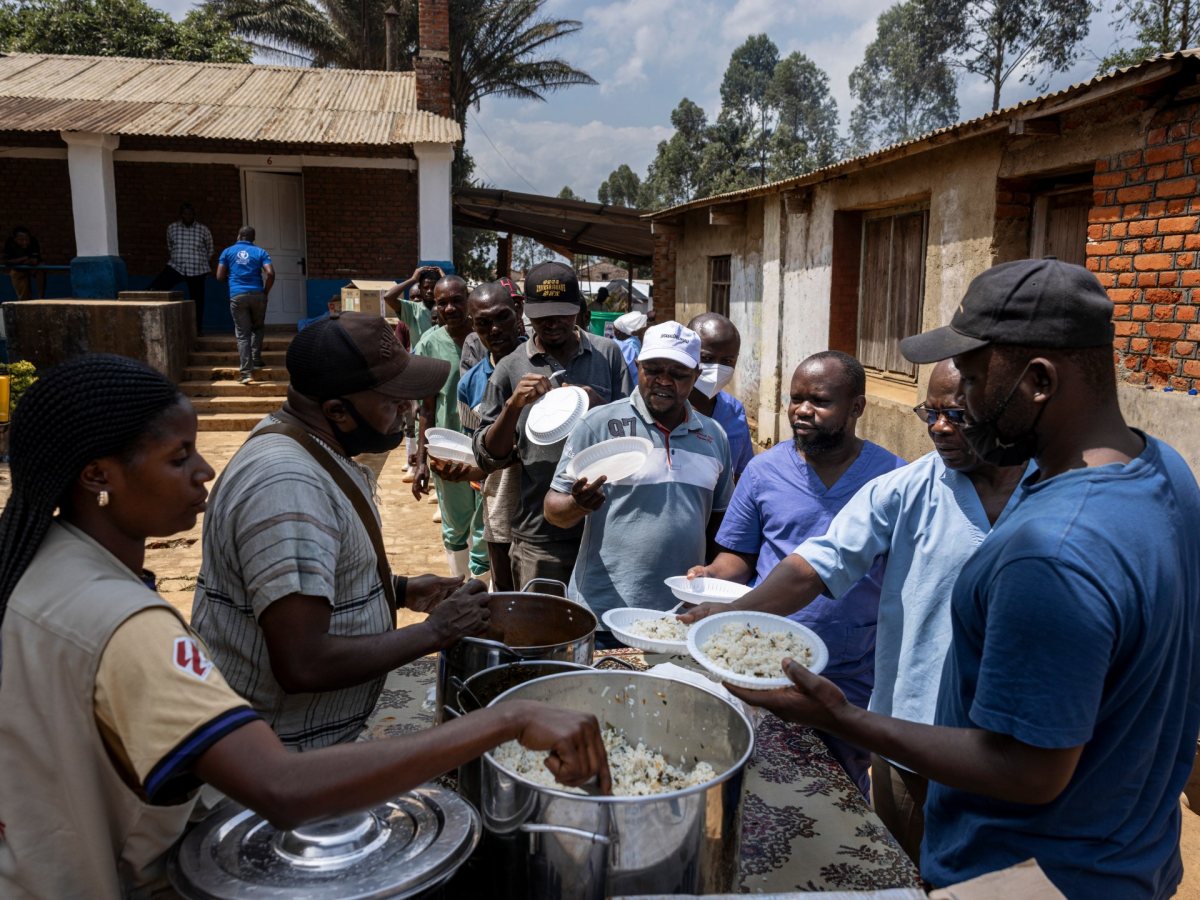
Disruption to three of the world's most important shipping routes is driving up the cost of food and humanitarian operations and could leave 7.3 million people without assistance, the head of the World Food Programme (WFP) has warned.
Speaking at the United Nations Security Council in New York on Monday, WFP Executive Director Luke Lindberg said what he called a "triple chokepoint" in the Strait of Hormuz, the Bab al-Mandeb and the Black Sea had sharply reduced the flow of food exports and farming inputs, according to Al Jazeera.
He told the council that the squeeze, together with a rise in conflicts and climate shocks such as El Nino, was having a real effect on food production and prices.
A $727m funding gap
The WFP projects that, if present conditions continue, it will face $727m in extra costs by mid-2027. That shortfall could put food assistance for 7.3 million people in jeopardy.
Lindberg said the rising costs were eating directly into the agency's operations, meaning less food reaching fewer families.
The warning comes at a time when 266 million people around the world are experiencing acute hunger. Parts of Sudan, South Sudan and Somalia are at risk of famine.
Why the routes matter
Each of the three waterways plays a distinct role in the global food system:
- Strait of Hormuz: roughly 30 percent of the world's fertiliser supplies pass through it.
- Black Sea: a major source of grain for countries including Somalia and Yemen, the latter of which imports 90 percent of its food.
- Bab al-Mandeb: the strait linking the Red Sea to the Gulf of Aden, identified by the WFP as one of the three points under strain.
According to the WFP, by mid-October the number of vessels carrying wheat and maize through the Bosphorus had fallen by 63 percent compared with the same period a year earlier.
The agency estimates that about 10 million tonnes of Russian and Ukrainian wheat could fail to reach world markets, a quantity it says would be enough to feed some 44 million people.
'A political problem'
Lindberg stressed that the crisis was not caused by a shortage of food.
"This is not a problem of production. It is a political problem," he said.
He added that grain was available but was not getting to those who needed it most.
The impact is already visible on the ground. In Sudan, where war has displaced millions, the cost of a basic diet has climbed by 130 percent since February, the WFP said.
Three 'red lines'
Lindberg called on UN member states to commit to three principles: no more famines, no more use of food as a weapon, and no more attacks on humanitarian workers.
For East Africa, the warning carries particular weight. Somalia, Sudan and South Sudan, all neighbours or near neighbours of Kenya, are among the countries the agency identifies as being at risk of famine, and Somalia depends in part on Black Sea grain shipments now facing disruption.
This story was prepared by the Hamasta Newsdesk with AI assistance, based on reporting by Al Jazeera. Read the original report. Photo: Al Jazeera.

Tell your story on screen.
Commercials, documentaries, interviews and social video, from script to final cut.





More in International
See all.jpeg)
WFP feeds thousands in Moyale after 30,000 flee Ethiopia clashes into Kenya
EU gives Sh78 million to aid Ethiopians displaced into Moyale by clashes
Darfur families displaced to Khartoum brace for cold winter as Sudan aid dries up

KeNHA Warns of Mombasa Road Disruption for World AIDS Day Half Marathon
UK sanctions 15 Sudanese army and RSF commanders on El Fasher anniversary, pledges £15 million in aid
Global Community Remarks
0