
Ruto, Germany's Steinmeier Agree Faster Visas and Language Training for Kenyan Workers
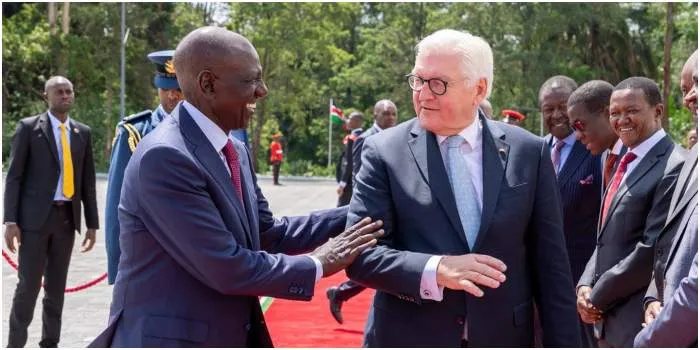
Kenya and Germany have agreed on a series of measures meant to make it easier for Kenyans to secure jobs in Germany, as rising unemployment at home pushes more young people to look for work abroad.
President William Ruto announced the commitments on Wednesday at State House, where he hosted German President Frank-Walter Steinmeier, according to Kenyans.co.ke. Most of the pledges made by the two leaders centred on employment opportunities for Kenyans.
Faster visas and recognition of skills
Among the key issues discussed was speeding up visa and recruitment processes, which are essential for anyone seeking to work in Germany.
The leaders also talked about faster recognition of Kenyan professional qualifications and stronger links between Technical and Vocational Education and Training (TVET) institutions and German industry.
Ruto identified language as one of the biggest hurdles facing Kenyan job seekers. Under agreements signed on Wednesday, a partner company will take charge of German language training and examinations.
"We discussed measures to streamline visa and recruitment procedures, facilitate language training, and accelerate the recognition of professional qualifications," Ruto said.
The push for quicker processing comes after Parliament questioned immigration officials over claims that intermediaries were charging travellers between Ksh26,000 and Ksh35,000 for expedited services. The allegations arose amid seasonal backlogs and reported email delivery problems on the Kenya eTA Portal.
Opportunities for seafarers
The two presidents also explored openings for Kenyan seafarers, including structured training, sea time placements and partnerships with German shipping companies. The move is aimed at bringing Kenya closer to global maritime leaders such as Germany.
Earlier labour deal showing results
Ruto said a labour agreement signed in November 2024, the Comprehensive Migration and Mobility Partnership, was already delivering results.
According to the President, the number of Kenyans working in Germany grew from 7,000 to 9,500 between March 2024 and March 2026. Over the same period, the number of Kenyan trainees contributing to Germany's social security system rose from 820 to 1,260.
Germany's labour shortage
Germany is the largest economy in Europe and the third-largest in the world, behind the United States and China.
Labour researchers say 2026 marks the first year in which more people are leaving Germany's workforce than entering it, with 12.9 million people heading into retirement, Kenyans.co.ke reported.
The country has more than 600,000 unfilled skilled positions, with nursing, information technology, engineering and construction among the hardest-hit sectors. Economists estimate that Germany needs about 400,000 foreign workers every year.
With fewer workers arriving from other European Union countries, Berlin has relaxed its immigration rules through the Skilled Immigration Act and the Opportunity Card, and has signed labour agreements with countries including Kenya.
Development funding
As part of the package agreed by the two leaders, Germany has also committed Ksh7.8 billion (€52.5 million) in development funding to Kenya for the 2026-2028 period.
Kenya and Germany have maintained diplomatic relations for 63 years.
This story was prepared by the Hamasta Newsdesk with AI assistance, based on reporting by Kenyans.co.ke. Read the original report. Photo: Kenyans.co.ke.




Know what people say about you.
Media monitoring, audience insights and strategic communication for your brand.


More in Business
See all
Kenya signs deal with German exam body TELC to ease path to jobs in Germany
German President Steinmeier to Hold Talks With Ruto at State House on November 25
German President Steinmeier lands in Nairobi for talks with Ruto on trade and investment
Kenyans working in Germany rise to 9,500 under migration deal, Ruto says
Germany's IG Metall calls 23,000 workers out on new 24-hour strike over pay
Global Community Remarks
0