
ISWAP arming commercial drones and tapping global finance networks, report says
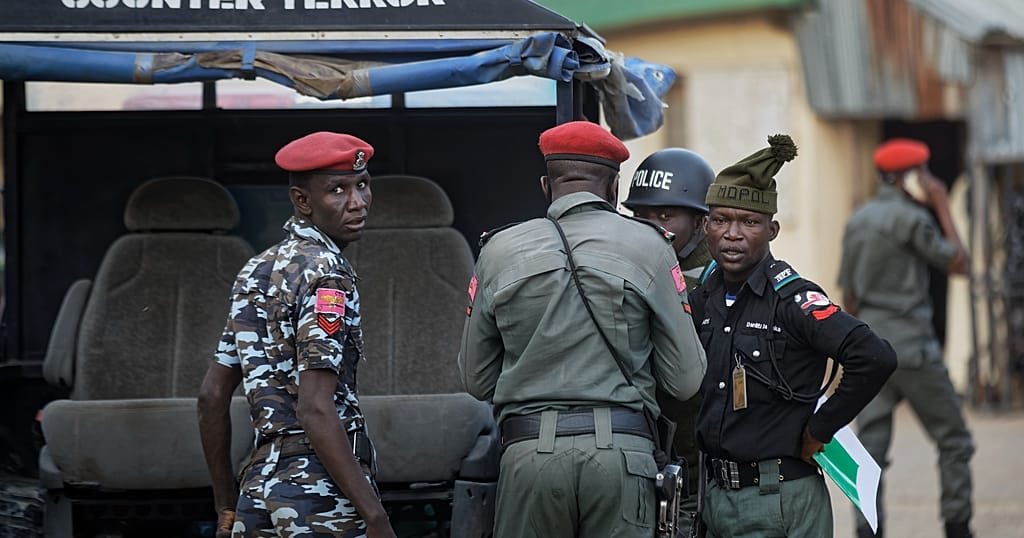
Islamic State militants operating in north-east Nigeria are turning commercial drones into weapons and relying on financing and supply networks that reach as far as Dubai, according to a new report by the Institute for Security Studies (ISS), Africanews reports.
The findings suggest that the Islamic State West Africa Province (ISWAP) is steadily upgrading its technological capabilities to keep its insurgency going, using tools that are widely available on the commercial market.
From surveillance to strikes
According to the report, ISWAP has adapted commercial technology for three main purposes: surveillance, propaganda and combat.
The group's use of drones has reportedly gone beyond gathering intelligence. Researchers say fighters are now fitting commercial drones with improvised explosives and flying them against military positions in north-east Nigeria.
The report also points to the militants' use of satellite communications, which form part of what it describes as a broader effort to strengthen the group's operations.
Money and supply lines
Beyond the battlefield, the ISS study traces supply and financing networks that link the insurgents to major Nigerian commercial hubs, including Lagos and Kano, and extend to Dubai in the United Arab Emirates.
The report further highlights ties between ISWAP and the central leadership of the Islamic State group, underlining that the Nigerian affiliate does not operate in isolation.
Researchers also uncovered what they describe as a payment system that rewards fighters for weapons seized during raids on military targets. Such an arrangement would give combatants a direct financial incentive to attack army positions and capture equipment.
Calls for a stronger response
In light of the findings, the researchers are urging Nigerian authorities to take several steps:
- Reinforce the defences of military bases in the conflict zone;
- Expand the country's counter-drone capabilities;
- Disrupt the networks that supply and finance the insurgency.
The recommendations reflect concern that the militants' growing access to cheap, adaptable technology could shift the balance on the ground if security forces do not adapt quickly.
Wider significance
ISWAP emerged in 2016 after splitting from Boko Haram and has since become one of the most active jihadist groups in the Lake Chad basin, where Nigeria's north-east borders Niger, Chad and Cameroon.
The report adds to growing attention on how armed groups across Africa are exploiting commercially available technology. Drones that can be bought cheaply for photography or agriculture can, once modified, give insurgents an aerial capability that was once largely the preserve of national armies.
The financing links described in the report also suggest that efforts to counter the group will need to extend beyond military operations in the north-east to include tracking money flows through Nigeria's commercial centres and international financial hubs.
The Nigerian government's response to the report's recommendations was not included in the Africanews account.
This story was prepared by the Hamasta Newsdesk with AI assistance, based on reporting by Africanews. Read the original report. Photo: Africanews.
Every moment, captured beautifully.
Events, corporate portraits, products and editorial shoots by our newsroom photographers.






More in International
See all
Tinubu vows to restore peace to Borno as Nigeria's January election nears
Kenya and Italy sign security pact covering terrorism, trafficking and cybercrime

Safaricom launches Ziidi Shari'ah, an Islamic money market fund you can join on M-PESA with KES 100
Treasury cuts CBK overdraft by Sh90bn after tapping idle cash in state accounts
'The Strait of Hormuz is closed': Sirens wake Bahrain at 4am as Iran sends six drones at a US base, its second strike in three days

Global Community Remarks
0