
Butere TTI principal earns up to KSh 7,500 a day from worms fed on kitchen waste
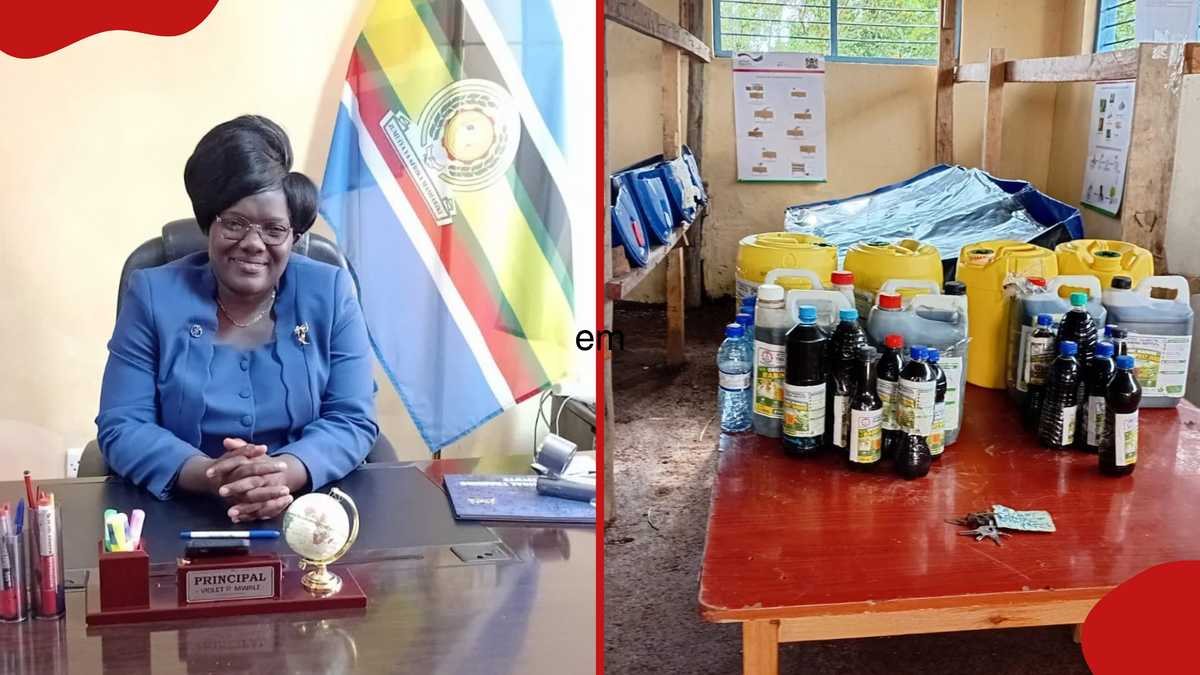
A principal at Butere Technical Training Institute (TTI) says she can earn as much as KSh 7,500 a day by selling liquid fertiliser produced by worms that feed on the college's kitchen leftovers and garden refuse, according to Tuko.
Pamela Mwale started the vermicomposting project about a year ago, hoping it would eventually help farmers move away from inorganic fertilisers that she believes damage soil health.
How the project works
Mwale keeps red German wiggler worms, which she feeds daily on food scraps from the students and on waste collected after garden harvests, mostly kales and cabbages.
As the worms digest the waste, they produce cast and a liquid known as vermijuice, which Mwale calls worm urine. She harvests at least half a litre a day, and a litre sells for KSh 1,500, giving a minimum daily income of KSh 750.
When the worms are well fed, the harvest can rise to five litres, pushing earnings to KSh 7,500 a day, Tuko reported.
Mwale said the early months were difficult, with little to show for the effort, but that the situation has since improved considerably.
The vermijuice is used both as a fertiliser and as a pesticide on garden crops, including vegetables. Students carry out the work under the supervision of their trainers.
Savings, healthier soil and less smell
According to the institution, the project has reduced spending on synthetic fertiliser. The college now produces enough for its own farm, with surplus vermijuice sold as an income-generating activity.
Mwale said earlier tests had found the school's soils to be highly acidic, but that the worm cast and juice have brought the pH to neutral.
She said the Kenya Agricultural and Livestock Research Organisation (KALRO) in Kakamega later tested the soils, and the institution reported that the results showed plenty of useful micro-organisms, good aeration, sound structure and good water-holding capacity. Mwale says yields have since doubled.
The worms have also eased a long-standing waste problem. Disposal of kitchen residue was once a headache because of the foul smell, but the worms now consume the waste and the odour has gone.
A classroom for the community
The vermicomposting site has also become a learning area for trainees, many of whom come from surrounding communities. The institution says a good number have been trained and later helped to set up their own projects.
Mwale also runs a rabbit project at the college, collecting rabbit urine which she says works as a fertiliser and an insecticide.
Call to drop chemical fertilisers
Mwale argued that farmers should turn to homemade organic fertilisers made from animal and plant materials, which she described as harmless.
She claimed that years of continuous chemical fertiliser use have sharply depleted soil nutrients and killed beneficial bacteria, leaving plants unhealthy. She further suggested that eating such crops may sometimes lead to diseases such as cancer, a view she expressed without citing specific evidence in the report.
She urged farmers to adopt local manures, saying they neither harm farmers nor destabilise the soil.
Message to young people
Mwale also encouraged students in technical and vocational education and training (TVET) institutions to be innovative, noting that white-collar jobs are scarce while skilled people can thrive.
She said Butere TTI has more than 3,000 students on a range of courses and claimed that investors increasingly prefer TTI graduates to university ones. She called on young people to enrol in TVET colleges in large numbers.
This story was prepared by the Hamasta Newsdesk with AI assistance, based on reporting by Tuko. Read the original report. Photo: Tuko.

Tell your story on screen.
Commercials, documentaries, interviews and social video, from script to final cut.





More in Environment
See all
Counties told to sort waste at source and plan housing with drainage as Kisii hosts World Cities Day

Meru's Karumo TTI ranked Kenya's top TVET in gender mainstreaming, eighth overall

Kenya seeks stronger partnerships to turn waste into jobs ahead of circular economy plan
Nairobi County takes NEMA to court in battle over who controls city garbage

Mudavadi urges Western Kenya to back Ruto as KSh 21bn Kakamega projects unveiled

Global Community Remarks
0